
Category: Governance

  • Edo LG Chairmen Suspension Declared Invalid by AGF

    Edo LG Chairmen Suspension Declared Invalid by AGF

    The Attorney-General of the Federation and Minister of Justice, Prince Lateef Fagbemi, has described the suspension of Local Government Chairmen and Vice Chairmen in Edo State as unconstitutional.  

    The controversy began when the Edo State House of Assembly suspended council leaders from all 18 local governments for two months. 

    The suspension was based on allegations of gross misconduct and insubordination.

     Governor Monday Okpebholo reinforced the decision by directing the officials to hand over to their legislative leaders, citing their failure to submit financial reports dating back to September 2022.  

    In defiance, the suspended officials have vowed to remain in office until their terms end in 2026. 

    According to Fagbemi, the suspensions violate the Supreme Court’s July 2024 ruling, which safeguards the autonomy of local government councils and restricts state interference.  

    The AGF clarified that disciplining local government leaders is solely the responsibility of their legislative houses, emphasizing that governors lack the authority to remove elected council officials.  

    This development has reignited discussions about the separation of powers between state and local governments, with implications for governance across Nigeria’s 774 local councils.

  • Reps Propose Removal of NECO, UI, Police from 2025 Budget

    Reps Propose Removal of NECO, UI, Police from 2025 Budget

    The House of Representatives has put forward a proposal to exclude several ministries and agencies from the 2025 national budget due to their failure to comply with financial reporting requirements. 

    Among the affected entities are the National Examinations Council (NECO), the University of Ibadan (UI), and the Nigeria Police Force. 

    The recommendation came after repeated invitations to these bodies, which failed to attend hearings or provide necessary documentation for scrutiny.

    The Public Accounts Committee made the decision following concerns about the non-compliance of these agencies, which included hospitals, universities, and other institutions. 

    The committee emphasized that these bodies should be excluded from the budget until they provide clarifications on their past financial activities. 

    Other institutions in question include the Federal Ministry of Labour and Employment, Ahmadu Bello University Teaching Hospital, and the Federal Medical Centre in Bida. 

    The committee’s move aims to enforce greater accountability for the use of public funds.

  • Tinubu Unveils 2025 Budget

    Tinubu Unveils 2025 Budget

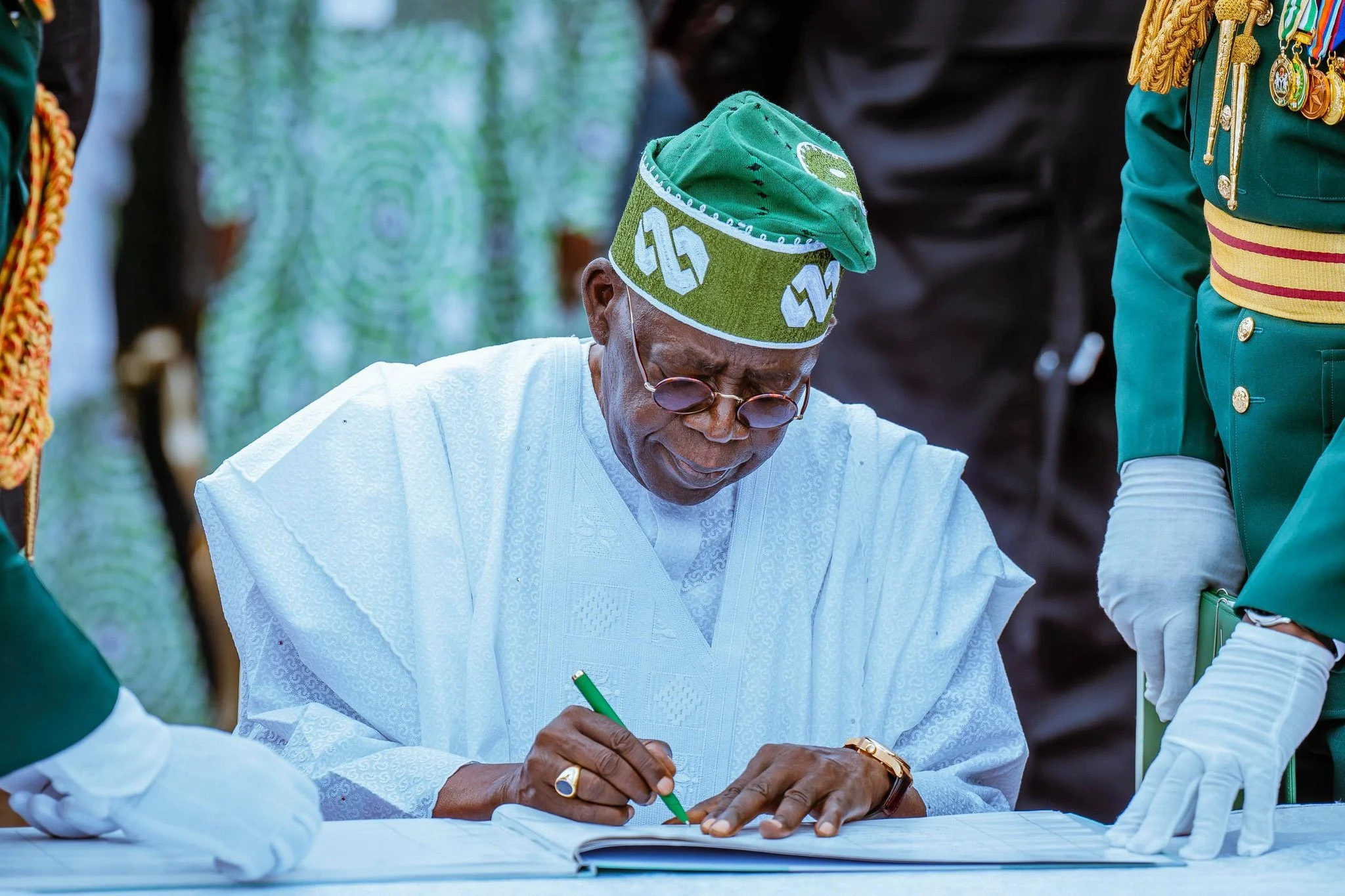
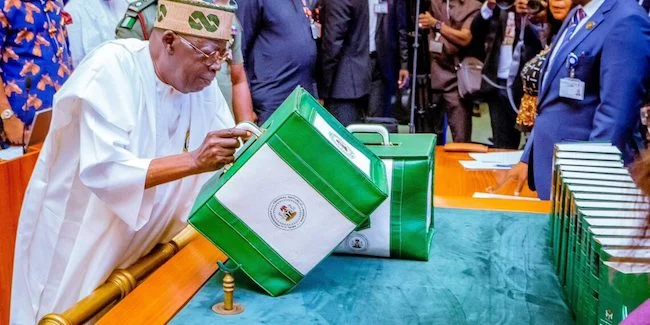
    President Bola Ahmed Tinubu has presented the 2025 budget proposal to the National Assembly, marking a pivotal step in his administration’s efforts to stabilize and transform Nigeria’s economy. 

    Dubbed “The Budget of Restoration: Securing Peace, Rebuilding Prosperity,” the plan lays out strategic investments to tackle economic challenges and rebuild critical sectors.  

    The proposed N47.90 trillion expenditure includes key allocations for defense, infrastructure, education, and healthcare.

     Tinubu emphasized bolstering security, improving infrastructure, and fostering self-sufficiency in agriculture. Revenue projections stand at N34.82 trillion, while the budget deficit is pegged at N13.08 trillion.  

    The president highlighted significant milestones achieved under the 2024 budget, such as a 3.46% economic growth rate in Q3 and robust foreign reserves nearing $42 billion. 

    For 2025, the focus shifts to reducing inflation, enhancing trade, and driving industrial output.  

    With plans to reduce dependency on food and oil imports while boosting exports, Tinubu assured Nigerians of a brighter future, calling for collective action to overcome challenges and build a more prosperous nation.

  • Insecurity: Nigerians Paid N2.3trn As Ransom In One Year — NBS Report

    Insecurity: Nigerians Paid N2.3trn As Ransom In One Year — NBS Report

    “Perhaps the most depressing aspect of the survey was the discovery that most Nigerians lack confidence in law enforcement agents as many are of the belief that police intervention would not result in meaningful action.”

    Further sign of the failing status of Nigeria as a nation state emerged yesterday as a report by the National Bureau of Statistics revealed the chronic lack of capacity of Nigeria to protect the life and property of its citizens.

    Meanwhile, Sect 14(2)(b) of the 1999 Constitution of Nigeria,as amended, declares that the security and welfare of the people shall be the primary purpose of government.

    According to the NBS report, Nigerians paid an estimated N2.3 trillion as ransom in 12 months to secure their freedom from kidnappers.

    It was also revealed in the survey that households nationwide had an estimated 51,887,032 criminal incidents within the period under review.

    Perhaps the most depressing aspect of the survey was the discovery that most Nigerians lack confidence in law enforcement agents as many are of the belief that police intervention would not result in meaningful action.

    The federal government agency reports that these figures were realised from its 2024 Crime Experience and Security Perception Survey (CESPS), and it underscores the dangerous rate and extreme financial burden which Nigerians have to bear just to ensure their personal safety in their own country.

    The survey also revealed close correlation between poverty and violent crimes.

    For instance, it was discovered that, with roughly 14,402,254 households, the North-West, where poverty is most prevalent in Nigeria, reported the highest household crime rates, followed by the North-Central (8,771,400) and the South-East (6,176,031).

    The survey also showed that these type of crimes were more prevalent in the rural than urban areas.

    While the crime rate in the rural areas stood at 26,526,069 discovered that the figure for the ur­ban area stood at 25,360,963 incidents.

    “In Nigeria, 4,142,174 households experienced home robbery. Less than half (36.3%) of the households who were victims of home robbery reported their experience to the police,” it was stated in the report.

    “At the individual level, 21.4 percent of Nigerians reported being victims of crime, and the most common crime was phone theft (13.8%).”

    In the robust survey that covered wide ranging aspects of crime and criminality, it was also found that about 90 percent of the victims of phone thefts reported to the police, and only 50 percent of the victims expressed satisfaction with police responses.

    “Nationwide, an estimated 1.4 million experienced sexual offences, which occurred mostly in someone else’s home (27.7%), followed by the victim’s home (22.2%).

    “Sexual offences are less likely to occur at a public transport station (0.9%), and only 22.7 percent of victims reported to the police. Public perception on safety shows that 9.6 percent of Nigerians believed they might be a victim of crime in the next 12 months.”

  • John Mahama Visits Tinubu Ahead of Inauguration

    John Mahama Visits Tinubu Ahead of Inauguration

    John Dramani Mahama, Ghana’s president-elect, made a courtesy visit to Nigeria’s President Bola Tinubu at the Presidential Villa in Abuja on December 16, 2024. 

    The meeting, which took place on Monday, was part of Mahama’s visit to Nigeria before his official inauguration as Ghana’s president on January 7, 2025.

    Mahama, who emerged victorious in the 2024 Ghanaian elections, was welcomed by President Tinubu and his wife, First Lady Oluremi Tinubu, who also appeared in the photos shared on social media.

     The images, posted by Olusegun Dada, Tinubu’s special assistant on social media, captured the cordial interaction between the two leaders.

    Mahama’s political career includes serving as Ghana’s vice president from 2009 to 2012.

     Following the untimely death of President John Atta Mills in 2012, Mahama ascended to the presidency, where he served until 2017. 

  • Nigeria Reopens North Korea Embassy After Long Closure  

    Nigeria Reopens North Korea Embassy After Long Closure  

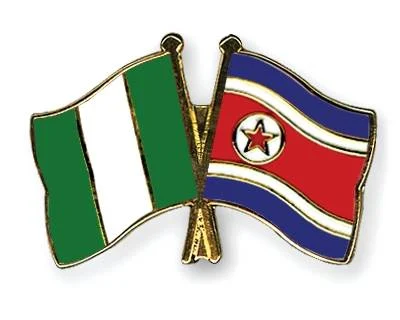
    Nigeria has resumed operations at its embassy in Pyongyang, North Korea, after a closure that began during the global COVID-19 outbreak in 2021.

     This move makes Nigeria one of only two African countries, alongside Egypt, with a diplomatic presence in North Korea.  

    During the embassy’s closure, diplomatic activities between the two nations were managed through Nigeria’s mission in Abuja. 

    The Nigerian envoy, Patrick Imodu Imologhome, recently met with Russia’s ambassador to North Korea to discuss the reopening.  

    North Korea, which had sealed its borders at the start of the pandemic in 2020, only began allowing foreign diplomats back into the country in mid-2023. 

    Despite the challenges, both nations maintained their longstanding ties, established in 1976, through ongoing communications.  

    Nigeria joins a select group of nations with embassies in Pyongyang, reflecting a strategic decision to re-establish its presence in the isolated nation.

  • PRESIDENT TINUBU Appoints Eight New Permanent Secretaries

    PRESIDENT TINUBU Appoints Eight New Permanent Secretaries


    President Bola Ahmed Tinubu has appointed eight permanent secretaries in the federal civil service.

    The move is to create adequate manpower to fill existing and impending vacancies in some states and geopolitical zones. 
     
    A statement by Mr. Bayo Onanuga, the President’s spokesperson said this is the second set of eight permanent secretaries appointed by the president, after those appointed last June.

    He said the states covered by the June appointment were Akwa Ibom, Anambra, Bauchi, Jigawa, Ondo, Zamfara,  South East and South-South. 
     
    In the statement, it was disclosed that the “Office of the Head of the Civil Service of the Federation recommended that the new permanent secretaries be appointed after diligent selection.” 
     
    They  are:
     
    1.        Onwusoro Maduka Ihemelandu (Abia State) 
    2.        Ndiomu Ebiogeh Philip (Bayelsa State) 
    3.        Anuma Ogbonnaya Nlia (Ebonyi State)
    4.        Ogbodo Chinasa Nnam (Enugu State) 
    5.        Kalba Danjuma Usman (Gombe State) 
    6.        Usman Salihu Aminu (Kebbi State) 
    7.        Oyekunle Patience Nwakuso (Rivers State) 
    8.        Nadungu Gagare (Kaduna State) 
     
    Mr. Onanuga said the “President Tinubu urges the new permanent secretaries to demonstrate greater commitment, diligence, and innovation in serving the nation.”

  • Nigeria inflate rate surges higher, hits 34.60%

    The most realistic sign that the Federal Government’s economic policies are not yielding the desired result emerged again today as figures released by the National Bureau of Statistics (NBS) show a relentless rise in the rate of inflation from 33.88% in October to 34.60% in November.

    The Central Bank of Nigeria’s (CBN) in furtherance of efforts to curtail the rise in inflation took the following measures during 298th Monetary Policy Committee (MPC) meeting on November 25–26, 2024.

    Despite these measures which the current management of the CBN had embarked upon since assuming office, the rate of inflation continues to soar, thereby confirming the contrary opinion of analyst who think the apex bank is not only prescribing the wrong medication but has missed the diagnosis.

    Further, the NBS figure indicates that on a year-on-year basis, the Headline inflation rate was 6.40% points higher than the rate recorded in November 2023 (28.20%). This shows that the Headline inflation rate (year-on-year basis) increased in November 2024 compared to the same month in the preceding year (i.e., November 2023).

    It is noteworthy to observe however, that on a month-on-month basis, the “Headline inflation rate in November 2024 was 2.638%, which was 0.002% points lower than the rate recorded in October 2024 (2.640%). This means that in November 2024, the rate of increase in the average price level is slightly lower than the rate of increase in the average price level in October 2024,” it was stated in the report.

    Food inflation after easing at the peak of the harvest period between July and September has spiked, rising, year on year from 39.16% in November 2023 to 39.93% at the end of November 2024.

    Month on month, the rate rose gently from 2.94% at the end of October to 2.98% in November.
    2.98 39.93

    The NBS stated in the report that, “Every month, 10,534 informants spread across the country provide price data for the computation of the CPI. The market items currently comprise 740 goods and services regularly priced.”

  • CBN to Fine Banks Caught Selling Mint Notes to Hawkers N150million

    CBN to Fine Banks Caught Selling Mint Notes to Hawkers N150million

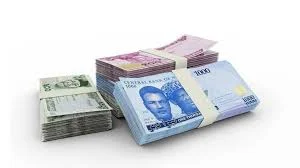
    Concerned about the illegitimate sale of the national currency, the Central Bank of Nigeria (CBN) has introduced a ₦150 million fine on banks caught supplying mint naira notes to street hawkers. 

    This action targets curbing the unauthorized sale of the naira, which has disrupted cash flow and accessibility for citizens.  

    The directive, issued by the Acting Director of Currency Operations, Mohammed Olayemi, outlines that any branch of a Deposit Money Bank (DMB) found guilty will face the penalty, with harsher sanctions for repeated violations under the Banks and Other Financial Institutions Act (BOFIA) 2020.  

    The CBN plans to intensify monitoring by conducting unannounced checks at banking halls and ATMs while deploying undercover agents to identify hawking locations. 

    Banks are also urged to strengthen internal controls to prevent exploitation for illegal cash transactions.  

    This move comes as the apex bank reaffirms the validity of old ₦1000, ₦500, and ₦200 notes following a Supreme Court ruling and warns against hoarding cash. 

    The CBN is determined to ensure proper distribution and discourage illicit practices that hinder access to funds.  

  • FG Allocates N1.727 Trillion to State Governments in November  

    FG Allocates N1.727 Trillion to State Governments in November  

    In November 2024, the Federal Government distributed N1.727 trillion among federal, state, and local governments, sourced from a gross revenue of N3.143 trillion. 

    The allocation was decided during the December meeting of the Federation Account Allocation Committee (FAAC), led by Finance Minister Wale Edun.  

    From the total, the federal government received N581.856 billion, states were allocated N549.792 billion, and local governments got N402.553 billion.

     Additionally, N193.291 billion was set aside for oil-producing states as 13% derivation revenue.  

    The Value Added Tax (VAT) revenue for November stood at N628.972 billion, a drop of N39.318 billion from the previous month. 

    After deductions for collection costs and transfers, N628.973 billion was shared: N87.855 billion went to the federal government, N292.850 billion to states, and N204.995 billion to local councils.  

    Gross statutory revenue climbed to N1.827 trillion, an increase of N490.339 billion from October. 

    Out of this, N455.354 billion was shared among the three tiers, with the federal government receiving N175.690 billion, states N89.113 billion, and local councils N68.702 billion.  

    Revenue from the Electronic Money Transfer Levy (EMTL) totaled N15.046 billion, with federal, state, and local governments receiving N2.257 billion, N7.523 billion, and N5.266 billion, respectively. 

    An exchange rate adjustment also added N671.392 billion to the distributable pool, with allocations spread across the three levels of government.  

    Despite the boost in oil and gas royalties, revenues from other streams like import duties, excise taxes, and electronic transfer levies saw declines.