
President Bola Ahmed Tinubu’s recent travels from the UK to France have sparked public reactions, especially given Nigeria’s current economic situation.
After spending nine days in London, Tinubu is now heading to France for undisclosed engagements.
Many Nigerians have voiced concerns on social media about his continued absence from the country.
Responding to the criticism, the President’s Special Adviser on Information and Strategy, Bayo Onanuga, reacted that Tinubu has the right to travel for personal reasons and official business, as his two-week leave allows him the freedom to move as he chooses.
Onanuga in a post in his X handle wrote: “President Tinubu is on leave for two weeks.
He is not restricted to the UK.“It is his private time. He can go anywhere he so desires.“He is still observing his leave.”
Vice President Kashim Shettima has declared that every child must have access to quality education, equitable healthcare must be the norm, and our workforce must be equipped with the skills necessary to thrive in the 21st-century economy.
He made this statement on Saturday ehile launching the Nasarawa State Human Capital Development (HCD) Strategy Document and Gender Transformative Human Capital Development Policy Framework at the Aliyu Akwe Doma Banquet Hall, Lafia.
Senator Shettima emphasized the urgent need for targeted interventions to improve educational outcomes and healthcare access in Nasarawa State.
He pointed out the alarming rates of out-of-school children and the high maternal and infant mortality rates, stating that Nasarawa Sate cannot afford to overlook these pressing issues.
“The future of our nation depends on the quality of education and healthcare we provide today.
We must work together to ensure that our children are not left behind,” he asserted.
The VeePee called for a collaborative effort among government agencies, private sector partners, and civil society to implement effective solutions.
The Vice President also highlighted the importance of equipping the workforce with relevant skills, noting that education should align with the demands of the modern economy.
He urged the state government to focus on vocational training and skill development to enhance employability and reduce unemployment among the youth.
Shettima commended Nasarawa State for its commitment to the HCD programme, emphasizing that successful implementation requires adequate budgetary allocations, particularly in education.
He noted that Nasarawa’s allocation of over 15% of its budget to education exceeds international benchmarks, showcasing a significant step toward achieving these goals.
As the state moves forward with its Human Capital Development initiatives, Shettima reiterated the importance of partnerships and collaboration in achieving sustainable progress.
“Together, we can create a future where every child has the opportunity to succeed and every citizen has access to the services they need,” he concluded.
While Nigerians battle excruciating hardship caused by government economic policies, President Bola Tinubu, after spending nine days in London, proceeds to Paris, France.
Tinubu initially traveled to London for a two-week break, as stated by his media team, marking his first official leave since taking office in May 2023.
The vacation was described as a period for both rest and reflection on his administration’s economic strategies.
A close associate, Ibrahim Kabir Masari, who visited the President in London, announced they would be traveling together to France.
Although the specific purpose of this trip is yet to be disclosed, Tinubu is expected to return to Nigeria after the engagement in France.
It remains uncertain if the President informed the National Assembly about his vacation, as required by the constitution.
Says Nigerians suffering, bad advisers sabotaging govt
The senator representing Borno South in the National Assembly, Mohammed Ali Ndume, has raised the alarm, saying certain fifth columnists working hard to sabotage the administration of President Bola Ahmed Tinubu.
Ndume said the astronomical increase in the prices of fuel, food, essential goods and services is becoming unaffordable to average Nigerians and the poor that form the majority
In a statement made available to newsmen in Abuja, Ndume said the bad elements are trying hard to pitch the people against the administration of President Tinubu by pushing for harsh reforms and bad policies instead of controlling inflation and exchange rate that are making life unbearable for Nigerians.
The ranking senator said those who are bent on making the President look bad will stop at nothing in inflicting pains on Nigerians through the “so-called reforms until things get out of hand and the blame will be on President Tinubu.”
While advising the administration of President Tinubu, Ndume said many families can barely meet up with daily demands in their houses as a result of the hyperinflation caused by incessant increase in the price of essential goods and services.
Ndume said: “I personally believe President Bola Ahmed Tinubu means well for Nigeria and Nigerians. I know this because I know what he stands for. But some of his advisers who don’t mean well for the people of this country give him wrong advise.
“I’m appealing to him to resist these bad people who want to pitch the people against his administration. The hardship these people are inflicting on Nigerians is becoming unbearable. I’m currently in Borno, and I know what I’m talking about. People are really suffering, hungry, frustrated and angry.
“In Borno State here, many families can’t even feed anymore. The untold hardship of these frequent increases in the prices is unimaginable. Farmers can not even move their farm products anymore because of the high cost of transportation.
“Those who can still do this add the cost of transportation to the prices of food items they sell, and that’s why many people can’t feed again. People can’t travel anymore. To travel by road from Abuja to Maiduguri, for instance, is a fortune. How many of our people can afford that?
“I know that President Tinubu means well for Nigerians, and therefore he should not stay back and allow a few bad advisers to destroy this country. That’s why I’m begging him to do something before it is too late. It is not good to test the patience of Nigerians, and that’s exactly what these bad advisers are doing.
“As soon as the President returns to Nigeria, I urge him to look into these issues and address them urgently. The purchasing power of Nigerians is too poor, and they can’t afford the things that are being pushed on them every day by enemies of state.”
It is D-day in Nasarawa State today as the Vice President, His Excellency Senator Kashim Shettima launches the Nasarawa State Human Capital Development Strategy Document in Lafia, the state capital.
A release from the focal Nasarawa State Human Capital Development Agency (HCDA) indicates the overarching focus of the strategy as “accelerating growth and development.”
The occasion shall also feature the launch of the Nasarawa state Gender Transformative Human Capital Development policy framework.
Human Capital Development was adopted as a development strategy by the National Economic Council in 2018. The aim was to address poverty and ensure sustainable economic growth.
” Nigeria’s Human Capital Development program (HCD 1.0) set clear targets and commitments for investment priorities, accelerating investments in human capital, and expanding stakeholder support to drive outcomes in Health, Education, and Labour Force participation in line with the UN Sustainable Development Goals 2030.”
With a population of about 215million, expected to double to 400million by 2050, the human capital, apart from a huge reserve of oil and gas, which is a finite resource, is Nigeria’s most sustainable development resource.
A huge population alone is however, not enough. Age and educational attainment are two critical attributes required to make the population amenable to development needs.
Consequently, the World Bank Human Capital Project defines human capital “as a combination of the knowledge, skills, and health people accumulate throughout their lives that enables them to realise their potential as productive members of society.”
It is therefore the position of the NEC that, “For Nigeria to unlock its ‘demographic dividend’ and tap into the economic potential of its working age citizens, the country will need to first enhance its investment in its people – particularly women and children.”
It argues that, “Over the past decade, many of the key metrics relating to Human Capital Development (HCD) in Nigeria have been going in the wrong direction.
Nigeria’s performance across all major global HCD indices, including the United Nations Human Capital Index, the Institute of Health Metrics and Evaluation (IHME) Expected Human Capital Index, and the World Bank Human Capital Index, is below the global average, as well as below the average for developing economies in sub-Saharan Africa (SSA),” the NEC, Nigeria’s apex economic policy body posited.
According to a statement by Habiba Balarabe Suleiman, the Director General, Nasarawa State HCDA, successful implementation of the state HCD Strategic Plan 2024-2030 “is pivotal to the socioeconomic growth and sustainable development of Nasarawa state.”
The launch of the HCD Strategy Document and Nasarawa state Gender Transformative Human Capital Development policy framework by the Vice President opens a new vista in the development aspiration of the state and a benchmark for peer review by other sub-nationals.
The federal government is introducing a new curriculum for Basic and Senior Secondary Education in Nigeria, aiming to ensure that every student graduates with at least two practical skills.
This update, announced during the 68th National Council on Education (NEC) meeting in Abuja, aligns with the government’s plan to integrate skills, knowledge, and values into the education system.
The focus is on equipping students with skills that align with the country’s economic needs, enabling them to lead productive lives post-graduation.
This curriculum reform is part of the Education Transformation Agenda, aimed at revamping the education sector to promote quality learning, accessibility, and equity.
The government has also committed to upholding international agreements and protocols to safeguard educational facilities and learners from attacks.
Furthermore, it emphasized the need for incorporating digital technology and entrepreneurship in education to foster national development.
Officials highlighted that the current global trends demand an education system that adapts to technological changes, ensuring relevance to societal needs and growth.
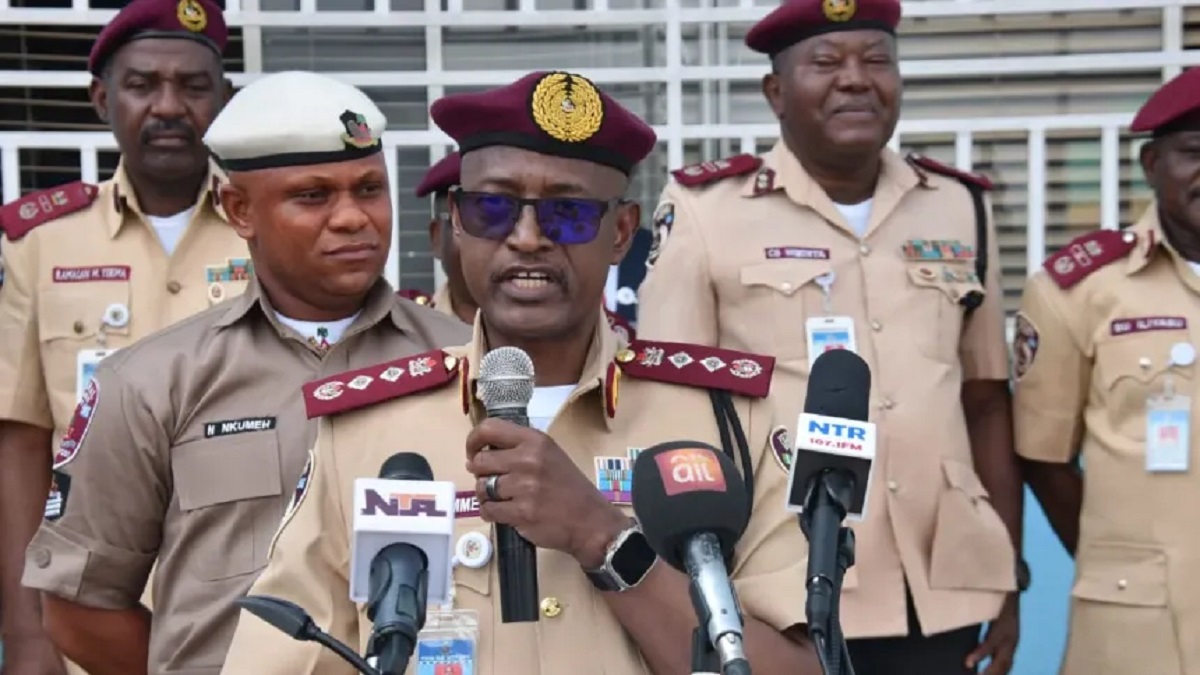
The House of Representatives has moved forward with a bill aiming to establish a special armed squad within the Federal Road Safety Corps (FRSC).
The proposed amendment to the FRSC Act of 2007, sponsored by lawmakers Abiodun Derin Adesida and Olaide Lateef Muhammed, passed its second reading.
It seeks to grant FRSC officials greater authority in road traffic management and safety, including clearing road obstructions and educating the public on proper road use.
The bill also proposed enhanced benefits for FRSC officers holding the rank of Deputy Corp Marshal, covering retirement packages and related privileges.
Additionally, the legislation would give the FRSC exclusive control over road traffic administration and safety management.
In a related development, the House approved a motion by Garba Ibrahim Muhammad, encouraging the FRSC to integrate more technology into its operations.
The motion recommended the use of automated traffic enforcement systems and advanced analytics to enhance traffic safety and efficiency.
The matter has been forwarded to the House Committee on FRSC for further review.
The National Drug Law Enforcement Agency (NDLEA) has revised its visa clearance process by removing the requirement for married women to provide approval letters from their husbands.
This regulation previously led to widespread criticism, with many condemning it as discriminatory and outdated.
The agency explained that the decision is part of an ongoing overhaul of its visa clearance procedures.
The controversial spousal approval rule, initially included due to specific issues in some source countries, has now been discarded.
NDLEA assured the public that further updates on the revised procedure will be made available soon.
The Court of Appeal in Abuja has moved the hearing for the Indigenous People of Biafra (IPOB) appeal to October 31.
This appeal challenges the group’s proscription as a terrorist organization by the Federal Government.
The three-judge panel postponed the session to allow both sides time to submit and exchange all necessary documents.
IPOB’s leader, Nnamdi Kanu, who is currently detained, has applied to join the appeal as an interested party.
The appeal targets the 2017 ruling by the late Justice Abdul Abdu-Kafarati of the Federal High Court, which banned IPOB’s activities across Nigeria.
The proscription followed an ex-parte motion filed by the Attorney General of the Federation (AGF) and Minister of Justice, Abubakar Malami, on behalf of the Federal Government.
In its appeal, IPOB argued that the court’s ruling was unjust and based on incorrect information.
The group insisted that it operates within the law and that its actions are in line with its constitutional rights to self-determination.
It claims that its protests have been peaceful, involving non-violent demonstrations such as marches with placards.
IPOB also highlighted the lack of evidence showing it has engaged in any form of violence.
The group further criticized the original ruling, alleging that the AGF failed to provide accurate information during the 2017 court session, which led to a biased judgment.
IPOB’s appeal called for the appellate court to dismiss the proscription order, arguing that the high court misinterpreted its activities and failed to acknowledge its peaceful nature.
The court instructed all parties involved to ensure that all legal processes are filed and exchanged before the scheduled hearing date.
The Federal High Court in Abuja has officially recognized Julius Abure as the legitimate Chairman of the Labour Party.
This decision, delivered by Justice Emeka Nwite, reinforces the leadership structure established during the party’s national convention in Nnewi in March 2024.
The court’s directive mandates that the Independent National Electoral Commission (INEC) accept Abure’s chairmanship, contradicting its previous assertion that his leadership lacked legal validity.
INEC had contended that the Labour Party’s convention breached the Nigerian Constitution and the Electoral Act, claiming that proper legal protocols were not followed.
The current decision of the court however, further conflicts the relationship between Mr. Abure and His Excellency Peter Obi, the party’s presidential candidate in the 2023 national election.