
The Supreme Court has reserved its judgment on a significant legal challenge brought by 16 state governments against the constitutionality of the laws that establish the Economic and Financial Crimes Commission (EFCC).
The case, presided over by Justice Uwani Abba-Aji and a seven-member panel of justices, reached this phase on Tuesday after extensive arguments from the involved parties’ attorneys.
Originally initiated by the Kogi State Government through its Attorney General and Commissioner for Justice, the suit has seen multiple states join as co-plaintiffs.
The states involved in the suit, marked SC/CV/178/2023, include Ondo, Edo, Oyo, Ogun, Nasarawa, Kebbi, Katsina, Sokoto, Jigawa, Enugu, Benue, Anambra, Plateau, Cross-River, and Niger.
In a turn of events, the Attorneys General of Anambra, Adamawa, and Ebonyi have withdrawn from the case, with the Supreme Court panel granting their request.
The suit addresses critical questions about the federal scope of anti-corruption enforcement, challenging the legal foundation of the EFCC’s establishment under current laws.
The decision of the Supreme Court will be keenly awaited, as it holds substantial implications for federal and state powers in the governance and administration of justice.
The Anambra State Government announced on Tuesday its decision to withdraw from a legal suit challenging the legality of the Economic and Financial Crimes Commission (EFCC).
This lawsuit, initially filed by the Kogi State Government, seeks to declare the operations of the EFCC, the Nigerian Financial Intelligence Unit (NFIU) and the Independent Corrupt Practices Commission (ICPC) as unconstitutional.
Through a notice dated October 20, Anambra’s Attorney General, Prof. Sylvia Ifemeje, informed the Supreme Court of the state’s decision to step back from the case.
Meanwhile, Osun State, represented by its Attorney General, Mr. Oluwole Bada, sought to join the suit and consolidate its own grievances against the EFCC with those of Kogi State. Osun State is pursuing similar reliefs, seeking to challenge the EFCC’s authority.
At Tuesday’s hearing, a seven-member panel of the Supreme Court, led by Justice Uwani Abba-Aji, also noted the absence of Sokoto State, which had previously been a co-plaintiff but did not send a legal representative.
Other states present in the case include Kogi, Kebbi, Katsina, Jigawa, Oyo, Benue, Plateau, Cross River, Ondo, Niger, Edo, Bauchi, Adamawa, Taraba, Ebonyi, Imo, and Nasarawa.
Representing the federal government, Attorney General of the Federation and Minister of Justice, Prince Lateef Fagbemi, SAN, did not oppose Anambra’s request to withdraw from the case.
The case stems from a collective legal action by 16 states against the EFCC, arguing that the anti-graft agency was not constitutionally established by the administration of former President Olusegun Obasanjo.
The states claim that section 12 of the 1999 Constitution was violated, as the EFCC Act, passed by the National Assembly in 2002 and later amended in 2004, did not receive the required approval from a majority of state Houses of Assembly.
The plaintiffs assert that the EFCC’s establishment under the United Nations Convention Against Corruption did not comply with constitutional requirements, rendering its operations illegal in states that did not consent to the law. They argue that, based on the supremacy of the 1999 Constitution, any act inconsistent with it should be considered null and void.
Kogi State, in its submissions to the Supreme Court, raised six key issues and sought nine major reliefs. Among them is a request for a declaration that the EFCC, the Nigerian Financial Intelligence Unit (NFIU), or any other federal agency does not have the power to investigate or manage funds belonging to Kogi State or its local government areas without state consent. Kogi also contends that federal agencies lack the authority to issue directives regarding the administration of state funds.
Abdulfatah Ahmed, former Kwara Governor, was on Monday re-arraigned alongside his finance commissioner, Ademola Banu, on a 14-count charge for alleged stealing and mismanagement of N5.78 billion of state funds.
The duo were arraigned before Justice Mahmud Abdulgafar of the Kwara State High Court sitting in Ilorin.
The Ilorin Zonal Directorate of the Economic and Financial Crimes Commission, EFCC, brought them before the current judge following the transfer of the former trial judge, Justice Evelyn Anyadike of the Federal High Court sitting in Ilorin.
Mr. Dele Oyewole, Head of Media and Publicity of the anti-graft agency, said in a statement on Monday that the duo were first arraigned on a 12-count charge of mismanagement of public funds before Justice Anyadike on April 29, 2024, to which they pleaded not guilty.
Media reports stated that Mr. Ahmed and his finance commissioner were accused of conspiring to steal funds of the Kwara State Universal Basic Education Board.
After a formal presentation of the case before the trial judge by counsel to the EFCC, Rotimi Jacobs, SAN, and concurrence by the lead counsel to the defendants, Kamaldeen Ajibade, SAN and Gboyega Oyewole, SAN, the duo pleaded not guilty.
Subsequently, the defence counsel sought the leave of the court to move oral applications for the bail of the defendants.
They told the court that the case had started since 2019 and the defendants were granted administrative bail by the Commission, which they had never jumped.
They urged the court to exercise its discretion and admit the defendants to bail as all the offences levelled against them are bailable.
Ruling on the applications, Justice Abdulgafar admitted Abdulfatah and Banu to bail in the sum of N100 million, with two sureties each. One of the sureties must be a Permanent Secretary, serving or retired.
The case was adjourned till December 4 – 5, 2024, for commencement of trial.
President Bola Tinubu has resumed duties at the Aso Rock Presidential Villa, Abuja.
Pictures released from the State House Monday showed the President at his desk receiving a briefing from the Chairman of the Federal Inland Revenue Service, Mr Zacch Adedeji.
It read, “President Bola Tinubu at his desk this morning, after returning from a two-week vacation.
Mr President received a briefing from Zaccheus Adedeji, Chairman, Federal Inland Revenue Service. Abuja, Monday, October 21, 2024.”
Tinubu arrived in Abuja, on Saturday, after a two-week working vacation in the United Kingdom and France.
The President departed Abuja on Wednesday, October 2, a statement issued by his Special Adviser on Information and Strategy, Bayo Onanuga, revealed.
Onanuga said, “President Bola Tinubu will depart Abuja today for the United Kingdom to begin a two-week vacation, part of his yearly leave.“
He will use the two weeks as a working vacation and a retreat to reflect on his administration’s economic reforms.“He will return to the country after the leave expires,” the statement said.
On October 11, President Tinubu left the UK for Paris in France for “an important engagement,” his Senior Special Assistant on Political and Other Matters, Ibrahim Masari, disclosed in a tweet that Friday.
He returns amid concerns over delays in the presentation of the 2025 appropriation bill.
The Nigerian Army has stated that the absence of the Chief of Army Staff, Lt. Gen. Taoreed Lagbaja, has not created any leadership vacuum within the service.
The Army explained that Lagbaja is on official leave, and necessary protocols have been put in place for the Chief of Policy and Plans (Army), Major General Abdulsalami Ibrahim, to act on behalf of the COAS during his absence.
In a statement on Saturday, the Director of Army Public Relations, Maj. Gen. Onyema Nwachukwu, emphasised that Lagbaja’s absence is not affecting the operations of the service.
He said, “There have even been insinuations that there is a leadership vacuum, with officers confused about what to do. Nothing could be further from the truth.
“To be very clear, the Nigerian Army is a highly structured establishment with well-laid-out procedures and processes for dealing with different circumstances. Before proceeding on leave, necessary protocols were put in place for the Chief of Policy and Plans (Army), Major General Abdulsalami Bagudu Ibrahim, to act on behalf of the COAS while he was away.
“This is not peculiar to the NA, as there have been instances where unforeseen human frailty kept service chiefs away for about three months, and their Chiefs of Policy and Plans held sway in their absence. Claims of a leadership vacuum in the NA at present are therefore mere speculation, as all routine and scheduled activities of the service are on course.”
Explaining that promotions for officers have not been stalled by the COAS’s absence, Onyema added that the results of the Captain-to-Major promotion exam had been released following the approval of the Chief of Policy and Plans.
He said, “Indeed, in line with its Forecast of Events for 2024, the Nigerian Army recently conducted the Captain-to-Major Practical Promotion Examination in Akure. Subsequently, and in line with extant procedures, the Commander of Training and Doctrine Command, Major General Kevin Aligbe, announced the results after due authorisation by the Chief of Policy and Plans (Army), who currently represents the Chief of Army Staff during his absence on leave and medical check-up abroad. Additionally, the Master Warrant Officer to Army Warrant Officer Promotion Exercise is currently ongoing in Jos.
“This follows a similar exercise held for Warrant Officer to Master Warrant Officer (WO-MWO) in Kaduna. The results of these exercises are expected to be released in the coming days, pending final reconciliation between the respective Corps and the Army Headquarters Department of Personnel Management.”
Also, contrary to the insinuation that the COAS’s absence due to his leave has caused undue delays in the release of the WO-MWO promotion exercise results, Onyema clarified that it has never been the practice for the COAS to personally sign postings or promotions for officers and soldiers in the Nigerian Army.
“The appropriate departmental chiefs perform these functions routinely.
These Departmental Chiefs, demonstrating their unwavering commitment, are fully carrying out their responsibilities in line with the COAS Command Philosophy.
“The Army Headquarters, therefore, enjoins the general public to remain confident in the NA and be assured that the service remains on top of the security situation in the country and is ever ready to defend Nigeria against any aggression on its land territory,” he added.
President Bola Tinubu has returned to the country after weeks of annual leave in London, United Kingdom and Paris, France.
Presidential aide Dada Olusegun wrote on his X (Twitter) account on Saturday: “Welcome home Mr President.
“The eagle has landed.”
Tinubu arrived at the Nnamdi Azikiwe International Airport, Abuja, this (Saturday) evening after his working leave.
Daily Trust reports that the President was received on arrival, among others, by the Lagos State Governor, Babajide Sanwo-Olu; Chief of Staff to the President, Femi Gbajabiamila; Ministers, including Wale Edun (Finance), Abubakar Atiku Bagudu (Budget and Economic Planning), Nuhu Ribadu (National Security Adviser), and Abdullahi Ganduhe (National Chairman of the ruling All Progressives Congress (APC).
Although the presidency announced that Tinubu’s overseas trip would last for two weeks, checks by Daily Trust showed that he spent extra days.
On the day Tinubu was supposed to return, Vice-President Kashim Shettima proceeded on a 2-day trip to Sweden.
The Presidency however, insisted that there was no vacancy in leadershop.
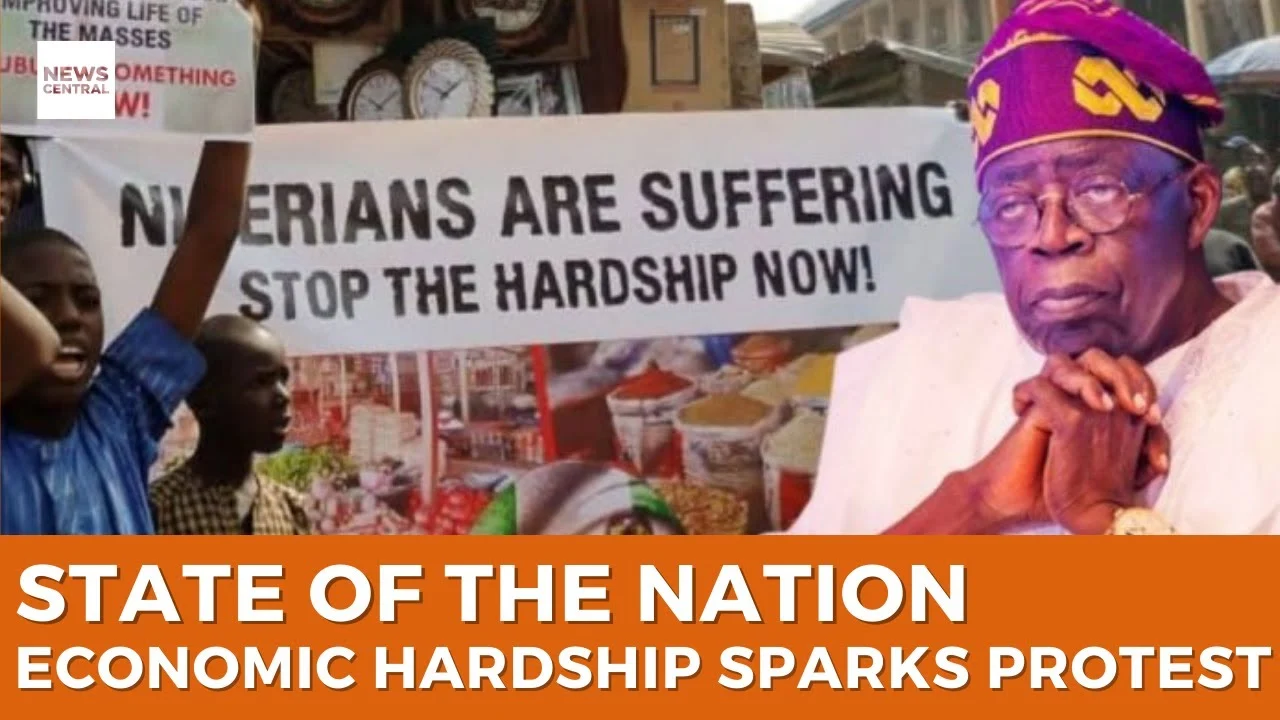
The Governor of Bauchi State, Bala Mohammed, has criticised the policies of the Federal Government, which have led to increased hardship in the country.
Speaking at the launch of the Nigeria Development Update report by the World Bank in Abuja on Thursday, he said that the economic policies of the President Bola Tinubu-led administration were not yielding the desired results.
Mohammed also said that the revenues available to state governments are not enough to address the challenges in states.
He said, “We should go back to the basics. Nigerians are not enjoying the regime at this time across board, not only the federal government, including the state and local governments.
Therefore, the onus rests on you, the finance and the managers of the economy.
“We need to come up with a budget programme with economic policies that will reduce hardship. The money that we are sharing is not enough.
The report spoke about employment, wages, and how many per cent of Nigerians are even employed. Most of our people live in the informal sector; we should look at how we can make them self-employed.
“The purchasing power has dwindled, these policies are not working and you know that.”
While introducing the new report, Alex Sienaert, lead economist of the World Bank in Nigeria, said that to achieve the desired growth in the nation’s economy, the recently introduced macroeconomic stabilisation reforms should be backed up by creating productive jobs.
Also, the World Bank Country Director for Nigeria, Dr. Ndiame Diop, said that while the reforms may be challenging, they are crucial for the nation’s long-term stability.
He added that opposing or reversing these reforms would be detrimental to the development of the country.
The Nigerian House of Representatives has urged the Federal Government to reconsider the recent hike in fuel and cooking gas prices, citing concerns over rising economic challenges faced by citizens.
This call comes after a meeting between government officials and labor unions on the matter ended without resolution.
Petrol prices in major cities like Abuja and Lagos saw significant increases, which led to higher transportation and food costs.
Lawmakers stressed the need for immediate action, warning that the continued price hike could worsen inflation and put further strain on the livelihoods of ordinary Nigerians.
The House highlighted the need for swift intervention, emphasizing the burden placed on small businesses and households due to escalating fuel costs.
They also called for urgent repairs of domestic refineries to reduce dependence on imported petroleum products.
As the government and labour unions continue discussions, many Nigerians await relief from the rising costs.
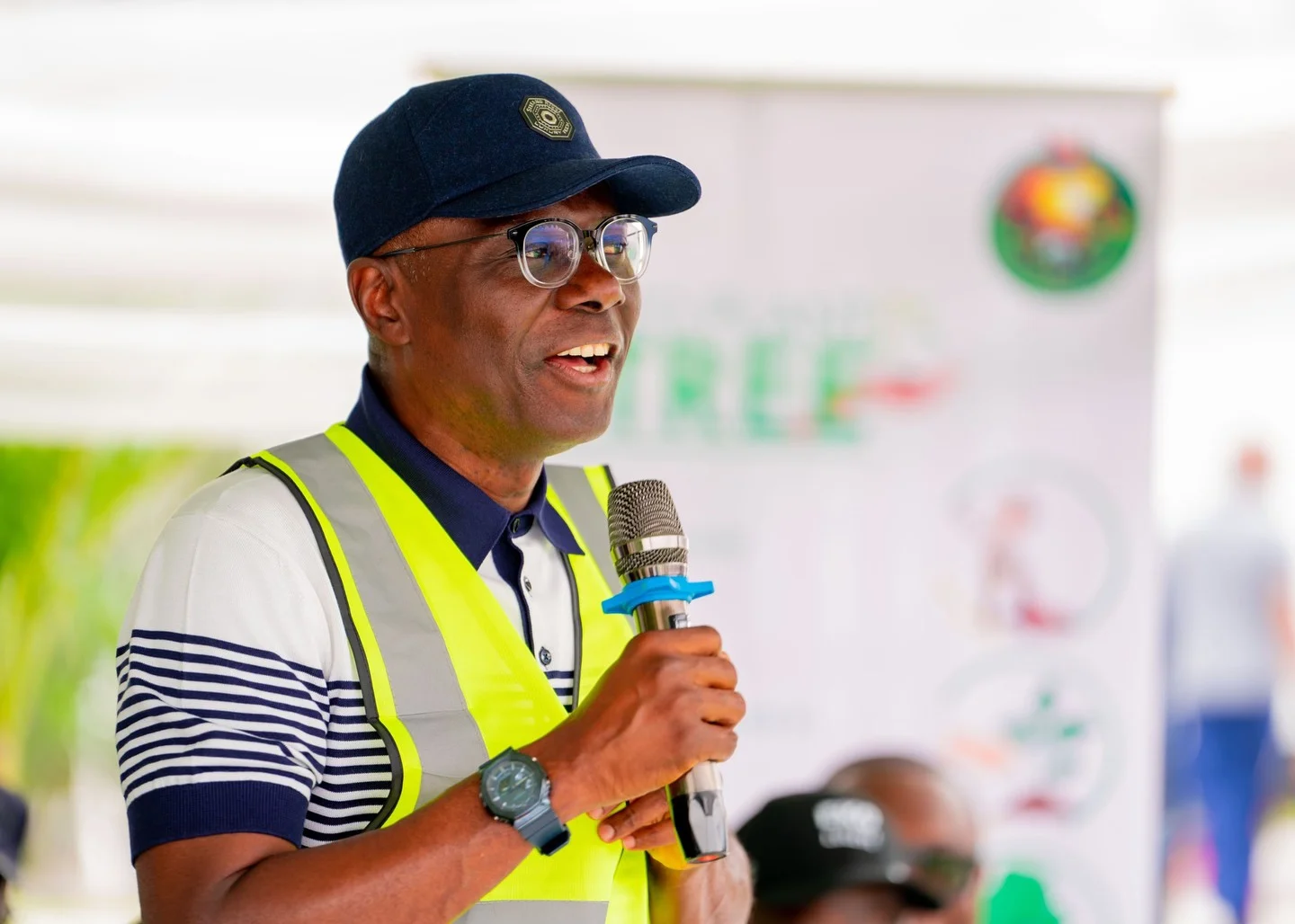
The governor of Lagos state, Babajide Sanwoolu has approved N85,000 as minimum wage for civil servants in the state.
This is in line with the federal government’s approval of N70,000 as minimum wage in Nigeria.
Governor Sanwoolu made this announcement on Channels TV last night in an interview session.
This move comes as a great relief to workers with the Lagos state government as it goes a long way to ameliorate the current spiraling inflation and cost of living crisis.
While announcing the new wage, the governor cautioned that this should not be misconstrued as competing with any state government but a reflection of the socioeconomic realities of Lagos state.
In further update of a burgeoning governance superstructure, the Senate today confirms the appointment of 21 federal commissioners for the Revenue Mobilization Allocation and Fiscal Commission.
The Commission is an agency of the federal government presiding over the sharing of oil proceeds and other revenue of the government.
It has the responsibility of also deciding the remuneration of the president and other political office holders.
The new commissioners whose appointments were ratified by the senate are: