
Category: Governance

  • NLC demands probe of UBA Fire, market Infernos

    NLC demands probe of UBA Fire, market Infernos

    Insists that the fires are totally not accidents of fate

    The Nigeria Labour Congress (NLC) has demanded an independent probe into the recent United Bank for Africa (UBA) fire and other infernos on Lagos Island.

    This is according to a statement signed by the Acting President of NLC, Prince Adewale Adeyanju,  on Thursday in Abuja.

    It would be recalled that on Sept. 16, no fewer than  six people died in the UBA Afriland Building blaze, while several others sustained injuries and remain hospitalised.

    “Our grief is worsened by the fresh memory of another devastating fire that consumed shops and warehouses in the same axis, destroying livelihoods and goods valued in billions of Naira.

    “These fires are totally not accidents of fate. They are products of systemic rot, institutional negligence,, and disregard for safety rules which expose citizens to needless deaths and losses,” it said.

    The NLC said that the sight of workers jumping out of windows to escape the UBA fire was disheartening.

    “Were there safety precautions in the building design? Were workers trained? Where were crisis management teams?” the statement asked.

    The congress also expressed concern over recurring market fires in Lagos, calling them an annual ritual that should have been addressed with adequate safeguards.

    It added that every society was judged by how it safeguarded citizens.

    “In Lagos, we see the opposite fires without water, collapsing buildings without rescue, citizens without emergency response.

    “Why do emergency agencies continue to budget billions annually yet arrive unprepared in moments of crisis?.

    “Why are corporate institutions allowed to compromise safety standards without accountability?” it asked.

    The NLC,  therefore, demanded the investigation of the fires, compensation for victims, mandatory safety enforcement, and adequate funding for emergency services.

    “No worker should leave home for work and end up in the morgue because of preventable disasters,” it said.

    The NLC also warned against reducing the tragedies to mere statistics.

    “The blood of the workers cries out for justice,” the statement said.

    The NLC commended NEMA for issuing flood warnings but urged proactive evacuations and long-term solutions to annual flooding linked to water releases from Cameroon.

    It called on Nigerians to resist normalising tragedies.

    “We must demand institutions that work, safety that is guaranteed, and governance that protects, not abandons,” the NLC stated.

  • PENCOM inaugurates leadership council to shore up coverage gaps

    PENCOM inaugurates leadership council to shore up coverage gaps

    The National Pension Commission (PENCOM) has unveiled the Pension Industry Leadership Council (PILC), a multi-stakeholder consultative body aimed to foster synergy between the regulator and industry operators.

    Performing the unveiling ceremony on Thursday in Abuja, the Director General of PENCOM, Omolola Oloworaran says the body shall address persistent challenges plaguing the sector as well as expanding pension coverage.

    Oloworaran said PILC’s core mandates include expanding pension coverage, enforcing governance standards, and driving innovation across the industry to safeguard contributors’ interests.

    The PenCom DG also unveiled what they called Pension Revolution 2.0, which is a set of reforms championed by President Bola Tinubu.

    The initiative introduces a minimum pension guarantee and healthcare coverage for retirees, described as unprecedented in Nigeria’s pension history.

    She assured stakeholders that PenCom is working with government partners on new investment instruments and revised regulations to hedge against inflation and currency depreciation.

    Oloworaran added that contributors’ Retirement Savings Accounts would retain long-term value under the new measures.

    She explained that pension funds would be increasingly deployed into infrastructure, agriculture, affordable housing, and capital markets to spur jobs and growth without compromising safety.

    According to her, pensions are expected to serve as a pillar of social protection, inclusion, and sustainable economic growth in Nigeria.

    Oloworaran disclosed that significant progress had been made on the N758 billion bond, noting that government efforts are ongoing.

    She also urged the media to champion advocacy for better retirement planning in the country. 

  • Nigeria-UK trade hit all-time-high at N16trn

    Nigeria-UK trade hit all-time-high at N16trn

    British High Commissioner to Nigeria, Richard Montgomery, says the trade value between Nigeria and Britain, which currently stands at 7.9 billion pounds (16 trillion naira) has hit an unprecedented level.

    Montgomery made this known in an interview with the News Agency of Nigeria (NAN) on Wednesday in Abuja.

    He lauded the UK-Nigeria Enhanced Trade and Investment Partnership (ETIP) which he said boosts trade relations by removing non-tariff trade and investment barriers to foster cooperation in priority sectors.

    According to him, the ETIP, which also promotes collaboration with the Developing Countries Trading Scheme (DCTS), would scale the trade value by providing generous trading terms and tariff reductions on Nigerian products. 

    “So I’m really delighted at our most recent trade figures. The 7.9 billion pounds or 16 trillion Naira trade is the highest that it’s ever been between the UK and Nigeria. And so it’s a very positive trajectory.

    “The enhanced Trade and Investment Partnership (ETIP) is exciting because it’s a mutually agreed set of sectors and issues on which the UK and Nigeria government are going to work on.

    “It’s happening under the umbrella of our respective ministers, the federal minister of industry, investment and trade, and the UK business and trade minister,” he said.

    He added: “The exciting thing about ETIP is, and you’ve used the word leverage, that’s precisely right.

    “It identifies through mutual agreement the areas that the UK feels it has a comparative advantage in and the areas that Nigeria wants to create more economic opportunities in.”

    Montgomery said the UK was not competitive in all sectors, but has major advantages in various sectors, including the financial services, new technology, financial technology, artificial intelligence and other digital platforms.

    The British envoy said that in the creative economy, his country has some advanced manufacturing and advanced energy solutions, which are worth looking at, and credible in the Nigerian context.

    He said the UK was doing a lot in higher education investments in the Nigerian education sector, as well as in the agricultural sector to boost Nigeria’s agricultural exports, considering its high potential.

    “So, the ETIP identifies these priorities and we have ways of following up in each sector with the businesses and the government agencies on both sides that can unlock more investment and growth.

    “The aim is mutual growth, it’s creating jobs in both our countries, and that’s why it’s really important that we realise that ETIP is mutually agreed and negotiated, it’s in both our interests,” he added.

  • Unpaid benefits: Pensioners threaten nationwide ‘naked protest’

    Unpaid benefits: Pensioners threaten nationwide ‘naked protest’

    The Coalition of Federal Pensioners of Nigeria has threatened a nationwide naked protest on Oct. 6 if government fails to implement pension increments and palliatives.

    The coalition’s National Chairman, Mr Mukaila Ogunbote, announced this during a news conference on Tuesday in Lagos.

    Ogunbote, who also chairs the Nigeria Union of Pensioners, NIPOST Chapter, said pensioners had given government until September to settle arrears, increments and palliatives.

    He warned that failure to act would leave the pensioners with no choice but to embark on a nationwide naked protest on Oct. 6.

    According to him, the protest would symbolically expose government failures and highlight pensioners’ grievances before the public.

    Ogunbote recalled that in October 2023, President Bola Tinubu approved N35,000 for workers and N25,000 for pensioners as palliatives.

    He said workers received their payment within one month of approval, yet pensioners were still waiting for theirs nearly a year later.

    Ogunbote noted that workers had since demanded and received additional palliatives for ten months, while pensioners’ requests for six months’ worth remained unmet.

    He said President Tinubu had also directed an increase of N13,000 in pensions, but no implementation had followed from the Ministry of Finance or the Accountant-General.

    “When we enquired, we were told our N32,000 increment was omitted from both the 2024 and 2025 budgets. This is injustice,” Ogunbote declared.

    Mr Fashola Oluwo, a retiree from the Federal Ministry of Information, urged questioning of officials who failed to implement the President’s directive.

    Oluwo lamented that pensioners still struggled in spite of the increment being inadequate for the rising cost of living in Nigeria.

    He said many retirees could not afford essential medication, while some had died waiting for their pension increases.

    Another pensioner, Mrs Dupe Ogunniyi of FRCN, appealed to the First Lady to intervene with the President on behalf of retirees.

    She said many pensioners were supporting unemployed graduate children and relied solely on their pensions for survival.

    Mr Adebola Akinduture, former Chairman of the Lagos NUP, stressed that hunger was the central grievance of the retirees.

    “We are hungry. Food is medicine, yet without it, medicine is meaningless. Pensioners are starving,” Akinduture said.

    He vowed that pensioners would take to the streets naked on Oct. 6 if government ignored their demands. 

  • Sen Tinubu launches N925m national women empowerment scheme

    Sen Tinubu launches N925m national women empowerment scheme

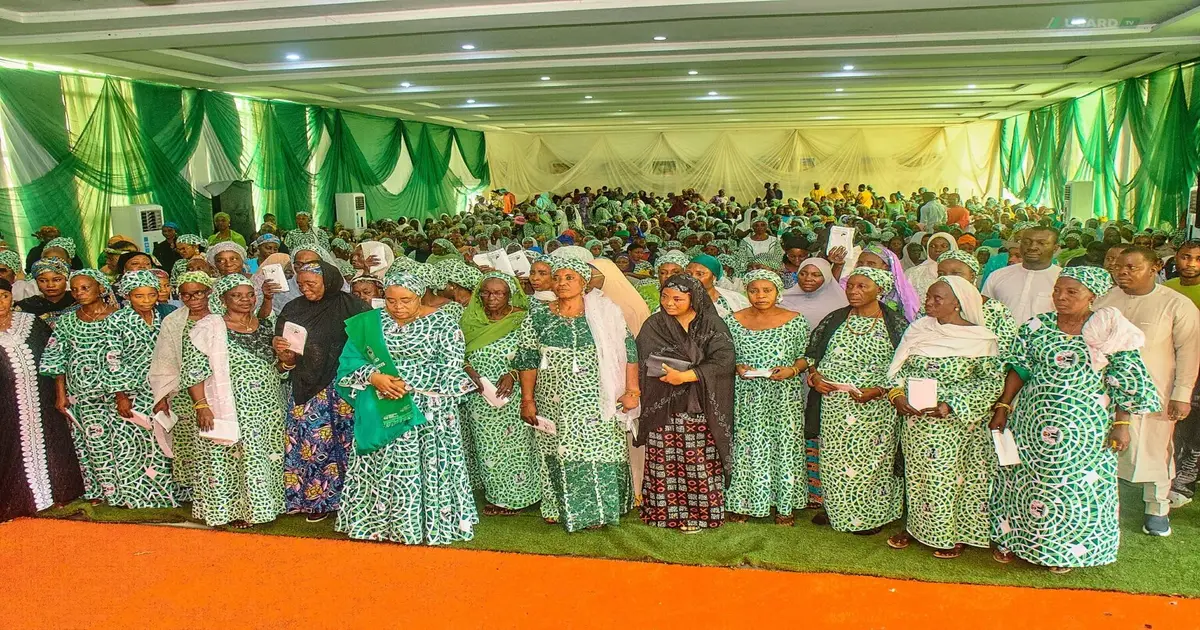
    The First Lady, Sen  Oluremi Tinubu has flagged off a N925million empowerment scheme targeted at 18,500 women nationwide.

    The empowerment scheme shall be executed as joint programme of her Renewed Hope Initiative (RHI), in partnership with the Tony Elumelu Foundation.

    Senator Tinubu inaugurated the disbursement on Thursday at Government House, Lokoja and said the scheme was aimed at boosting economic growth and supporting women entrepreneurs across the country.

    Represented by the wife of Kogi state Governor, Hajia Sefinat Ododo, she explained that the initiative targets 18,500 women nationwide, with 500 beneficiaries in each state, including the FCT.

    She said 500 Kogi women would each receive N50,000 grants to strengthen their small businesses and improve their economic stability.

    According to her, the programme was designed to support hardworking women traders and entrepreneurs who sustain their families while uplifting their communities.

    Tinubu stressed that empowering women was vital to achieving the Sustainable Development Goals, particularly SDG-5 on gender equality and SDG-8 on decent work and economic growth.

    The initiative was made possible through a N1 billion donation by the Tony Elumelu Foundation to the Renewed Hope Initiative.

    The First Lady added that the scheme underscored RHI’s commitment to promoting women’s economic independence and strengthening households, communities and the nation.

    Secretary to the Kogi Government, Dr Folashade Ayoade, thanked the First Lady for remembering Kogi women and praised Elumelu’s philanthropic support.

    She urged the beneficiaries to use the funds wisely to expand their businesses and ensure quality education for their children.

    Kogi Commissioner for Women Affairs, Mrs Fatima Momoh, said the programme fulfilled a vision to uplift women and transform communities through sustainable support.

    Momoh assured that her ministry would continue backing initiatives that promote women’s empowerment across the state.

    Hajia Sefinat Ododo presented N50,000 cash to a beneficiary during the Lokoja event.

    Grateful beneficiaries, including Aisha Salihu, lauded the First Lady and the Governor’s wife, saying the support would enhance their businesses and livelihoods.

  • Train derailment: House Cmte summons transport minister

    Train derailment: House Cmte summons transport minister

    After dishonouring earlier invitations, Blessing Onuh Committee issues the minister 48-hour ultimatum to appear

    The House of Representatives Committee on Land Transport has given the Minister of Transportation, Mr Sa’idu Alkali, 48 hours to appear over the Abuja-Kaduna train derailment.

    Chairman of the committee, Rep. Blessing Onuh (APC-Benue), issued the ultimatum on Tuesday during an investigative hearing in Abuja.

    It would be recalled that the Kaduna-bound train derailed on Aug. 26 at 11:09 a.m. between Kubwa and Asham stations.

    Also summoned are the Managing Director of the Nigerian Railway Corporation, Mr Kayode Opeifa, and the Managing Director of China Civil Engineering Construction Corporation (CCECC) Nigeria Ltd., Mr Guan Shuai.

    Onuh explained that the ultimatum followed the minister’s failure to honour earlier invitations to explain the incident.

    She said it was unacceptable for the minister to “turn his back on Nigerians at a time they needed him most.”

    “A toad does not run in the daytime for nothing. We are on recess, but many cut their break and travelled from Lagos over this tragedy.

    “Only for the minister to snub parliament. We strongly object. Our people were endangered. This is not a joke. He must appear within 48 hours,” she declared.

    Onuh stressed that the committee seeks not only the immediate cause of the derailment, but also the remote and root causes to prevent future occurrences.

    Rep. Cyril Hart (PDP-Rivers) condemned the minister’s absence, saying that Alkali, as a former parliamentarian, should not be seen to dishonour the House.

    “Over 618 Nigerians could have died. This raises grave questions about the safety of our rail system.

    “For a former lawmaker to shun this committee when Nigerians need answers is betrayal. We cannot allow anyone to toy with lives,” Hart said. 

  • AU, Nigeria sign MoU on counterterrorism cooperation

    AU, Nigeria sign MoU on counterterrorism cooperation

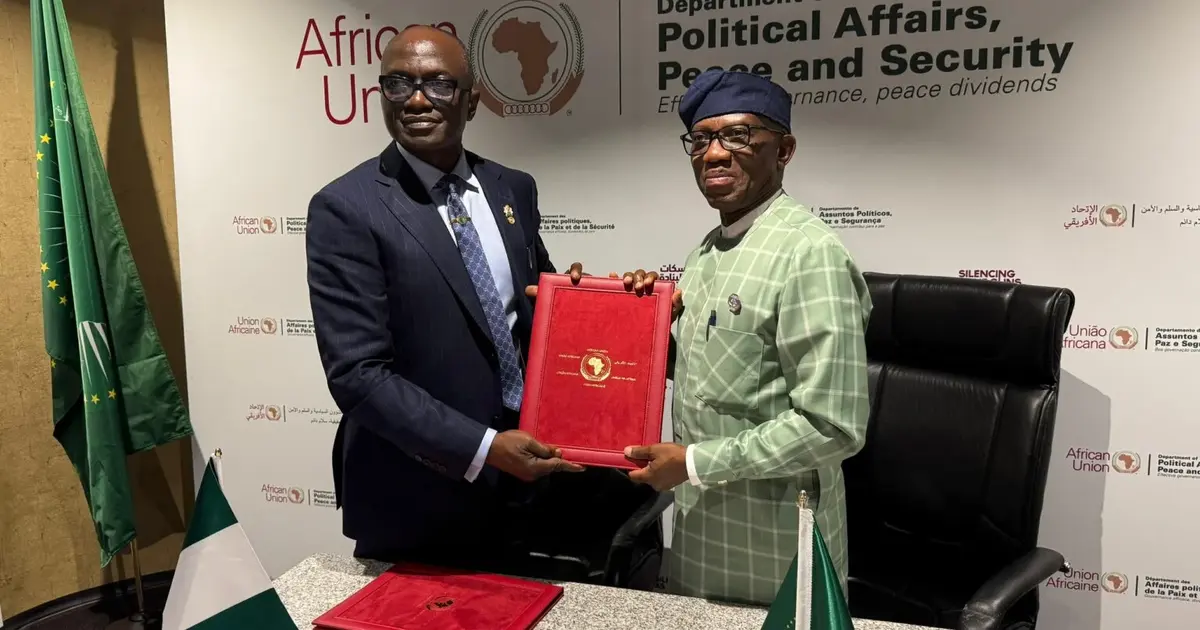
    The African Union (AU) Commission and Nigeria’s National Counter Terrorism Centre (NCTC) on Monday signed a Memorandum of Understanding (MoU) to boost collaboration against terrorism and violent extremism across Africa.

    This is contained in a statement by Mr Paschal Chem-Langhee, Communication Coordinator, PAPS, African Union Commission and made available to newsmen in Abuja.

    The MoU was endorsed by Amb. Bankole Adeoye, AU Commissioner for Political Affairs, Peace and Security, and Maj.-Gen. Adamu Garba Laka, National Coordinator of the NCTC.

    In his remarks, Adeoye commended Nigeria’s leadership role in West Africa and the Sahel.

    He noted that the country’s advanced facilities and expertise at the NCTC had “greatly contributed to regional and continental security.

    “The AU is proud to formalise this partnership with Nigeria, a key anchor state in the fight against terrorism.

    “The NCTC’s leadership and state-of-the-art technology have set a benchmark for counterterrorism efforts in Africa,” he said.

    On his part, Laka said the MoU reflected Nigeria’s commitment to advancing the Abuja Process Declaration of April 2024 and deepening regional collaboration.

    According to him, by working with the African Union, we intend to strengthen regional capacities, harmonise strategies and demonstrate Nigeria’s resolve in ensuring peace and security across the continent,” he said.

    The MoU will be jointly implemented by the AU Counterterrorism Centre (AUCTC) and Nigeria’s NCTC.

    “Areas of cooperation include real-time intelligence sharing, secondment of experts, joint research, support for victims of terrorism, and programmes on deradicalisation and reintegration.

    “It will also reinforce AU-backed initiatives such as the Nouakchott Process, the Accra Initiative, the UFL-Sahel Joint Force, and the Multinational Joint Task Force (MNJTF).

    “A Joint Working Group will monitor implementation,” it added.

  • Don’t abstain from sessions: court warns Al-Barnawi, terror suspects

    The Federal High Court in Abuja has warned Mohammed Usman, also known as Khalid Al-Barnawi, alleged leader of Boko Haram splinter group, Ansaru, and four others, against absenting themselves from court sessions.

    Justice Emeka Nwite issued the warning on Tuesday following the absence of Al-Barnawi, the 1st defendant, and his lawyer in court.

    Justice Nwite also ordered the counsel and the defendants to show up at the next hearing date fixed for Sept. 5.

    Al-Barnawi is being prosecuted on terrorism related charges along with other suspected members of his group.

    Other co-defendants include Mohammed Bashir Saleh; Umar Mohammed Bello, a.k.a Datti; Mohammmed Salisu and Yakubu Nuhu, a.k.a Bello Maishayi.

    They are among others, accused of being members of Ansaru terrorist group, also known as Jama’atu Ansarul Muslimina Fi Biladis Sudan.

    The defendants are also alleged to have conspired among themselves to carry out acts of terrorism between 2011 and 2013 in Sokoto, Kebbi, Bauchi, Borno, Gombe and other states in the northern part of the country.

    Upon resumed trial on Tuesday, the prosecuting lawyer, Alex Izinyon, SAN, told the court that the case was scheduled for continuation of proceedings in the trial-within-trial.

    Izinyon however said that the 1st defendant (Usman) and his lawyer were not in court.

    He further observed that lawyers to two other defendants were also not in court.

    The lawyer told the court that Al-Barnawi’s lawyer, who claimed to be away in Enugu, had promised to send a representative, but failed to do so.

    Izinyon expressed concern that the absence of the 1st defendant and the defence lawyers was unpleasant to the resolve by the court to accelerate hearing in the about 13-year trial.

    He said the absence of the defence lawyers without communicating to the court was disrespectful.

    Lawyer to Bello and Nuhu (3rd and 4th defendants), Abdulkarim Audu, equally submitted that the proceedings would have to be rescheduled in view of the absence of the 1st defendant and the defence lawyers.

    Both lawyers however urged the court to grant a short adjournment to enable parties make progress in the case within the ongoing vacation of the court.

    Justice Nwite expressed displeasure over the absence of the 1st defendant and some of the defence lawyers in court.

    According to the judge, it is unfortunate that this scenario is playing out when the effort is to ensure expeditious hearing of the matter.

    “This court will not condone the attitude of the 1st defendant or any of the defendants in absenting themselves from the proceedings,” he said.

    The judge directed lawyers to parties to work together to address what informed the absence of Al-Barnawi and other defence lawyers to prevent further delay in the case.

    Justice Nwite then adjourned the matter until Sept. 5 and Sept. 12 for continuation of evidence of the 3rd prosecution witness (PW3) and the playing of the videos in the trial-within-trial.

    The U.S. had, in 2012, placed a $5 million (£3.5m) bounty on Al-Barnawi’s head after branding him one of three Nigerian “specially designated global terrorists.”

    Ansaru is said to be ideologically aligned to al-Qaeda in the Islamic Maghreb and is also accused of killing a number of Westerners.

    Ansaru was reported to have claimed that it carried out an attack on a maximum security prison in Abuja in 2012 during which dozens of inmates were freed.

  • Media urged to champion fight against illegal mining

    Nigeria loses N41.1bn annually to the menace

    Stakeholders in Nigeria’s extractive industry have called on the media to take the lead in the fight against illegal mining.

    The call was made, Wednesday at a media parley and workshop in Abuja.

    It was disclosed at yhe event that Nigeria currently loses an estimated N41.1 billion annually to the menace of illegal mining.

    The Media Parley and Workshop was titled Illegally, Mining: The Role of the Media, and organised by the Nigeria Union of Journalists (NUJ), FCT Council.

    Declaring the session open, the Chairman of NUJ FCT Council Comrade Grace Ike noted that illegal mining has become a national crisis, threatening not only Nigeria’s economy but also its environment, security, and communities.

    She urged journalists to see themselves as “catalysts for change” by investigating, exposing, and educating the public on the dangers of the practice.

    “As gatekeepers of truth and agents of accountability, our duty goes beyond mere reportage.

    We must investigate, expose, and educate the public on the devastating effects of illegal mining, particularly on host communities and water resources,” she said.

    The NUJ pledged to continue amplifying the voices of affected communities while working with security agencies, civil society, and government institutions to ensure accountability and promote sustainable mining practices.

    Also speaking, the Commissioner of Police, FCT Command, CP Ajao Saka Adewale, described illegal mining as not just an economic crime but a security threat that fuels banditry, kidnapping, and communal clashes.

    He warned that cartels involved in the activity have links with organised criminal networks.

    “Illegal mining robs our nation of vital resources. It is directly linked to insecurity in states like Zamfara, Niger, and even parts of the FCT.

    Nigeria Extractive Industries Transparency Initiative (NEITI) has estimated losses from illegal mining and gold smuggling at $9 billion annually, draining foreign exchange and tax revenues,” he stated.

    Commander of the Mining Marshals, ACC A. J. Onoja, spoke passionately about the need for everyone to pitch in. He explained how illegal mining has cost Nigeria billions in lost money, ruined farmland, and stirred up trouble in communities.

    “The fight against illegal mining in Nigeria cannot be won by enforcement agencies alone, but through a broad coalition that includes the government, industry players, communities, and, most importantly, the media,” he said.

    Onoja praised the government’s efforts under President Bola Ahmed Tinubu and Minister of Solid Minerals, Dr. Henry Dele Alake, Minister of Interior, Olubunmi Tunji-Ojo and the Commandant General of the NSCDC, Ahmed Abubakar Audi, to clean up the sector by creating the Mining Marshals.

    He stressed that this unit is no ordinary group—it’s backed by strong laws and a strict code of conduct to ensure fairness and toughness.

    “We have dismantled illegal mining camps, arrested and prosecuted offenders, ensuring that the emerging policies of the Federal Government for the mining sector are working,” he added.

    He also warned of challenges like tough landscapes and attempts to blackmail them through the media. He urged journalists to report fairly: “When individuals under investigation run to the press to spin their self-serving sides of the story, alleging victimisation despite breaches of the law, we ask for balanced reportage that reflects the intricacy of our work.”

    In his remarks, the National President of the Miners Association of Nigeria, Dele Ayanleke, lamented that legitimate investors are being discouraged as illegal operators continue to undermine the sector.

    He called for stronger enforcement of mining laws and collaboration with the media to sustain advocacy against the menace.

    The workshop pointed out the economic, social, and environmental costs of illegal mining, including: Loss of government revenue due to unreported extraction and tax evasion, Water pollution, deforestation, and biodiversity loss, Exploitation of child labour and unsafe mining practices and Increased insecurity in mineral-rich communities.

    Participants stressed that the media has a critical responsibility to keep the issue in the public spotlight, mobilise communities, and hold both government and operators accountable.

    The parley, themed “Sustaining the Fight Against Illegal Mining: The Role of the Media”, also emphasised the need for investigative journalism, grassroots monitoring, and responsible use of digital platforms to expose cartels and protect Nigeria’s natural resources.

  • NGF challenges governors on “true subnational transformation”

    Nigeria Governors’ Forum (NGF) has challenged state governments to do more to attract investments to their domain if “true subnational transformation can be achieved.

    It said Nigeria currently lags behind its peers in the continent like South Africa and Ghana in terms of the volume of Foreign Direct Investment (FDI) which currently stands at a paltry 0.5 percent.

    Kwara state governor and chairman of the NGF, Andulrahman Abdulrazq made these observations at the launch, yesterday in Abuja of Investopedia, an investment information platform.

    Governor Abdulrazaq called the launch “a milestone achievement for the Nigeria Governors’ Forum and for our country,” emphasizing that it “will stand as one of the legacies of my stewardship.” He underscored Nigeria’s potential, noting, “Nigeria is Africa’s largest economy, endowed with abundant human and natural resources.”

    Doubling down on the imperative of FDI, the governor emphasised, “Public budgets alone cannot solve this,” stressing the need to “mobilize both global and African capital to finance projects that create jobs, modernize infrastructure, and drive inclusive growth.”

    Reinforcing the insights of the governor, NGF Director General, Mr. Abdulateef Shittu  remarked that “Over the last decade our inflows of Foreign Direct Investment (FDI) have averaged just 0.5% of GDP, well below the African average and behind peers like Ghana and South Africa,” with 2023 FDI at $1.87 billion.

    Both leaders emphasized the infrastructure financing gap, with Mr. Shittu citing “USD 100 billion annually — nearly USD 1 trillion over the next decade,” and states budgeting “more than N17.5 trillion for capital projects in 2025.”

    Governor Abdulrazaq echoed this, noting annual FDI averages of “only USD 2 billion, which is less than 0.5% of gross domestic product (GDP),” concentrated in “oil and gas, telecommunications, real estate, and agriculture,” would be insufficient for “true sub-national transformation.”

    A statement by NGF Director of Media and Strategic Communications, Mr. Yunusa Abdullahi said the NGF Chairman was represented at the event by Nasarawa state Governor Abdullahi Sule.

    He stated that in his explanation, the DG asserts that the NGF Investopedia addresses these challenges by “curating bankable pipelines of projects across all 36 states,” providing “a one-stop shop to engage with credible opportunities, backed by a transparent process, strong institutional oversight, and global visibility.”

    While Governor Abdulrazaq clarified,  “It is not just a catalogue — it is an entry point, showing investors not only where to invest, but also how to invest in Nigeria with confidence.”

    It was also reported that Mr. Shittu outlined that the publication shall be deployed to, “Simplify investor access by consolidating credible projects into one gateway; provide confidence through due diligence and transparent presentation of opportunities; and mobilize partnerships that go beyond financing to include technical support, capacity-building, and risk mitigation.”

    The launch drew chief executive officers (CEOs), managing directors (MDs), and industry leaders, prompting Mr. Shittu to say: “Your presence signals confidence—and it emboldens our states.”

    Governor Abdulrazaq extended an invitation: “To our distinguished investors, both here in Nigeria, across Africa, and globally, I extend this invitation: Partner with Nigeria’s states. The opportunities are vast, the commitment is firm, and the time is now.”

    The Governor stated that “Public budgets alone cannot solve this,” stressing the need to “mobilize both global and African capital to finance projects that create jobs, modernize infrastructure, and drive inclusive growth.”

    He highlighted growing African Direct Investment (ADI), noting, “Regional investors from South Africa, Morocco, Egypt, and Ghana are expanding into sectors such as banking, fintech, agribusiness, and infrastructure,” signaling “growing confidence among African partners in Nigeria’s markets and opportunities” under the African Continental Free Trade Area (AfCFTA). He said partnerships are central to the initiative.