
Category: Governance

  • Meet Nigeria’s 25th Chief of Naval Staff – Rear Adm. Idi Abbas

    Meet Nigeria’s 25th Chief of Naval Staff – Rear Adm. Idi Abbas

    The appointment of Rear Adm. Idi Abbas as the 25th Chief of Naval Staff (CNS) brings a wealth of experience, discipline, and professionalism to the leadership of the Nigerian Navy.

    A seasoned Above Water Warfare specialist, Rear Adm. Abbas has spent more than three decades in service to the nation, distinguished by dedication to duty and a passion for maritime security.

    Born on Sept. 20, 1969, Abbas hails from Nassarawa Local Government Area of Kano State.

    He began his educational journey at Gwagwarwa Primary School, Kano, and later attended the Air Force Military School, Jos, from 1981 to 1986.

    In 1987, he gained admission into the Nigerian Defence Academy (NDA) as a member of the 40 Regular Course and was commissioned Sub-Lieutenant on 10 September 1993 with a Bachelor’s degree in Chemistry.

    A well-trained officer, Abbas has attended several military courses at home and abroad.

    These include the Sub-Lieutenant Technical Course and Officers’ Long Course in Above Water Warfare at NNS QUORRA, as well as the Junior and Senior Staff Courses at the Armed Forces Command and Staff College, Jaji.

    He also attended the United Nations Military Observer Course in Tanzania in 2009 and is a graduate of the National Defence College (NDC), Abuja, Course 23.

    Over the years, the new Naval Chief has held several command and staff appointments. He has served onboard various Nigerian Navy ships, including NNS ARADU, NNS DAMISA, and NNS AYAM, as a Watch-Keeping Officer.

    He was also Naval Assistant to the Deputy Commandant, Armed Forces Command and Staff College, Jaji, and later served as Commanding Officer, Burma Battalion, NDA.

    His other notable appointments include Base Administrative Officer, NNS PATHFINDER; Maritime Guard Commander, Nigerian Maritime Administration and Safety Agency (NIMASA); Commander, Task Group Operation TSARE TEKU; and Flag Officer Commanding, Central Naval Command.

    He also served as Chief of Naval Safety and Standards, Chief of Defence Civil-Military Relations at Defence Headquarters, and Senior Research Fellow at the Nigerian Army Heritage Centre before his elevation to the position of Chief of Naval Staff.

    Rear Adm. Abbas has risen steadily through the ranks from Midshipman in 1996 to Rear Admiral on Sept. 10 2020.

    His career has been decorated with several honours, including the Forces Service Star (FSS), Meritorious Service Star (MSS), Distinguished Service Star (DSS), Grand Service Star (GSS), and the Defence General Staff Medal (DGSM).

    He is a Fellow of the Defence College (fdc) and a member of the Nigerian Institute of Management (NIM) and the International Institute of Professional Security (IIPS).

    A calm, focused, and result-oriented officer, Abbas is widely respected for his professionalism and strategic leadership.

    Outside the uniform, he enjoys playing hockey and driving. He is married to Mrs Aisha Abbas, and they are blessed with two sons.

    The new naval chief is expected to bring renewed drive and operational focus to the Nigerian Navy as it continues its mandate of safeguarding Nigeria’s maritime domain and contributing to national security. 

  • Anambra Guber: CP assures fair treatment for all

    Anambra Guber: CP assures fair treatment for all

    The Commissioner of Police in Anambra, Ikioye Orutugu, has assured the public of professional conduct and neutrality among its personnel during the Nov. 8 governorship election in the state.

    The Police Public Relations Officer (PPRO) in the state, SP Tochukwu Ikenga, gave the assurance in a statement on Monday in Awka.

    Ikenga quoted Orutugu as also calling for strict adherence to the rule of law among the officers and men, during the election.

    “As part of the ongoing security preparations for the forthcoming Anambra gubernatorial election, the CP, Anambra Command, Ikioye Orutugu has embarked on an operational tour and evaluation across the Police Area Command to assess the readiness of the officers and men for the crucial assignment.

    “The exercise which commenced with a visit to the Onitsha Area Command, saw the CP leading the high-visibility patrols through major routes and strategic locations within the area.

    “He also addressed officers and men  emphasizing the need for professionalism, neutrality, and strict adherence to the rule of law during election duties,” Ikenga said.

    The police spokesman also quoted the CP as calling on the officers and men to remain disciplined and committed to upholding the integrity of the Nigeria Police Force.

    The  Command reiterated its commitment to provide a safe and secure environment before, during and after the election.

    Orutugu noted the commitment of the Inspector-General of Police (IGP) Kayode Egbetokun, to free, fair, and credible elections nationwide.

    Ikenga said that during the patrol, the CP inspected operational formations, police posts, and checkpoints in the area to ensure that the deployed officers and men were alert and properly equipped.

    The CP commended the cooperation of sister security agencies as well as other security stakeholders in the area for their synergy and support to the police.

    Orutugu further urged residents of the state to remain law-abiding and to report all suspicious activities to the nearest police station.

  • IMF urges stronger tax, smarter spending, hails Nigeria’s fiscal reforms

    IMF urges stronger tax, smarter spending, hails Nigeria’s fiscal reforms

    The International Monetary Fund (IMF) has commended Nigeria’s fiscal reforms, and urged the country adopt smarter spending and stronger tax systems.

    The Division Chief, Fiscal Affairs Department IMF, Davide Furceri, made the statement during a news conference on fiscal monitor, in Washington on Wednesday on the sidelines of the Annual Meetings of the IMF/WorldBank Group.

    Furceri said that Nigeria’s ongoing fiscal and structural reforms were neutral and well aligned with monetary policies designed to curb inflation and stabilise the economy.

    He said that the fund’s latest assessment of fiscal policy across developing economies, especially the Nigeria’s policy direction, was consistent with efforts to strike a balance between revenue mobilisation and efficient expenditure management.

    “Currently, what we are projecting for Nigeria is a neutral fiscal stance, which we believe is consistent with monetary policies aimed at reducing inflation,” he said.

    He advised Nigeria to focus on revenue and expenditure sides of public finance.

    “Nigeria has made significant progress in recent years. Several laws have been passed to streamline the tax code, reduce tax expenditures and ease the compliance burden for businesses and coerce.

    “These are steps in the right direction,” he said.

    Furceri called for greater efficiency in public spending to ensure better outcomes for citizens.

    He said that optimising on how resources are allocated and spent could deliver substantial economic and social gains.

    “In addition, it is important to increase social spending, particularly to support vulnerable households and ensure inclusive growth,” he said.

    He urged Nigeria to continues to implement key fiscal and monetary reforms under its medium-term economic framework, fiscal discipline, improved revenue generation and enhanced transparency in public finance management.

    He said that IMF’s endorsement reflected growing confidence in Nigeria’s reform trajectory, even as the government pushes for policies aimed at boosting growth, reducing inequality and sustaining macroeconomic stability.

    The News Agency of Nigeria (NAN) reports the fiscal monitor explores how governments can improve economic growth prospects by enhancing the efficiency and composition of public spending.

  • Curtain falls on Prof Yakubu’s controversial reign at INEC

    Curtain falls on Prof Yakubu’s controversial reign at INEC

    • Professor Mahmood Yakubu has officially stepped aside as Chairman of the Independent National Electoral Commission (INEC).
    • Mrs May Agbamuche-Mbu, INEC National Commissioner, has taken over the reins as Acting Chairman of the electoral body.

    The formal handover ceremony took place on Tuesday at the INEC headquarters in Abuja during a meeting with Resident Electoral Commissioners (RECs).

    The transition follows Professor Yakubu’s decision to proceed on terminal leave after completing his two-term tenure as head of the Commission.

    Mrs. Agbamuche-Mbu, one of INEC’s longest-serving National Commissioners, currently chairs the Legal Services, Clearance, and Complaints Committee (LSCCC).

    A lawyer with over three decades of experience, she holds a Master of Laws (LL.M) degree in Commercial and Corporate Law from Queen Mary and Westfield College, University of London.

    In a brief ceremony, Professor Yakubu formally handed over documents to Mrs. Agbamuche-Mbu, signifying the official transfer of leadership.

    INEC, in a statement, said the handover was part of its tradition of ensuring administrative continuity and institutional stability.

    Professor Yakubu, who was first appointed by former President Muhammadu Buhari in November 2015 and reappointed for a second term in 2020, is the longest-serving INEC Chairman since Nigeria’s return to democratic rule.

    His tenure witnessed landmark electoral innovations, including the introduction of the Bimodal Voter Accreditation System (BVAS) and the INEC Result Viewing (IReV) portal — two reforms widely credited with improving transparency and credibility in Nigeria’s electoral process.

    Critics observe however, that while the huge investment in technology aided the voting process, the outcome of elections remained quite controversial due to the failure of the electoral body to deploy for the outcome.

    The smooth transition comes as the Commission continues with ongoing voter registration exercises in the Federal Capital Territory (FCT) and prepares for off-cycle governorship elections in key states.

    Meanwhile, credible reports suggest that President Bola Ahmed Tinubu is set to nominate Professor Joash Amupitan (SAN) as the substantive INEC Chairman.

    The nomination, according to sources, may be ratified at a scheduled Council of State meeting on Thursday.

    Until then, Mrs. Agbamuche-Mbu will oversee the affairs of the Commission in an acting capacity, ensuring that ongoing electoral operations remain uninterrupted.

    Her appointment is seen as a continuation of INEC’s commitment to professionalism, gender inclusion, and effective succession planning.

    Further details about the handover and the anticipated presidential nomination are expected in the coming days.

  • Miyetti Allah hails Tinubu on commitment to livestock development

    Miyetti Allah hails Tinubu on commitment to livestock development

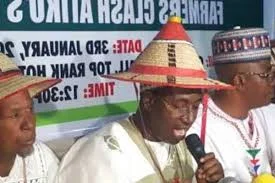
    Pampered and enabled by the defunct Buhari regime, Miyetti Allah Kautal Hore, are on another fancy ride, applauding President Bola Tinubu for his administration’s commitment to livestock development.

    The socio-cultural association representing the interest of Fulani pastoralists in Nigeria, bared their mind in a communiqué jointly signed by the association’s National President and Secretary, Alhaji Abdullahi Bodejo and Saleh Alhassan.

    The statement issued Tuesday, in Keffi, Nasarawa State after an expanded national executive meeting by the national leadership of the association to x-ray the challenges confronting Fulani pastoralists in Nigeria.

    The meeting, which took place in Karu Local Government Area on Sunday, had state chairmen of the association and other critical stakeholders in attendance.

    Members of Miyetti Allah Kauthal hore

    According to the communiqué, the association expressed appreciation to Tinubu for his commitment to livestock development and enhancement of security and general welfare of the pastoralist community in the country.

    It, however, called for adequate funding of the Ministry for Livestock Development to ensure full implementation of the National Livestock Development Plan.

    The association also appreciated the decision of the ministry to commence designation, gazetting and development of all the 415 grazing reserves across the states of the federation.

    Miyetti Allah Leader, Baba Usman-Ngelzarma

    This, it said, would serve as a strategic step to addressing the challenges confronting Fulani herders in Nigeria.

    “This will include building of earth dams and solar boreholes, building of veterinary clinics and development of diary (milk) collection centres, among others,” the communiqué stated.

    It condemned the continuous profiling of Fulani pastoralists by a section of the media and called for unbiased and justice-based reportage of the farmers and herders’ conflicts.

    The association, however, applauded the National Security Adviser, Mallam Nuhu Ribadu and the Senate Committee on National Security and Intelligence for adopting both kinetic and non-kinetic strategies in addressing rural banditry, particularly in the North-West zone. 

  • Dangote/PENGASSAN: NLC mobilises for total lockdown

    Dangote/PENGASSAN: NLC mobilises for total lockdown

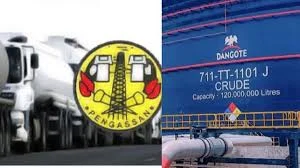
    The Dangote/PENGASSAN dispute is taking a turn for the worse as the Nigeria Labour Congress (NLC) has directed all its affiliate unions to immediately commence mobilisation for industrial action against the Group.

    This directive is contained in an internal memo signed by NLC President, Mr Joe Ajaero, on Monday in Abuja.

    The order follows a dispute between Dangote Refinery and Petroleum and Natural Gas Senior Staff Association of Nigeria (PENGASSAN) over the alleged sack of over 800 workers.

    Ajaero said the directive was prompted by what the congress described as the Dangote Group’s “anti-worker crusade” against Nigerian workers.

    He alleged that the conglomerate consistently violated Section 40 of the Constitution and ILO Conventions 87 and 98, which protect workers’ rights to association and unionisation.

    According to him, affiliates are placed on full alert and must begin unionisation drives in all Dangote facilities within their areas of jurisdiction.

    “The impunity of the Dangote Group must be met with resistance. Each affiliate should establish an Action Mobilisation Committee and liaise with the NLC Secretariat within 72 hours,” Ajaero said.

    He urged affiliates to mobilise resources and members for nationwide action, stressing that unity of purpose and collective resolve were non-negotiable.

    Meanwhile, there is report that the Federal Government has convened a conciliatory meeting to prevent escalation of the dispute.

  • Tinubu jets out of Abuja again

    Tinubu jets out of Abuja again

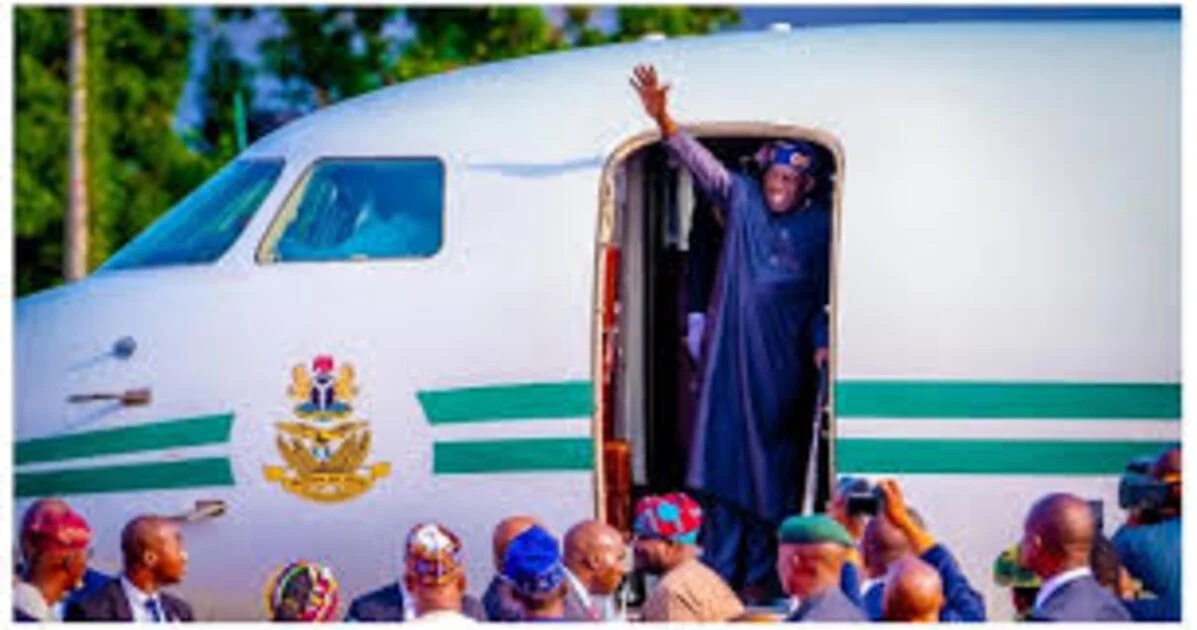
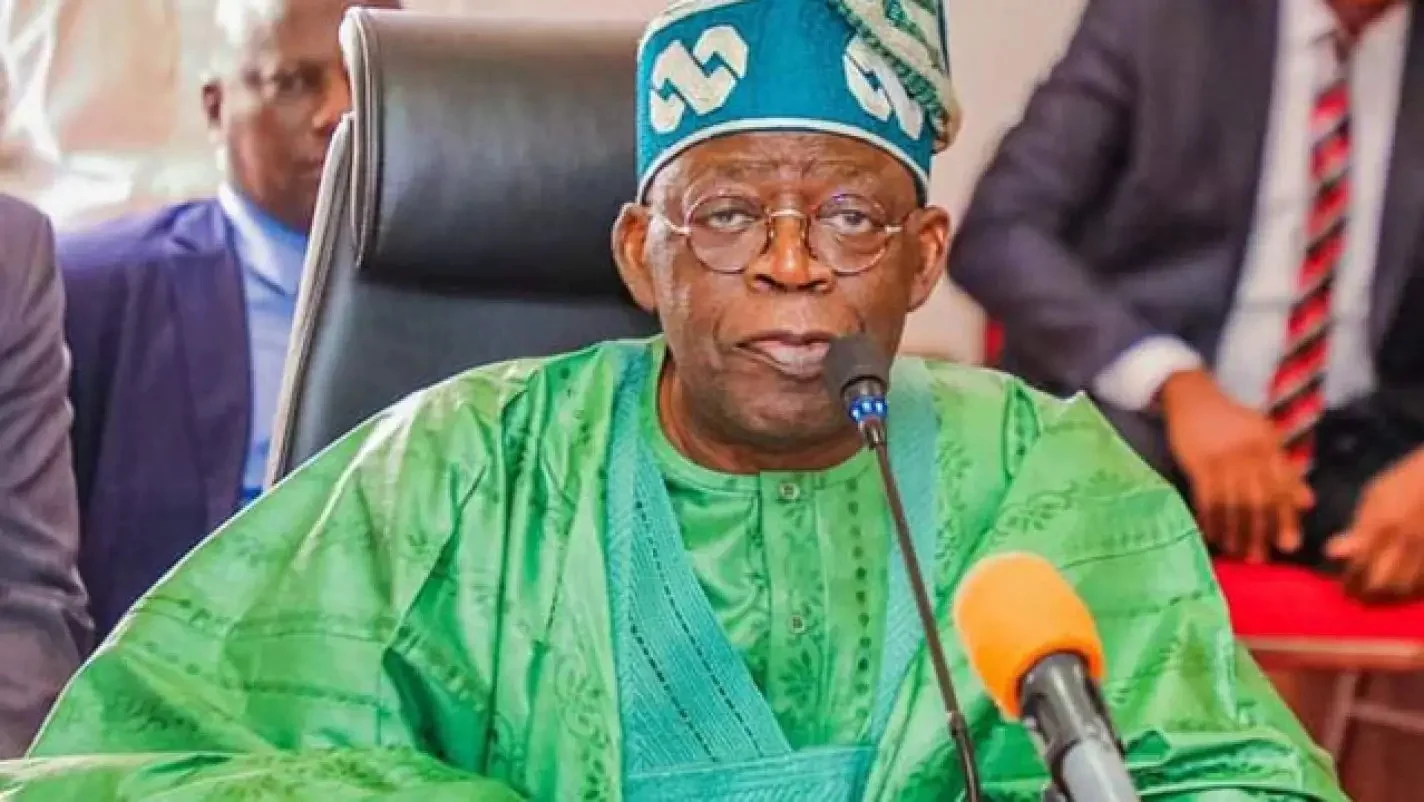
    President Bola Tinubu arrived in Lagos on Friday for a working visit, as Nigeria prepares for a low-key  65th Independence Anniversary.

    ‎This is contained in a statement issued by Presidential Spokesperson, Mr Bayo Onanuga on Friday in Abuja.


    ‎Tinubu travelled to Lagos after attending the coronation of the new Olubadan of Ibadanland, Oba Rashidi Ladoja, in Oyo

    State.


    ‎While in Lagos, the President is expected to engage with key private sector leaders and senior government officials.

    ‎He will travel to Imo on Tuesday to inaugurate projects executed by Gov. Hope Uzodimma.

    ‎As part of the Independence anniversary, the President will also commission the remodelled National Theatre, Lagos, which has been renamed the Wole Soyinka Centre for Culture and the Creative Arts.

  • UNGA80: Nigeria, 100 others unveil NDCs climate plan

    UNGA80: Nigeria, 100 others unveil NDCs climate plan

    Nigeria and leaders from 100 other countries have announced a new national climate action plan at a summit on the sidelines of UNGA80 in New York..

    The summit was convened by Secretary-General António Guterres alongside President Luiz Inácio Lula Da Silva of Brazil, host of the COP30 conference, which will be held in November in the Amazonian city of Belém.

    At the Climate meeting for Heads of State and Government, Vice President Kashim Shettima announced Nigeria’s new National Determined Contributions (NDCs) under the Paris Agreement.

    In a strong show of momentum, major economies – including China, the world’s largest emitter, and Nigeria – unveiled economy-wide targets to slash emissions across all greenhouse gases and sectors, making pledges that signal a more unified push toward deep decarbonization.

    Meanwhile, other nations stepped forward with bold commitments: scaling up renewable energy, cracking down on methane, protecting vital forests, and accelerating the phase-out of fossil fuels.

    Together, these announcements mark a turning point in global climate ambition, setting the stage for COP30 and a decade of decisive action.

    At the outset of the summit, leading climate scientists Johan Rockström and Katharine Hayhoe provided a stark assessment of global efforts so far to honour the Paris Agreement, the landmark 2015 treaty that seeks to limit global temperature rise to 1.5 degrees Celsius above pre-industrial levels.

    Ten years on, greenhouse gas emissions that cause global warming continue to rise, and annual global temperature change exceeded 1.5 degrees for the first time last year.

    “This is a deep concern,”  Professor Rockström, chief scientist at Conservation International. “An even deeper concern is that warming appears to be accelerating, outpacing emissions.”

    Yet it is still possible to meet the 1.5-degree goal, and the two experts highlighted solutions, including transitioning from fossil fuels to clean energy sources and transforming food systems to eliminate waste.

    “We cannot prevent this catastrophe alone. But together, we can. By setting stronger targets, moving on faster timelines, and making deeper commitments,” said Professor Hayhoe, a winner of the 2019 UN Champions of the Earth Prize.

    Under the Paris Agreement, governments are required to submit climate plans called Nationally Determined Contributions (NDCs) laying out bold action for the next decade.

    The treaty has made a difference, the Secretary-General said, as projected global temperature rise dropped from four degrees to less than three over the past 10 years, if current plans are fully implemented.

    “Now, we need new plans for 2035 that go much further, and much faster,” he said.

    “Delivering dramatic emissions cuts aligned with 1.5 degrees; covering all emissions and sectors; and accelerating a just energy transition globally.”

    He stressed that COP30 “must conclude with a credible global response plan to get us on track” and outlined five crucial areas for action: accelerating the transition to clean energy, drastically cutting methane gas emissions, forest conservation, cutting emissions from heavy industry, and ensuring climate justice for developing nations.

    With just a few weeks until COP30, President Lula wondered “whether the world will arrive in Belém with its homework done.”

    He said that “the energy transition opens the door to a productive and technological transformation comparable to the Industrial Revolution” and NDCs “are the road map that will guide each country through this change.”

    For its part, Brazil has committed to reducing all greenhouse gas emissions between 59 per cent and 67 per cent, covering all sectors of the economy, he said, and continues efforts to end deforestation by 2030.

    At the meeting, President Xi Jinping of China announced that by 2035, the country will reduce economy-wide net greenhouse gas emissions by seven to 10 per cent from peak levels.

    The country will also increase the share of non-fossil fuels in total energy consumption to over 30 per cent, expand wind and solar power capacity sixfold compared to 2020 levels, and make “new energy vehicles” the mainstream in new vehicle sales, he said in a video message.

    Meanwhile, “the clean transition is moving on” in the European Union, where emissions are down nearly 40 per cent since 1990, said European Commission President Ursula von der Leyen.

    European countries are also “doubling down on global partnerships” and will remain the world’s largest providers of climate finance, she said, while also mobilizing up to 300 billion Euros to support the clean energy transition worldwide.

    For Belize, the 1.5-degree goal “is not an aspiration” but “a threshold between hope and hardship, between flourishing communities and forced displacement, between shared prosperity and irreversible loss,” Prime Minister Johnny Briceño, said.

    Its new NDC covers concrete actions, such as expanding renewable electricity generation to cover 80 per cent of domestic needs by 2035, restoring some 25,000 hectares of degraded forest, and planting a million trees over the next three years.

    “But let me be clear, ambition can only succeed if matched by support for small climate vulnerable nations like Belize.

    “This means scaled up, predictable finance; accessible technology and genuine partnerships,” he said, noting that “success depends on all of us acting with unprecedented urgency, solidarity and climate justice.”

  • Tuggar Urges U.S. to Strengthen Partnerships with Nigeria

    Tuggar Urges U.S. to Strengthen Partnerships with Nigeria

    Describes Nigeria as Africa’s Anchor State

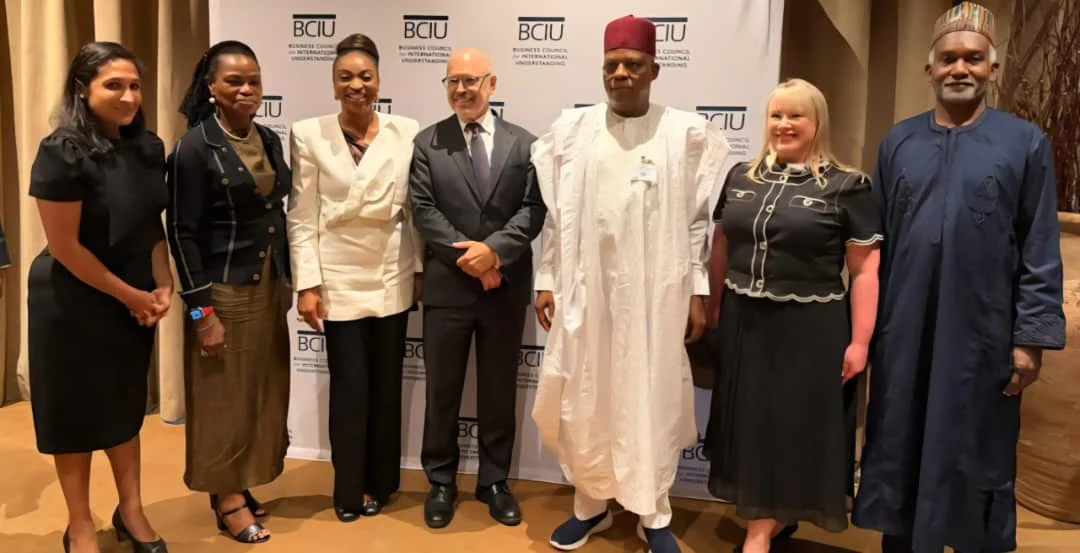
    Nigeria’s Minister of Foreign Affairs, Yusuf Maitama Tuggar, has reaffirmed the country’s strategic position as an anchor state in Africa.

    He therefore calls on the United States to deepen its engagement on the continent through stronger partnerships with Nigeria.

    Tuggar made the call at a high-level investment roundtable organized by the Business Council for International Understanding (BCIU) on the sidelines of the 80th United Nations General Assembly (UNGA).

    The forum was attended by Vice President Kashim Shettima and senior executives of top U.S. firms.

    Highlighting opportunities across priority sectors such as energy, agriculture, technology, and finance, Tuggar stressed that Nigeria’s size, resources, and leadership role make it the natural hub for U.S. investment in Africa.

    “With our vast population, abundant resources, and continental scale, Nigeria is a natural destination for U.S. business partnerships,” Tuggar said. “Such collaboration will reduce costs, provide access to a skilled talent pool, and help integrate millions of informal businesses into the formal economy.”

    He added that under President Bola Ahmed Tinubu’s Renewed Hope Agenda, Nigeria is pursuing economic diplomacy and reforms designed to attract investment, improve the ease of doing business, and ensure that global partnerships yield tangible benefits for citizens.

    Tuggar emphasized that Nigeria’s demographic advantage and continental influence reinforce its role as Africa’s premier gateway for global investors seeking growth and long-term impact

  • Experts decry global inequality, urge Nigeria to embrace China’s GGI

    Experts decry global inequality, urge Nigeria to embrace China’s GGI

    Flustered by the illusion that the solution to Nigeria’s governance challenge lies in foreign ideologies, a group has recommended the adoption of Chinese Global Governance Initiative (GGI) to foster inclusive development.

    The group says they are however, bothered by existing inequality in the contemporary global system and the impunity of major powers.

    It therefore, urged Nigeria to instead embrace China’s Global Governance Initiative as a panacea.

    The group is operating under the aegis of International Relations Experts, and made the call during a one-day seminar on the GGI with the theme: “Opportunities for China-Africa Cooperation under the GGI,” on Thursday in Abuja.

    The GGI is China’s framework designed to promote fairness, equity and inclusive development globally.

    Mr Charles Onunaiju, Director of the Centre for China Studies, described the GGI as a timely response to “the obvious deficit in global governance,” particularly the exclusion of voices from the Global South in decision-making.

    He warned that outcomes in the global system would remain “paralysed without the wisdom and input of the majority world.”

    “China has taken a bold step to bridge this lacuna with the Global Governance Initiative,” Onunaiju said.

    “It is not just a slogan but an idea whose time has come. Nigeria must not stay on the sidelines.”

    He also proposed the establishment of a Nigeria-China joint committee on the GGI to design action plans, exchange expertise, and strengthen cooperation.

    Prof. Sheriff Ibrahim, Director of the Centre for Contemporary China-Africa Research, criticised global institutions for favouring “a handful of dominant powers at the expense of billions of others.”

    He emphasised that exclusion begins at the UN Security Council, where only five nations hold permanent seats.

    “There is a need to involve every continent, every region as a permanent member,” Ibrahim said.

    “The impunity of powerful nations in breaching UN resolutions without consequence has eroded trust in international law.

    Reform is not optional, it is urgent.”

    He also called for reforms in the International Monetary Fund and the G20 to reflect the realities of developing nations.

    “What happens to Africa, the Pacific, Latin America or the Caribbean? Why is the Chinese yuan sidelined?

    “Let there be inclusion in the international monetary establishment,” he added.

    Ambition and Opportunity

    Dr. Sam Amadi, Director of the Abuja School of Social and Political Thoughts, described China’s proposals as both “ambition and opportunity.”

    “China seeks a fairer world order.

    “Nigeria must position itself strategically to benefit from this shift,” Amadi said.

    He added that Nigeria’s key lesson from China was the importance of adaptive reforms.

    “China did not copy models blindly. Under Deng Xiaoping, it adapted reforms to its own reality.

    “Nigeria must do the same industrialise, stabilise politically, and then leverage initiatives like the GGI.

    “We cannot remain weak domestically and expect to benefit globally,” he stressed.

    Level playing field

    Dr Muhammad Sani of the Department of Mass Communication, Baze University, noted that the GGI speaks directly to Nigeria’s push for fairness and inclusive development.

    “It levels the playing field for developing nations and restores justice in global decision-making,” he said.

    According to him, Nigeria’s BRICS membership, peacekeeping record, and advocacy for UN reform already align with GGI principles.

    “With GGI frameworks, Nigeria can diversify trade, expand renewable energy, and build digital innovation hubs.

    “But rhetoric must give way to action. Priority should be renewable grids, green jobs and digital skills for youth,” Sani added.

    Shared future

    Also speaking, Chinese Embassy Counselor, Dong Hairong, said the GGI was one of four initiatives proposed by President Xi Jinping to advance “a community with a shared future.”

    Dong explained that the five guiding principles of the GGI: sovereign equality, rule of law, multilateralism, people-centred development and real action had already gained wide recognition.

    “Nigeria particularly welcomes them as aligned with Africa’s Agenda 2063 and its own national development aspirations,” she said.

    She reiterated China’s readiness to work with Nigeria and Africa to reform global institutions, address under-representation of the South, and promote consensus on climate, trade, cyberspace and innovation.

    “China is ready to cooperate under the GGI to build a just global order,” Dong said.