
President Bola Tinubu has ordered a full personnel audit and skills gap analysis across the Federal Civil Service to improve capacity and overall performance.
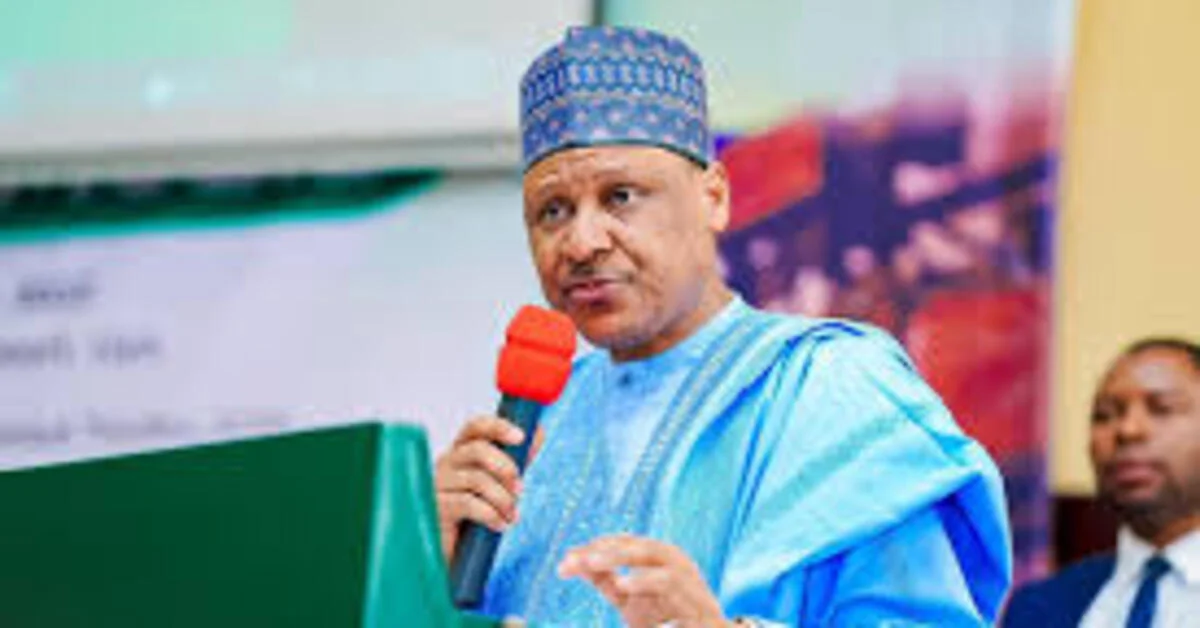
He gave the directive on Thursday in Abuja during the maiden edition of the 2025 International Civil Service Week.
Tinubu said it was essential to assign competent individuals to appropriate roles for an efficient and effective public service.
“We can only guarantee a high-performance culture by placing the right people in the right positions.
“To that end, I have authorised a full Personnel Audit and Skills Gap Analysis across the Federal Civil Service to build capacity,” he said.
He urged stakeholders to complete the exercise promptly to enable reforms and create a more agile, skilled and responsive civil service.
Tinubu described the civil service as “the engine room” for delivering public goods and effective governance throughout Nigeria.
“Our civil servants are the quiet architects of stability, innovation, and public trust,” he added.
He said the audit was part of a wider plan to align the civil service with global standards and digital transformation.
Tinubu emphasised the importance of accurate and secure data to support evidence-based policy and international benchmarking.
“Data is the new oil. Unlike oil, it becomes more valuable when refined and responsibly shared,” the President stated.
He instructed MDAs to publish verified data in line with the Nigeria Data Protection Act 2023.
Tinubu noted progress under the Federal Civil Service Strategy and Implementation Plan 2021–2025.
He commended the Head of Civil Service, Mrs Didi Walson-Jack, for leading reforms in digitalisation and staff development.
“Launching Service-Wise GPT and other innovations reflects exceptional leadership,” the President said.
Walson-Jack said the conference was entirely self-funded through strategic partnerships and creativity.
“If Nigeria must lead Africa, our Civil Service must lead first,” she declared.
The conference was with the theme ‘Rejuvenate, Innovate and Accelerate,’ reflecting a drive for renewal.
The Benue State Government has confirmed arrest of 50 fake Internally Displaced Persons (IDPs) at the International Market, George Akume way in Makurdi, the state capital.
The State Commissioner for Humanitarian Affairs and Disaster Management, Mr Aondowase Kunde, disclosed this on Saturday in Makurdi.
Kunde said that criminals have infiltrated the IDPs camp opened for victims of Yelwata attack.
He said that 50 fake displaced persons had been arrested adding that people from the host community and market women have all infiltrated the camp.
He stated that the criminals on Friday night broke into the camp and stole some non food items while market women too have invaded the camp buying off food items distributed to them.
“We have issues in the camp for the past two days and we discovered a lot of infiltrators in the camp.
“We conducted investigations after the protest and discovered that criminals and people from the host community in Makurdi were behind the protest.
“So we resolved that we have to be at the camp by 4am today (Saturday) to fish out those criminals and discovered that they stole mattresses through a collapsed fence to access the camp.
“We discovered that some market women have started coming to the camp to buy off rice and food items distributed to displaced persons.
“We also discovered that some women who were claiming to be lactating mothers went out to borrow babies from outside to be able to access the camp when they discovered that the first set of people we attended to are pregnant women and lactating mothers.
“When these so called lactating mothers were asked to breast feed their babies, we discovered that there was no milk coming out of their breast,” the commissioner said.
The Nigerian Guild of Editors (NGE) says a nation’s security and stability can be enhanced by leveraging its diversity, with the media playing a crucial role in promoting the goal.
The NGE said this in a statement on Sunday by its President, Mr Eze Anaba, and General Secretary, Dr Iyobosa Uwugiaren.
Diversity, according to the guild, is a source of strength, creativity, and innovation, and inclusive governance ensures that all segments of society are represented and included in decision-making processes.
The NGE emphasised the media’s social responsibility in promoting diversity, tolerance, and understanding, while also highlighting the importance of national security and stability.
‘’The media can achieve this by highlighting diverse perspectives and experiences, combating hate speech, misinformation, and stereotypes, and fostering dialogue and understanding among different groups’’, the guild said.
It announced ‘’Building A Secure And Cohesive Nigeria: The Role of Dialogue, Inclusion and The Media” as the theme of its Biennial National Convention in Enugu, from June 26 to June 29.
The NGE said that the convention would bring together no fewer than 400 editors, including prominent figures such as Prince Sam Amuka-Pemu, Publisher of Vanguard; and Chief Onyema Ugochukwu, former Presidential Spokesman.
Prince Nduka Obaigbena, Chairman/Editor-in-Chief of THISDAY/Arise News Channel, and Dr John Momoh, Chairman of Channels Television, are also expected at the forum.
The convention will be declared open by the Minister of Information and National Orientation, Alhaji Mohammed Idris, according to the guild.
“The Executive Governor of Enugu State, Dr. Peter Mbah, will serve as the Chief Host, while Dr. Momoh will chair the convention. Prince Amuka-Pemu, Chief Olusegun Osoba, and Chief Ugochukwu have been assigned roles as Fathers of the Day.
“The Director-General of the State Security Services (SSS), Mr Adeola Oluwatosin Ajayi, will deliver the keynote address, titled ‘’Nation’s Security Future: Harnessing Diversity for Peace/Stability and the Media’s Role.
“The National Security Adviser (NSA), Malam Nuhu Ribadu, will also be at the national convention as Special Guest,” the NGE said.
It said that the three-day convention would also witness the election of new executives to pilot the affairs of the professional body for the next two years.
Inside Nigeria’s Silent Billion-Naira Welfare Machine …all activities shrouded in mystery except for a few press releases.
By
Carol Ameh
Several months after Nigeria’s premier poverty alleviation agency, the National Social Investment Programme Agency (NSIPA), was thrown into disarray by allegations of financial mismanagement, the silence is deafening. Save for sporadic press releases and brief mentions in presidential communiqués, the agency has withdrawn behind a veil of secrecy. For a government body charged with disbursing billions of naira meant for the country’s most vulnerable citizens, the lack of transparency has raised serious concerns.
At the centre of the storm is the abrupt suspension of the agency’s former CEO, Halima Shehu, in January 2024, following allegations of financial malfeasance. She was barely three months into her tenure, having been confirmed by the Senate in October 2023. Her removal was the beginning of a domino effect. Within a week, the Minister of Humanitarian Affairs and Poverty Alleviation, Betta Edu, was also suspended over allegations of financial impropriety.
In response, President Bola Ahmed Tinubu suspended all activities under the NSIPA umbrella to facilitate a thorough investigation. Dr. Akindele Egbuwalo, previously the National N-POWER Program Manager, was appointed in an acting capacity. Seven months later, in June 2024, the President announced a new slate of leadership for the agency, with Badamasi Lawal taking over as the substantive Chief Executive Officer.
Dr. Badamasi Lawal Chiranchi, NSIPA CEO
According to a statement from the presidency, the move aimed to “ensure the effectiveness of humanitarian and social development programmes” and “guarantee that Nigerians, especially vulnerable groups, are the exclusive and direct beneficiaries of his administration’s reconfigured welfare programmes.”
Alongside Lawal’s appointment, other strategic placements were made, including Funmilola Olotu as Programme Manager for the National Social Safety-Net Coordinating Office; Aishat Alubankudi for Grants for Vulnerable Groups; Princess Aderemi Adebowale for the Home Grown School Feeding Programme; and Abdullahi Alhassan Imam for the National Cash Transfer Office.
Despite these reshuffles and reassurances, little is known about what exactly goes on within NSIPA. Journalists who have attempted to investigate have met stonewalls. Officials routinely decline interview requests, and attempts to obtain budget breakdowns or programme audits through the Freedom of Information Act have been ignored or denied.
Established in 2016 by the Muhammadu Buhari administration, the National Social Investment Programmes (NSIPs) were meant to address widespread poverty and hunger across the country. The agency was tasked with four core initiatives: the N-Power programme, Conditional Cash Transfers (CCT), the Government Enterprise and Empowerment Programme (GEEP), and the National Home-Grown School Feeding Programme (HGSFP).
The NSIPs were initially praised for their ambition and reach. Since inception, over 4 million beneficiaries have been recorded across the country. However, the schemes have frequently been accused of inefficiencies, poor coordination, and, increasingly, corruption.
The N-Power programme was designed to empower Nigerian youth between the ages of 18 and 35 with employable skills and monthly stipends of N30,000. The Conditional Cash Transfer scheme provides cash assistance to the poorest households, while the GEEP programme offers microloans between N10,000 and N100,000 to traders, artisans, and farmers. The HGSFP aims to boost school enrollment and improve nutrition for primary school children while supporting local food production through farm-to-table sourcing.
But reports of “ghost beneficiaries,” misdirected payments, and nepotism in programme enrolment have plagued these efforts. In 2023, Ms. Betta Edu, the minister suspended the N-Power programme amid allegations of massive irregularities. That same year, NSIPA was allocated over N500 billion in the national budget, a sum that many critics say lacks transparent accounting to date.
As part of the sweeping reforms in early 2024, President Tinubu appointed a six-member Special Presidential Panel led by Minister of Finance and Coordinating Minister of the Economy, Wale Edun. The panel, composed of high ranking ministers, was tasked with auditing and reviewing the NSIPs’ operational framework. It recommended the following: Placing the programmes under a steering committee led by the Finance Minister; a comprehensive operational and financial audit of NSIPA and amending the NSIPA Establishment Act to fix structural gaps that enabled previous abuses.
Chief Wale Edun, Minister of Finance and Coordinating Minister of the Economy
One of the most significant developments during this period was the President’s request in July 2023 for an $800 million loan from the World Bank to expand the National Social Safety Net Programme (NASSP). This initiative aims to offer shock responsive financial support to vulnerable Nigerians affected by the removal of fuel subsidies.
According to the President, the funds would be disbursed digitally to beneficiaries’ accounts or mobile wallets, an effort aimed at improving transparency and encouraging economic participation in the informal sector. The National Assembly approved the loan, but it’s unclear how much of it has been disbursed or how many have benefited so far. The overlap and ambiguity between NASSP and NSIPA’s mandate only adds to the confusion.
In a move that calls attention to both the high stakes and institutional distrust surrounding NSIPA, President Tinubu sent an executive bill to the National Assembly in October 2023, seeking to move the supervision of the social investment programmes from the Ministry of Humanitarian Affairs directly to the Presidency. The bill passed second reading in the Senate and is currently under review.
A separate but related amendment, submitted in November 2024, seeks to make the National Social Register the primary tool for identifying and targeting beneficiaries. These reforms could centralize control, potentially reducing corruption or concentrate too much unchecked power, depending on how implementation unfolds.
Critics argue that beyond legislation, the real test will be political will and operational transparency. “It’s not enough to appoint new faces or amend laws,” said a policy analyst at BudgIT, a civic organization that promotes fiscal transparency. “We need to see clear reports, measurable results, and regular audits. Right now, NSIPA is a black box.”
In May 2025, the Federal Government released over N10 billion for the Renewed Hope Conditional Cash Transfer scheme, benefiting more than 411,000 households across all 36 states and the FCT. In addition, the NSIPA announced plans to launch new programmes to empower 1.8 million Nigerians a potentially massive intervention if delivered effectively.
But again, specifics are scant. Who qualifies? How are they chosen? What mechanisms ensure that the money reaches its intended recipients?
No official audit has yet been published regarding the N10 billion disbursement. Civil society groups continue to call for full transparency, particularly in how digital payments are tracked and verified.
Meanwhile, state-level monitoring remains weak. Several local governments report that they have not received adequate guidance or data-sharing from the federal agency to effectively coordinate implementation or vet beneficiaries.
The silence surrounding NSIPA is not just about bureaucratic inefficiency, it reflects a deeper, systemic resistance to transparency in Nigeria’s public institutions. For an agency that handles multi-billion-naira interventions and serves as a lifeline for millions, the current opacity is not just unacceptable; it is dangerous. With a fragile economy, increasing poverty, and billions at stake, Nigerians deserve to know what’s really happening behind NSIPA’s closed doors. As more funds are allocated and new programmes launched under the guise of “Renewed Hope,” Nigerians have a right to know: Where is the money going? Who is watching the watchers? And perhaps most urgently, what exactly is NSIPA hiding from the press?
As the demands for pragmatic leadership continue to resonate amidst pervasive public dissatisfaction with Nigeria’s judicial sector and political fabric, the Nigerian Bar Association (NBA) Yenagoa Branch, has emerged as a pacesetter in projecting the Law as a means of arresting a dangerous slide into anarchy. The 2025 Law Week of the NBA’s Yenagoa Branch was in many respects an elevation from previous editions. Held under the theme “Setting the Pace: Law, Leadership, and Transformational Development,” this year’s event did more than gather the finest legal minds. It sparked a necessary national conversation about the evolving role of law as a catalyst for holding leadership accountable to the people, for ensuring the rule of law and for radically improving access to justice for the public. A week of passion and public engagement After several weeks of diligent preparation by the Law Week Planning Committee, the anticipated programme teed off on May 5, 2025, with a well orchestrated Press Conference at the Koripamo Ungbuku High Court Complex in Yenagoa, the Bayelsa State Capital.
Addressing a packed room of journalists from national and international media, the NBA Yenagoa Branch Chairman, Mr. Somina Johnbull, set the tone: “The branch is poised to build on the successes of previous editions of the Law Week to ensure that participants and guests have a first-rate experience this year; by offering solutions to generational challenges affecting leadership in Nigeria.” He said with the investment in critical infrastructure upgrade in the state judiciary, such as automatic recording system and research support for judges, as well as the availability of small claims courts and a multi-door courthouse, litigation and adjudication had been greatly enhanced. On his part, Chairman of the Law Week Planning Committee, Iniruo Wills, remarked that stakeholder satisfaction was the key objective in organizing the events, hence the choice of theme and sub-themes that address issues of vital public interest, such as governance based on the rule of law and revolutionizing access to justice. But as they say, health is wealth and all work and no play makes Jack a dull boy. So on the morning of Saturday May 10th, the Branch Chairman, Somina Johnbull, led the teeming lawyers in a 10-kilometre roadwalk to keep body and mind fit. Only a sound mind in a sound body can do justice to the aggrieved. In the evening of that day, the lawyers let their hair down in an Embeleakpo (Ijaw for enjoyment) Night, where they shared fun times by way of various indoor games such as Chess, Scrabble, Whot and Monopoly, along with music and dancing, spiced with roasted fish and like delicacies at the poolside of a major hotel. Continuing in that tempo, a novelty football match between the Branch and the Pharmaceutical Society of Nigeria took place at the Samson Siasia Stadium, Yenagoa on Monday May 12, ending in favour of the learned team. And the next day, the Branch Chairman, Mr Johnbull, the Planning Committee Chairman, Mr Wills, and the Law Week Facilitator, Dr (Mrs) Boma Miebai, led the branch to pay a visit to the Daisy Home for Special Children at Igbogene, where they spent about an hour with the children and donated food items worth over a million Naira, after a joint rendition of the classic charity song by global stars, We are the World. Before leaving, the lawyers took time to motivate the kids towards becoming teachers, doctors, lawyers, pastors and successful business people in the future.
A Summit of Legal Minds and Policy thinkers
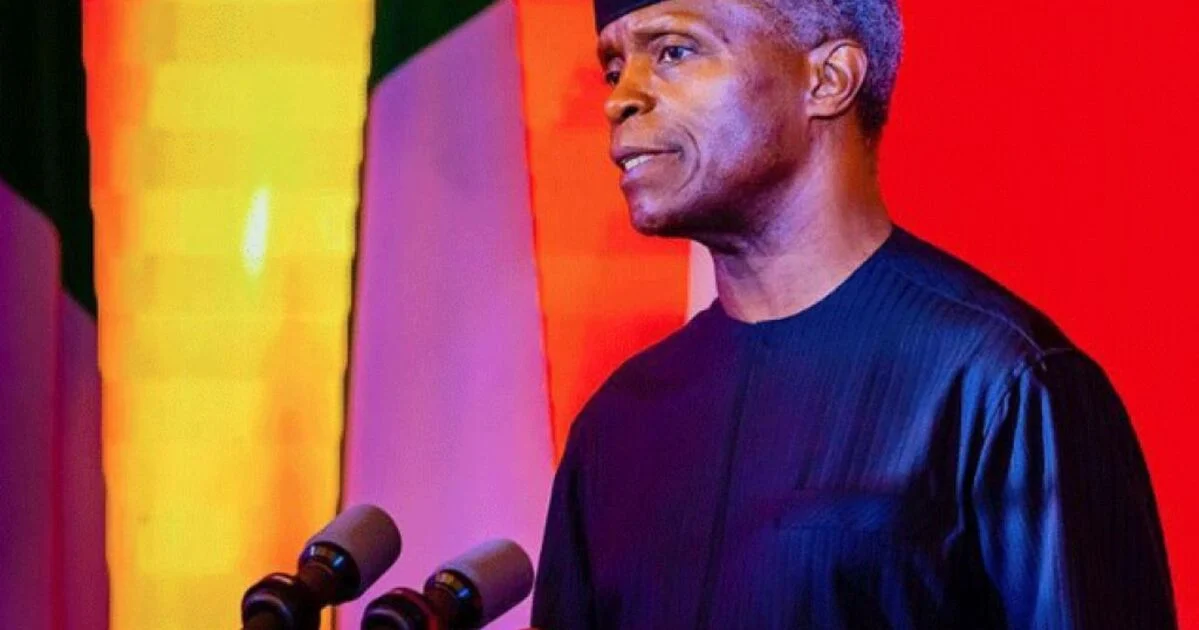
The week’s icing on the cake was the plenary session held on Friday May 16 at the ornate NCDMB Conference Hall, reportedly the first non oil and gas event to be held in the impressive Hall. The venue’s architectural elegance was matched only by the intellectual weight of the audience and resource persons of the day, headlined by one of Africa’s leading policy icons and public speakers, Prof Yemi Osinbajo (GCON, SAN), former Vice President of Nigeria, who delivered the keynote address. Declaring the session open, the Bayelsa State Governor, Senator Douye Diri, stated unequivocally, “If lawyers stand by the truth and the rule of law, Nigeria will survive-and thrive.” His words resonated across the capacity-filled auditorium and synced with the profound exploration of the intersections of law, leadership and transformational development that followed. Chief Judge of Bayelsa State, Justice Matilda Ayemieye, in her remarks stated her confidence in the Keynote Speaker’s renowned ability to do justice to the theme and also expressed her admiration for the organizers of the Law Week, noting that they had “raised the bar”, putting Bayelsa State in bright lights Also speaking the State’s Attorney General and Commissioner for Justice, Biriyai Dambo, SAN, thanked the NBA “for choosing themes that reflect the urgent really of our time”, noting that in moments of upheaval people look to the law as a hope. In quotable words, he charged the NBA to continue to be “a conscience of the nation, not just an association.”
Vision for a new Legal Era
In what many have described as one of the most thought-provoking addresses of the year, Prof. Yemi Osinbajo delivered a keynote titled “The Legal Profession: A Vision for a New Era.” With characteristic depth and clarity, evoking comparison with former US President Barrack Obama’s speech making,, Osinbajo glided though the emerging landscape of technology and law. “We are at the threshold of a major transformation,” he said, firing the first salvo. “Artificial Intelligence—tools like ChatGPT—are already reshaping the legal profession. The question isn’t whether we should adapt, but how.” He warned that AI is not simply a convenience; it is a force that will change how legal services are delivered in the years to come, adding that, “Our profession needs a new set of tools to work with, that is AI tools which … could process huge volumes of documents in minutes.”
He said, “Before 2022, Lawyers were the sole gatekeepers of legal knowledge. But with AI, we are no longer the custodian and gatekeeper of legal knowledge.” However, he was quick to stress that no machine could replace a lawyer’s ethical compass or moral reasoning. “What machines can’t replicate,” he said, “is the lawyer’s ability to exercise discretion, to uphold justice, and to reason ethically.” Against this backdrop he pointed out that the true value of lawyers must lie in focusing on the aspects of legal practice that machines cannot replicate. So in the face of this foreboding threat, what can lawyers do to remain relevant and competitive? The erudite silk has a gamut of solutions: First, he asserted that the legal community must reform its educational system and curriculum to reflect new realities, urging a paradigm shift from rote theoretical training to hands-on, mentorship-driven models. He cited the British “filtered entry” approach as an example of how Nigeria might professionalize the Bar and the Bench to be effective and efficient.
Osinbajo also called for cross-disciplinary training for lawyers and the integration of AI as a subject in the curriculum while legal education must emphasize problem solving and adopt simulation-based learning. What is more, he posited that the mandatory one year law school where lawyers are kept in classrooms and taught physically was anachronistic and must now be reviewed, emphasizing the imperative for online, virtual learning in law school and university campuses. “The days of in person law school are over. This is the emerging trend,” he pointed out. Pivoting to the ethical dimension, Professor Osinbanjo observed that with the integrity and reputation of the bar and bench greatly threatened by corruption, it was time for lawyers to “Sacrifice personal comfort for collective growth” He expressed worry over the unprecedented spate of conflicting court judgments which has greatly eroded the credibility of the legal system, urging the courts to “focus on justice over faults” “We have entered a new era, one that demands a new tool kit. This must be the pillar of our renewed vision”, he intoned.
Bridging the Gap between theory and practice
Following the keynote, a robust panel discussion unfolded, moderated by the erudite Justice Peter Affen, who provided a sobering reminder that legal education in Nigeria must catch up with global technological realities. Boma Ayomide Alabi, SAN, Chairperson of the NBA Section on Legal Practice, was forthright when asked of the possibility of AI replacing lawyers: “AI will not replace lawyers. But lawyers who embrace AI will replace those who don’t.” Her point was echoed by Mr. Naboth Onyesoh, Director of Legal Services at NCDMB, who emphasized the Impact of law on business and investment: “The UK’s legal sector contributes over £45 billion annually to the GDP. Imagine what Nigeria could do if we reformed and digitized our legal systems.”. But according to him, “People choose to arbitrate in the UK, causing capital flight due to the problem of lack of integrity and prestige here in Nigeria” He urged lawyers to take advantage of the Nigerian Oil and Gas Industry Content Act which provides for local content (indigenous lawyers) participation in oil and gas matters. On his part, Hon. Kemela Okara, former Secretary to the Bayelsa State Government, spoke on the role of government in promotung the rule of Law. “Law alone can’t do it; the government must be the catalyst enforcing laws, investing in the judiciary, and modeling discipline”, he said. On his part, another panelist, Dr. Ayibakuro Matthew, framed the conversation philosophically, declaring that “a society with bad laws being implemented by good people will produce better justice than good laws being implemented by bad people. But with both good laws and good people, we can truly transform.”
Revolutionizing ease of access to justice Prof Festus Emiri, SAN, former Deputy Director-General of the Nigeria Law School, gave a most thought-provoking presentation on the need to improve ease of access to justice even at the highest level of leadership. He skillfully touched on various critical sectors. On legal education reform, the Professor advocated for a shift from content-based to concept-focused curricula, centralizing experiential and apprenticeship education, and either abolishing or significantly reforming vocational legal education. On judiciary reforms, the distinguished Professor advocated for a more responsive and efficient judiciary through periodic institutional assessment and continuing education. The day after the epic Plenary Session, the lawyers had their traditional annual Dinner/ Gala Night at the Governor Diepreye Alamieyeseigha Banquet Hall, with Prof Solomon Ebobrah giving a dinner talk on the quizzical topic “The Legal Profession: One Way Creek or Ocean of Opportunities?” With every reason to do so, the Yenagoa legal community marked the formal end of the Law Week on Sunday 18th May with a special thanksgiving service at the St Peter’s Anglican Church, Yenagoa. A new standard is set, a new page of history opens Indeed, the 2025 NBA Yenagoa Law Week will be remembered for opening vistas of insight and opportunity for a new era of bridging the gap between law, leadership and transformational development. The Yenagoa Branch of NBA has been receiving applause since the events, for raising the bar in branch law week standards. Indeed, the Yenagoa Bar made an eloquent statement — that it has come of age and is setting the pace
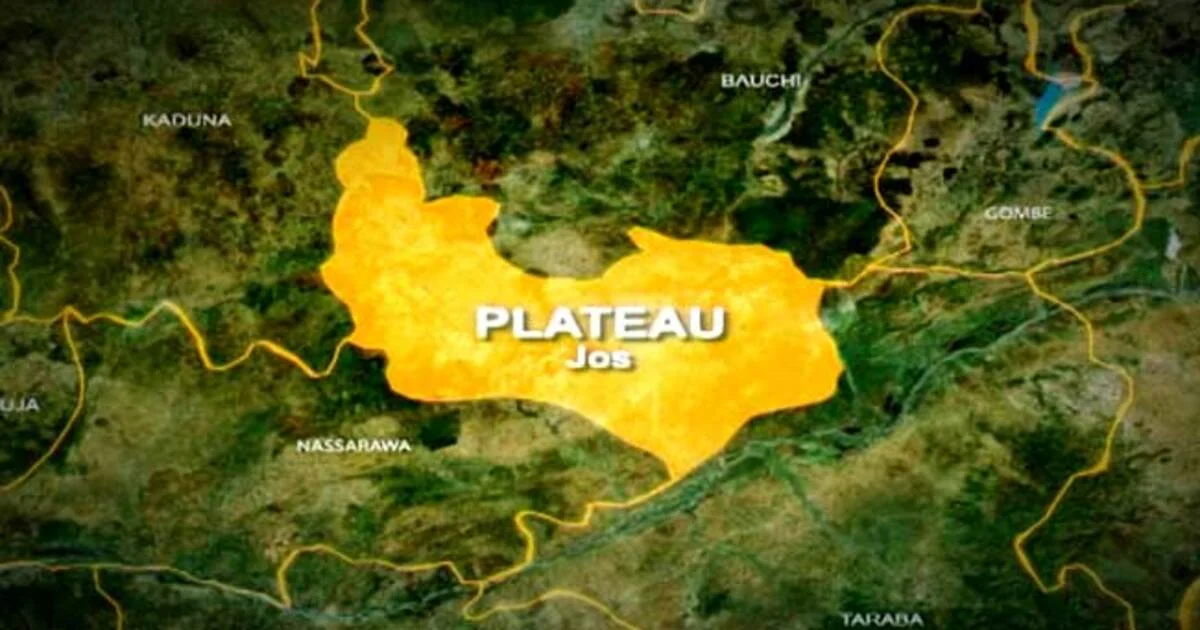
Troops of Operation Safe Haven (OPSH) have neutralised three suspected bandits in Wase Local Government Area (LGA) of Plateau.
Maj. Samson Zhakom, the Media Officer of OPSH, disclosed this in a statement on Sunday in Jos.
Zhakom said that the feat followed an intelligence tip, while adding that the troops also recovered weapons during the operations.
“Yesterday , troops of OPSH, acting on credible intelligence, conducted offensive operations at a criminal hideout along the fringes of Pinau community in Wase LGA of Plateau.
“During the operation, troops made contact with criminal elements terrorising the general area, including Pinau – Gimbi road.
“During the exchange of fire, troops overwhelmed the criminals with superior firepower and neutralised three of the suspected bandits
“While others ran away with wounds from gunshots, troops exploited the general area and recovered one AK-47 rifle and one AK-47 magazine,” he said.
Zhakom said that the troops had commenced a follow-up operation to intercept the fleeing criminals.
Decry strong arm tactics. Say FG lawsuit sends wrong signal
North Central women on Saturday urged the Federal Government not to trample on the rights of citizens.
‘’Senator Natasha Akpoti-Uduaghan’s rights are slowly extinguished. Her complaints, protests and appeals are now treated as seditious murmurings’’
They also advised the Federal Government not to provide a justification for political anarchism.
The women in a statement in Lafia said the lawsuit against Akpoti-Uduaghan was capable of sending wrong signals of political oppression of women in Nigeria.
They urged President Bola Tinubu to prevent the 10th Senate from being ill governed.
The zonal women advised President Tinubu to go to the root of the matter involving the Senate President, Godswill Akpabio and the Senator representing Kogi Central, Chief Natasha Akpoti-Uduaghan.
The statement issued by the Chairperson of North Central Women Front (NCWF), Mrs. Mary Adamu, described the recent case filed by the Federal Government against Senator Akpoti-Uduaghan as a desire for conquest and a bad way of maintaining or restoring stability, patriotism and morality among the people.
‘’The problem in the Senate cannot be resolved in this manner. It is in going to the root that you will find the solution of a number of problems of the 10th Senate which the leadership cannot settle’’.
The statement counseled Tinubu not to yield to the fatal temptation of oppressing women in the country.
Particularly, the women urged Tinubu to apply human wisdom, follow public reason and act aright by asking the Attorney General and Minister of Justice to quickly withdraw the lawsuit from the court.
The statement emphasized sincere reconciliation and the question of morality. The women praised Akpoti-Uduaghan for her honest heart.
They also underscored shameful methods in conflict resolution and the activities of fierce and brutal men in the country.
The Federal High Court in Abuja, on Monday dismissed a N50 billion fundamental rights enforcement suit filed by Philip Shaibu, former Deputy Governor of Edo, against ex-Gov. Godwin Obaseki and others
Justice Peter Lifu, in a ruling, dismissed the suit following an application to withdraw the suit by Anita Oteh, who appeared for Shaibu.
Upon resumed hearing in the matter, Oteh informed the court that parties in the suit had settled their differences, hence, the need to withdraw the suit.
However, Aliyu Abdulkadir, who represented the Attorney-General of the Federation (AGF), the 4th defendants in the suit, told the court that he was not aware of the settlement.
According to him, if there is any settlement, we should be informed so that we are well guided.
“However, we are not opposed to the application for withdrawal and will also not be asking for a cost, but I will make a simple request,” he said.
Abdulkadir then prayed the court to dismissed the suit.
Oteh disagreed with Abdulkadir’s request, urging the court to grant their application for the withdrawal of the suit.
Justice Lifu, in his ruling, held that, having joined issues in the matter, the proper thing was to dismiss the case.
“In view of the fact that issues have been joined in this matter, this suit is hereby dismissed in its entirety”, he ruled.
In the writ of summons, had sued Edo State Governor; Inspector-General (I-G) of Police; Director, Department of State Services (DSS), AGF and Attorney General of Edo as 1st to 5th defendants respectively.
In the suit marked FHC/ABJ/CS/914/2024 dated July 4, 2024 but filed July 19, 2024 by his counsel, Egwuaba Reuben, Shaibu sought right reliefs.
The ex-deputy governor sought an order of the court awarding the sum of N50 billion to him for aggravated and exemplary damages against the defendants to be paid jointly for the illegal and unconstitutional violation of his fundamental rights.
He also sought an order of perpetual injunction, restraining the defendants and their agents from further arresting or detaining him, repeating or continuing any act or further acts in violation of his fundamental rights on issues bordering on or connected to facts of the case without the leave of the court.
The plaintiff equally sought for the sum of N100 million as the cost of filing the suit.
In his witness statement of oath deposed to by himself, Shaibu averred that he was elected deputy governor of Edo and his tenure was to end on Nov. 11, 2024
He however alleged that on instigation of Obaseki and with the aid of the I-G, “I was unlawfully removed from the office before the expiration of my tenure which same issue is a subject of litigation pending before this court.”
He further alleged that upon discovery that he had been removed as deputy governor, the I-G withdrew all his security personnel who ought to have protected his life until the expiration of his term in office.
Shaibu also said his attention was drawn to a publication on July 2, 2024, wherein the Edo government issued a notice directing the retrieval of 22 official government vehicles in his custody, among others.
He, therefore, prayed the court to declare that the attempt by the 1st defendant (Obaseki) to instigate the 2nd to 5th defendants to be arrested was unlawful and amounted to an attempt to infringe on his fundamental rights guaranteed under the 1999 Constitution of the Federal Republic of Nigeria (as amended), among other reliefs.
It was observed that no lawyer appeared for the 1st, 2nd, 3rd and 5th defendants on Monday.
Justice James Omotosho of a sister court had, on July 17, 2024, reinstated Shaibu as deputy governor, three months after the Edo House of Assembly impeached him.
Justice Omotosho held that the impeachment by the house was illegal.
Nigeria’s Information and National Orientation Minister, Mohammed Idris, has denied reports that some ministers were billed to present a scorecard of the Tinubu Presidency to global media in London.
Media reports monitored by Nigerian Anchor indicated that Bode Adeyemi, Project Internal Coordinator of the President Bola Tinubu Midterm Legacy Projects Review Committee, told journalists this Tuesday in Abuja that some ministers and heads of departments and agencies will present their ministries’ success stories at an International Press Conference in London, the United Kingdom.
Mr. Adeyemi had listed the ministers to embark on the trip to include Mr. Nyesom Wike (FCT), Dave Umahi (Works) and Olubumi Tunji-Ojo (Interior).
Other officials of the Federal Government mentioned by Adeyemi were the Chief Executive of the Nigerian Upstream Petroleum Regulatory Commission, Gbenga Komolafe; the Managing Director of the Federal Mortgage Bank of Nigeria, Usman Osidi; the Chairman of the Federal Inland Revenue Service, Zacheous Adedeji; and several others are expected to address the international media.
The move was greeted by massive outcry as public policy analysts, the media and social media operators condemned the planned international media conference.
Briefing the media this Friday in Abuja, Idris resorted to subterfuge by deflecting from the subject matter to say that the Ministerial Press Briefing Sessions have not been relocated from Abuja to London without addressing the exact claims of Mr. Adeyemi.
“The insinuation that the press briefing session is relocating abroad is false because we have our responsibility first to the Nigerian nation.
“That is why we invite these ministers to come here and address Nigerians and those outside the country, directly from the National Press Centre, here in Abuja.
“The only platform that the Federal Ministry of Information and National Orientation provided for the briefing session, is right here,” he said.
Idris said, Umahi who was falsely reported to be among the ministers scheduled to unveil President Tinubu’s achievements at a press briefing in London, had denied the report and also present at the Abuja briefing.
The Friday session was attended by the Ministers of Arts, Culture and the Creative Economy, Hannatu Musawa, Water Resources and Sanitation, Prof. Joseph Utsev, and Works, Sen. David Umahi.
Northern Governors and traditional rulers have renewed their commitment to tackling insecurity, boosting infrastructure, and empowering the youths.
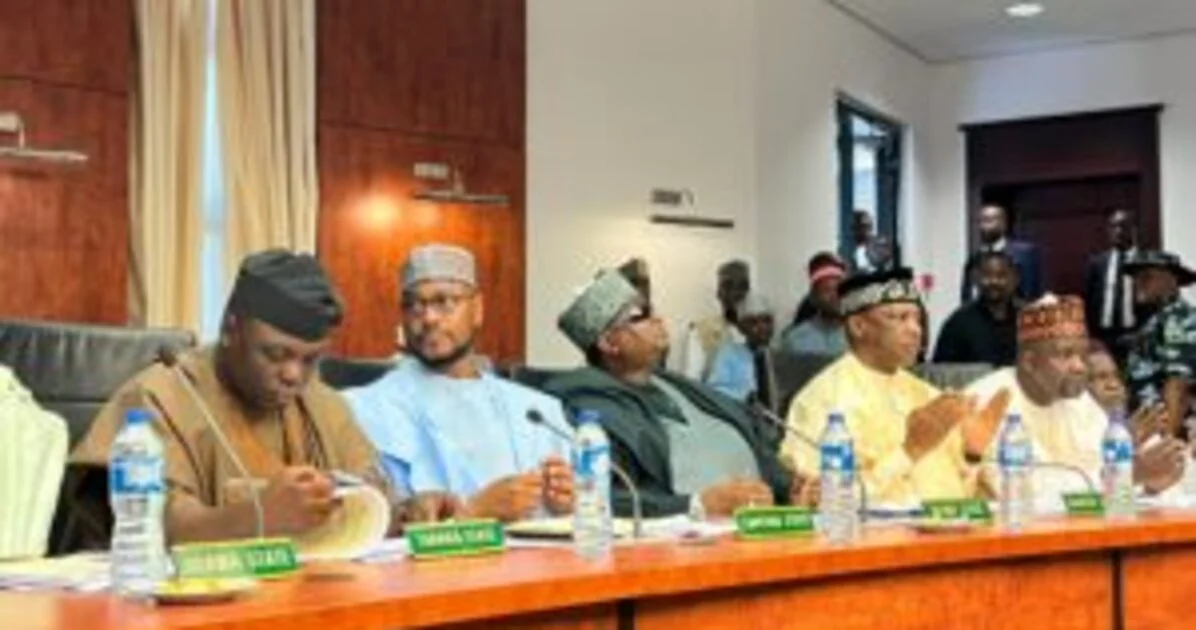
The resolutions were arrived at their joint meeting of the Northern States Governors’ Forum (NSGF) and the Northern Traditional Rulers Council held on Saturday in Kaduna.
Gov. Inuwa Yahaya of Gombe State, who is also the Chairman of the NSGF, described the gathering as timely, given the escalating security challenges and socio-economic pressures facing the region.
In his keynote address, Yahaya expressed condolences to the families and governments of Plateau, Bauchi, Benue, Borno, and Yobe over the recent wave of killings.
He called the attacks, “mindless acts of violence” that underscored the need for a comprehensive review of security strategies.
Yahaya stressed that the resurgence of Boko Haram activities in parts of the North-East and ongoing violence in the North-Central must be confronted with renewed synergy between federal, state, and local security structures.
On economic and infrastructural development, the NSGF Chairman called for the speedy completion of key projects.
They include the Port Harcourt-Maiduguri rail line, the Kano-Maiduguri expressway, and the Akwanga-Jos-Bauchi-Gombe-Biu expressway, among others.
NSG at the meeting in Kaduna
He lamented the exclusion of the North-East from the Federal Government’s superhighway project and advocated innovative funding solutions like public-private partnerships and infrastructure bonds.
The Governor said, “The state of infrastructure in Northern Nigeria remains a cause for major concern.
“Without.an urgent intervention, our goals for agricultural expansion and industrialization will remain a mirage.”
He also emphasized the need to restructure and reposition the New Nigeria Development Company (NNDC) as a hub for regional economic revival
Yahaya called for decisive action to end the almajiri system and provide the Northern youths with education and job skills.
“Our children must be taken off the streets and given opportunities for quality education and skills acquisition,” he appealed.
Yahaya further called for proactive steps to prevent herder-herder clashes during the rainy season.
The governor urged partnerships with agencies like NEMA and NIMET to develop early warning systems and support mechanisms against climate-related challenges.
He praised the traditional institutions for their role in peace building and advocated for their recognition through constitutional means to make them more effective in governance and conflict resolution.
“The wisdom and guidance of our traditional rulers remain indispensable as we navigate these complex times,” Yahaya said.
Earlier, Gov. Uba Sani of Kaduna State, in his welcome address, lauded the efforts of the NSGF and the traditional rulers council in promoting unity and consensus in the North.
He said, “In spite of our diversity, the two bodies have found a way of forging consensus on critical issues.
“We have made progress, but challenges remain. We must hasten the development and implementation of a regional roadmap for peace, security, and development.”
Sani commended President Bola Tinubu for his commitment to Northern development, particularly for reviving the long-abandoned Abuja ,Kaduna,Zaria-Kano dual carriageway, describing it as a “lifeline for Northern Nigeria.”
Both leaders emphasised the urgency of translating resolutions into tangible actions, with Yahaya concluding that history would judge Northern leaders not by the meetings they hold, but by the lives they impact.
He said: “The people of Northern Nigeria are looking up to us. We must rise above individual interests and deliver results.”
In his remarks,the Sultan of Sokoto and Chairman of the Northern Traditional Rulers Council, Alhaji Sa’ad Abubakar, has reaffirmed the commitment of the traditional rulers to supporting efforts aimed at tackling insecurity across the country.
Cross section of traditional rulers at the meeting
The sultan commended the governors for their dedication and collective resolve to restore peace, stability, and development in the region.
He stated that the persistent killings across various parts of the North have made it imperative for leaders to unite and take decisive action.
“Every life matters,” he declared, stressing the need for a holistic approach to restore peace and enable citizens to live freely and in harmony.
The sultan strongly condemned the criminalisation of ethnic or religious groups, warning that such narratives only fuel division.
He urged, “We must leave here with the understanding that a criminal anywhere is a threat to all of us,” he said.
The traditional ruler, who also acknowledged the efforts already made to address the crisis, emphasised that more needed to be done.
Abubakar declared, “Much has been done, but clearly not enough.
“As long as people continue to be killed, the perception will remain that nothing is being done.”
He concluded that the challenges facing the North were national in nature, and praised Tinubu’s commitment to finding lasting solutions.
He, however, urged intensified action to end the bloodshed and to reassure the citizens that their safety remain a top priority.
The governors present at the joint meeting included those of Nasarawa, Gombe, Niger, Kaduna, Kebbi, Katsina, Kogi, Yobe, Plateau, Taraba, Adamawa, Sokoto, and Jigawa.
Also in attendance were nineteen esteemed traditional rulers from across the Northern region under the umbrella of the Northern Traditional Rulers Council.