
Category: Governance

  • Bauchi Varsity Workers Begin Indefinite Strike

    Bauchi Varsity Workers Begin Indefinite Strike

    The Academic Staff Union of Universities (ASUU) at Sa’adu Zungur University (SAZU) in Bauchi has launched an indefinite strike to protest the university administration’s failure to fulfill prior agreements. 

    In a press statement following an emergency meeting held at the Yuli Campus on November 29, 2024, ASUU Chairperson Comrade Awwal Hussain Nuhu revealed that repeated attempts to resolve the issues through dialogue had failed. 

    READ ALSO: PDP CRUMBLES FURTHER AS FORMER MINISTER RESIGNS

    Despite efforts to engage both the university management and the government, the union found no willingness to address its grievances.

    As a result, the union decided to initiate a full and indefinite strike, which began at 12:00 PM on November 29. 

    This includes the suspension of all academic activities, including lectures, meetings, and any work related to the university’s academic operations, until further notice.

  • We support You, Tinubu assures Okonjo-Iweala

    We support You, Tinubu assures Okonjo-Iweala

    President Bola Tinubu has assured Dr. Ngozi Okonjo-Iweala of the support of the government and people of Nigeria following her re-election as the Director-General of the World Trade Organization (WTO). 

    The development economist, who made history in 2021 as the first African and the first woman to lead the WTO, will continue in her role for another four years beginning September 1, 2025. 

    President Tinubu expressed his pleasure at Dr. Okonjo-Iweala’s unanimous reappointment, highlighting it as a testament to the global trust in her leadership. 

    He recognized her dedication to advancing multilateral trade and fostering sustainable global economic growth. 

    Her work has played a key role in strengthening the WTO’s position as a vital organization for inclusive development.

    In his statement, Tinubu emphasized Nigeria’s commitment to supporting the WTO’s mission for a fair and equitable trading system. 

    As a member of the WTO, ECOWAS, and the African Continental Free Trade Area (AfCFTA), Nigeria will continue to back the efforts to ensure that trade practices are inclusive and beneficial for all nations. 

    He assured Dr. Okonjo-Iweala of Nigeria’s ongoing support as she moves forward with her reforms aimed at improving global trade relations and cooperation.

  • Despite rejection by Neighbours, Nigeria Seals €300m Deal with France

    Despite rejection by Neighbours, Nigeria Seals €300m Deal with France

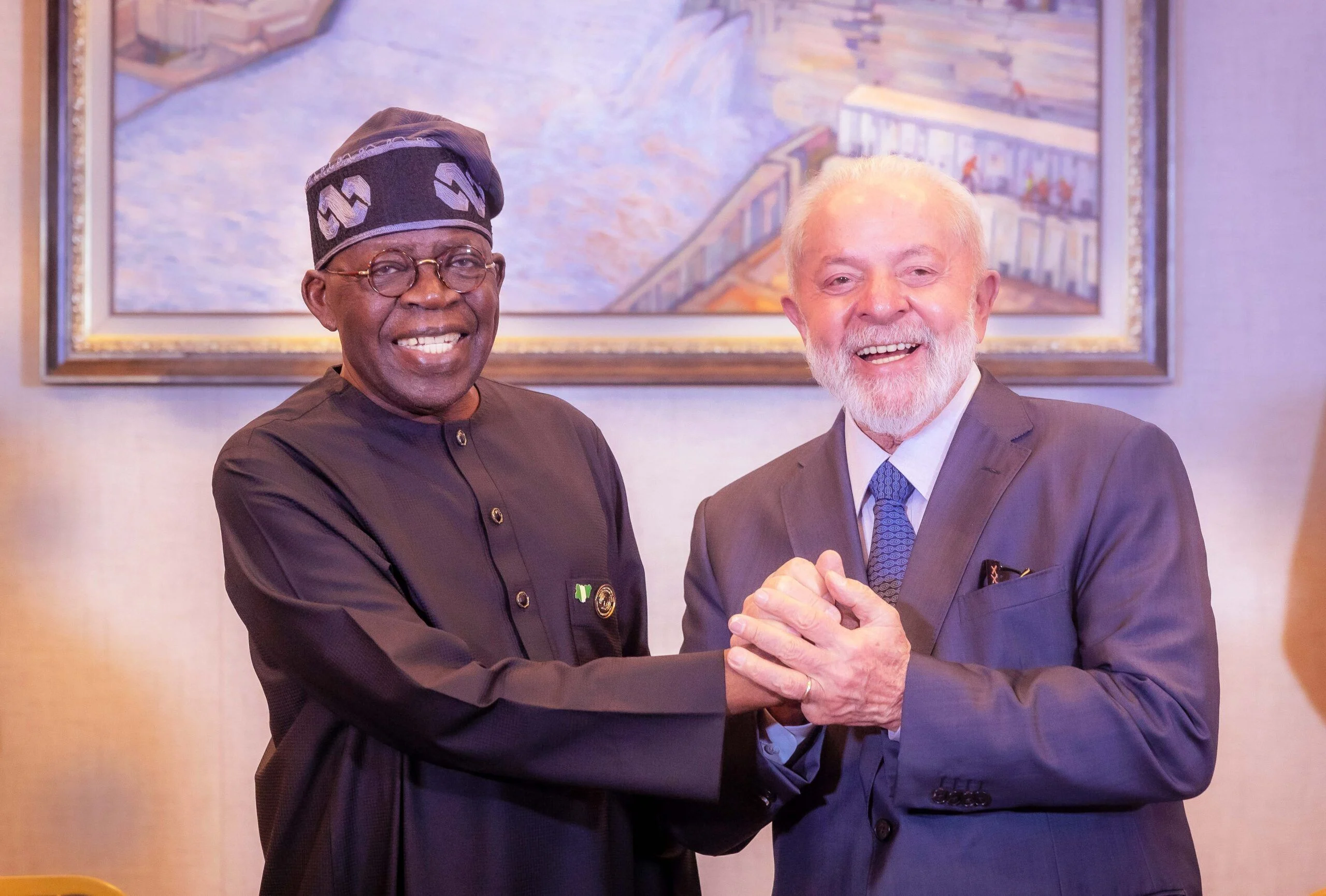
    Even as former colonies disengage from her choking hold, President Tinubu is in a warm embrace with France, signing, on Thursday in Paris, two agreements worth over €300 million.

    Presidential resources reveal that the deal is aimed at advancing critical infrastructure and food security in Nigeria. 

    The agreements were formalized during President Bola Tinubu’s state visit to France, which included a key economic forum at the Palais des Élysée in Paris.

     The event brought together leaders from both countries, including business executives, governors, and top officials, to discuss the future of their partnership.

    The agreements focus on several key sectors, including agriculture, transportation, healthcare, and renewable energy, with the goal of addressing pressing challenges and fostering sustainable growth across Nigeria.

    Nigeria’s Minister of Finance, Wale Edun, and French Minister of Economy, Finance, and Industry, Antoine Armand, signed a Letter of Intent outlining plans for collaboration in these critical areas.

     The package will be distributed across Nigeria’s geopolitical zones, ensuring that all regions benefit from the financial and technical assistance.

    In addition, the financial cooperation will support Nigeria’s ambitious development projects in urban infrastructure, MSMEs, and food security. 

    As part of the deal, the French Development Agency (AFD) committed to funding agro-logistic hubs and other initiatives to improve energy access, agriculture, and small business support.

     The cooperation will also focus on enhancing educational opportunities, especially in STEM fields, to better prepare Nigeria’s workforce for future challenges.

  • Tinubu’s Tax Reform Bills: The Beginning of Fiscal Federalism?

    Tinubu’s Tax Reform Bills: The Beginning of Fiscal Federalism?

    Not a few notable figures from the northern part of the country have expressed vehement opposition to the four tax reform bills proposed by President Bola Tinubu. Apart from the resistance to the piece of legislation by senators Abdul Nigi and Ali Ndume from Bauchi and Borno States, respectively, the greatest salvo yet, was delivered by Governor Babagana Zulum of Borno state who has raised alarms about the potential consequences of the proposed tax reform bills. 

    Governor Zulum warned that the legislation, advancing rapidly through the National Assembly, could severely harm the economic prospects of the North and other regions of Nigeria.

    He compared the swift legislative action on the tax bills to the prolonged process of the Petroleum Industry Bill, which took nearly two decades to pass.  He cautioned that the bills, if enacted, could hinder development efforts, including the ability to pay salaries in Northern states.

    The governor argued that the tax reforms would disproportionately affect certain regions, particularly in the North, as well as parts of the South West and South East. He expressed concern that the bills were being pushed through with little regard for their long-term effects on the country’s future.

    Zulum’s opposition may have been informed by the general intent of the bills which represents a significant shift in the manner of the distribution of VAT revenue.

    The new laws tend to mark the beginning of the much clamoured call for fiscal federalism as it provides for the allocation of VAT revenues based on the states where goods and services are consumed rather than pooling them centrally for redistribution as done for proceeds from the sale of oil and other national assets.

    Mr. Zacch Adedeji, the Federal Inland Revenue Service (FIRS) Chairman argued at a forum that the proposed sharing arrangement aligns VAT with its nature as a consumption tax.

    On the contrary, the north being largely agrarian, produces most cereals and other produce for the food and industrial raw materials needs of the country. Yet they do not benefit from VAT, even though the finished products are taxed.

    It is this mismatch or anomaly that may have been inflaming passions.

    Governor Zulum, however, emphasized that his opposition to the bills did not equate to opposition to the current administration but rather a plea for reconsideration.

     He also stated that some individuals may be misleading President Bola Tinubu into thinking the North does not support his government.

  • Tax Reform Bills Scale Second Reading at the Senate

    Tax Reform Bills Scale Second Reading at the Senate

    The Senate has moved forward with the four tax reform bills presented by President Bola Tinubu, sending them to a second reading on Thursday. 

    After a lengthy debate, the bills were referred to the Finance Committee for further review, with a deadline of six weeks for a report.

    Among the key proposals are the Nigeria Tax Bill 2024, aimed at restructuring the country’s tax framework, and the Tax Administration Bill, which seeks to resolve disputes and create a clearer legal structure for taxes. 

    Additionally, the Nigeria Revenue Service Establishment Bill intends to replace the Federal Inland Revenue Service Act, while the Joint Revenue Board Establishment Bill would establish a tax tribunal and ombudsman.

    Several lawmakers, including Senators Sani Musa and Seriake Dickson, expressed support for the bills, emphasizing the benefits to small businesses and the potential to reduce taxes. 

    In contrast, Senator Ali Ndume raised concerns about the timing of the reforms and issues related to derivation and VAT.

    The bills were further explained to lawmakers by President Tinubu’s economic team during the plenary session.

     Despite some opposition, the Senate voted in favor of advancing the bills to the next stage.

  • Nigeria to Conduct Population Census in 2025

    Nigeria to Conduct Population Census in 2025

    The National Population Commission (NPC) has revealed plans to hold Nigeria’s next population and housing census in 2025, nearly two decades after the previous count in 2006. 

    Nasir Kwarra, the NPC chairman, shared the update during the 2024 Nairobi Summit anniversary in Abuja, addressing the need for accurate data to support better decision-making. 

    Kwarra acknowledged the challenges posed by the long delay, which have impacted resource distribution and policy planning.

     The census was initially set for 2023 but was postponed to allow the incoming government to manage the process. 

    He emphasized the importance of timely data in tackling issues such as gender-based violence, reproductive health, and rural development.

    The upcoming census is seen as crucial for addressing gaps in healthcare, education, and economic development, particularly for vulnerable groups like women and youth. 

    Kwarra also stressed that access to sexual and reproductive health rights is not just a healthcare issue but a matter of social and economic equality.

    Toyin Saraki, founder of the Wellbeing Foundation Africa, expressed support for ongoing advocacy and called for greater collaboration across sectors to advance the goals of the International Conference on Population and Development (ICPD).

  • EFCC To Arraign Yahaya Bello Again Today

    EFCC To Arraign Yahaya Bello Again Today

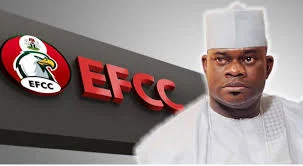
    The troubles may just be starting for former Kogi State Governor Yahaya Bello, who is about to face another round of legal troubles as the Economic and Financial Crimes Commission (EFCC) is arraigning him on allegations of mismanaging N80.2 billion in public funds.

     The proceedings will take place today at the Federal High Court in Abuja, presided over by Justice Emeka Nwite.  

    The case follows months of evasion by Bello, who was previously ordered to be arrested after missing court appearances.

     Earlier in April, Justice Nwite had issued an arrest warrant, but efforts to detain Bello were allegedly obstructed by Kogi’s current governor, Ahmed Ododo. 

    Reports revealed that Ododo used his official vehicle to shield Bello from EFCC operatives.  

    After months of avoiding legal proceedings, Bello voluntarily turned himself in to the EFCC last Tuesday.

     This led to his appearance before Justice Maryanne Anenih of the Federal Capital Territory (FCT) High Court, where he pleaded not guilty and was subsequently remanded in EFCC custody.  

    Initially scheduled for January 21, 2025, the case was fast-tracked by the anti-corruption agency, ensuring that Bello and his co-accused, including his nephew Ali Bello, Dauda Suleiman, and Abdulsalam Hudu, appear in court today. 

    The charges they face span money laundering, misappropriation of public funds, and breach of trust.  

  • House of Reps Approves 2025-2027 Budget Framework 

    House of Reps Approves 2025-2027 Budget Framework 

    The House of Representatives has approved the Medium-Term Expenditure Framework (MTEF) and Fiscal Strategy Paper for the years 2025 to 2027. 

    The approval came with a mandate for several committees to investigate allegations involving the Nigerian National Petroleum Company Limited (NNPCL). 

    Reports from the Revenue Mobilization, Allocation, and Fiscal Responsibility Commission claim that NNPCL has withheld ₦8.48 trillion, citing petrol subsidies.

     Furthermore, the Nigeria Extractive Industries Transparency Initiative’s report suggests that NNPCL failed to remit $2 billion (₦3.6 trillion) in taxes to the federal government.

    The committees are also instructed to verify the total unremitted revenue from the sale of petrol between 2020 and 2023.

    The approved framework includes projections for oil benchmarks, domestic oil production, GDP growth, exchange rates, and inflation for the next three years.

     These figures include an oil benchmark of $75 per barrel for 2025, 2026, and 2027, and GDP growth rates of 4.6%, 4.4%, and 5.5% for the respective years.

     The exchange rate is set at ₦1400/USD, subject to review in 2025. Inflation is projected at 15.75% for 2025, decreasing to 14.21% in 2026, and 10.04% by 2027.

  • Tinubu Appoints Jami’u Abiola as Senior Special Assistant  

    Tinubu Appoints Jami’u Abiola as Senior Special Assistant  

    In an unending orgy fresh appointments, President Tinubu’s bloated cabinet bulges further with the naming of Jami’u Abiola as another assistant.

    The son of the late politician and businessman, Chief MKO Abiola, Jami’u steps in as Tinubu’s Senior Special Assistant on Linguistics and Foreign Matters. 

    The appointment, effective from November 14, 2024, was announced by Segun Imohiosen on behalf of the Secretary to the Government of the Federation.  

    The role aligns with the guidelines of the Certain Political and Judicial Office Holders (Salaries and Allowances, etc) Act 2008, as amended. 

    Before this position, Jami’u served as Special Assistant on Special Duties in the Office of the Vice President.  

    In his new capacity, Jami’u will collaborate with the Federal Ministry of Foreign Affairs to apply his expertise in handling foreign matters and linguistic affairs.

  • More Drama as Yahaya Bello’s Fraud Trial Resumes

    More Drama as Yahaya Bello’s Fraud Trial Resumes

    The trial of Yahaya Bello, the immediate past governor of Kogi State finally got off to a dramatic start today as the trial Justice Maryann Anenih bolted out of the courtroom at some point due to the surging crowd that accompanied the ex-governor.

    How it occurred that agents of the law could not maintain order in the Federal High Court remains inexplicable but it took the intervention of the Mr. Bello himself to bring calm to the courtroom as he prevailed on his crowd of supporters to vacate the courtroom.

    At the resumption of proceedings, the former Kogi State Governor, denied the charges of financial fraud leveled against him by the Economic and Financial Crimes Commission (EFCC). 

    Appearing before Justice Maryann Anenih at the Federal High Court in Maitama, Abuja, Bello and his two co-defendants, Umar Oricha and Abdulsalami Hudu, were confronted with a series of serious allegations of embezzlement involving ₦110 billion.

    The court heard that Bello and his associates were accused of criminal conspiracy, breach of trust, and the possession of stolen property. 

    The charges are linked to accusations of embezzling state funds, which were allegedly used to acquire a series of high-value properties across Nigeria and beyond.

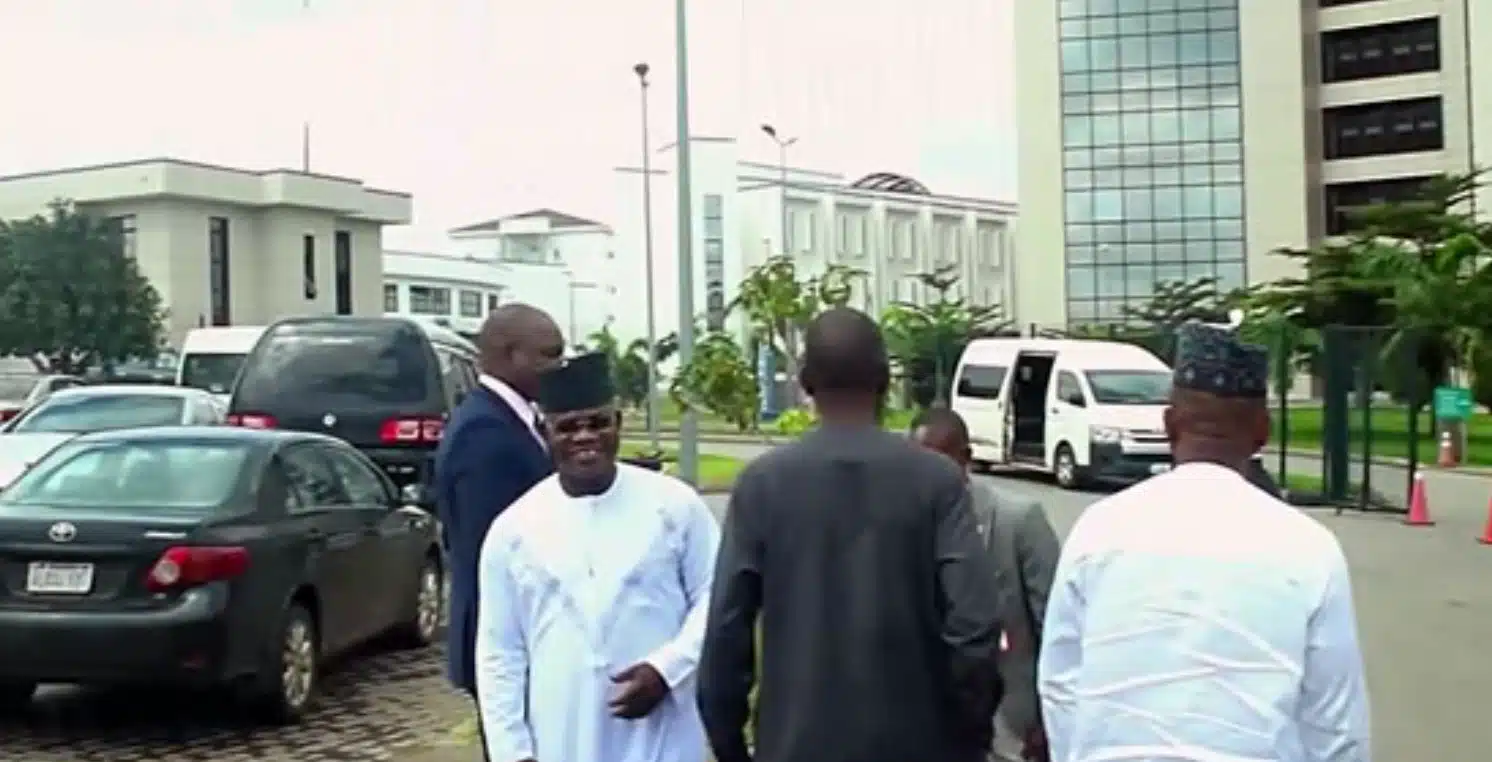
    Bello, who had been elusive in the weeks leading up to the trial, surrendered to the EFCC just a day before the court appearance, amid reports of his avoidance of authorities. Dressed in a traditional white caftan and blue cap, he entered the dock to formally respond to the charges in the case, which the EFCC has termed CR/7781.

    The list of properties tied to the accused includes real estate in Abuja, such as a building in Maitama valued at ₦950 million, a property in Gwarimpa worth ₦100 million, and another mansion in Asokoro priced at ₦920 million. Other properties are located in areas like Wuse Zone 4 and Dubai, including a hotel apartment valued at over 5 million dirhams.

    Additionally, the EFCC claims that Bello and his co-defendants were involved in transferring substantial amounts of money abroad, including $570,330 and $556,265 to a US-based bank. The investigation also uncovered that they were in possession of ₦677.8 million linked to an illicit business, Bespoque Business Solution Limited.

    Bello’s trial has sparked considerable attention, and the outcome of the proceedings could have serious ramifications for the former governor, who served as Kogi’s leader for two terms. 

    The case continues to unfold, with the EFCC determined to recover the allegedly misappropriated funds.