
In what some analysts have likened to the ignoble scenario of corruption fighting against the effort of the government to rein in on corrupt agents of the state, the gambit by 16 state Attorneys General was curtailed by Supreme Court, which on Friday in Abuja, threw out their suit seeking to have the EFCC scrapped.
The suit, which was initially instituted by attorneys general of 16 states, sought the scrapping of the anti-graft agency.
While some states withdrew from the suit, some others asked to be joined as co-plaintiffs.
The state governments, in their suit, had argued that the Supreme Court, in Dr. Joseph Nwobike Vs Federal Republic of Nigeria, held that it was a United Nations Convention against corruption that was reduced into the EFCC Establishment Act and that in enacting the law in 2004, the provision of Section 12 of the 1999 Constitution, as amended, was not followed.
They argued that in bringing a convention into Nigerian law, the provision of Section 12 must be complied with.
The Defence Headquarters (DHQ) has raised alarms about the growing activities of the Lukarawa terror group, which has started recruiting to strengthen its forces.
The DHQ confirmed that the military is actively collaborating with state authorities and other security agencies to prevent the group’s expansion, especially in Sokoto and Kebbi states, where it has been operating.
Lukarawa, which has had a presence in northern Nigeria for several years, recently intensified its recruitment drive, particularly targeting local youth through sermons and welfare incentives.
The group is also exploiting social media platforms to spread their message.
Despite these efforts, the DHQ remains vigilant, working alongside other agencies to halt the group’s influence.
A former DSS director, Mike Ejiofor, clarified that while the group has been active since 2018, its size is not currently a major national security threat.
However, he urged for continued surveillance and community cooperation to prevent further escalation.
Security expert Timothy Avele echoed this sentiment, revealing that the group’s operations, such as collecting levies and influencing local governance in Kebbi, highlight gaps in intelligence operations.
A scene described as embarrassing and unbecoming of a government unraveled today in Abuja as pensioners barricaded streets, especially the entrance of the Federal Ministry of Finance, to express their frustration over delayed pension payments.
The protest, spearheaded by the National Union of Contributory Pensioners, focused on unpaid accrued rights—benefits earned under the old pension scheme before the 2004 transition to the Contributory Pension Scheme.
These entitlements are meant to be transferred to Pension Fund Administrators (PFAs) to allow retirees access upon retirement.
However, some pensioners who retired as far back as 2003 claim they have yet to receive their due, leaving them unable to secure funds through the Pension Administration System.
The pensioners are calling on the federal government to resolve the backlog swiftly.
Nigeria’s ever surging debt hits N134.297 trillion as of last June, dragging each citizen into a N619,501 debt burden without much to show for it.
Nigeria’s Debt Management Office (DMO) reports that the figure stems from Nigeria’s total public debt, which surged to N134.297 trillion by the end of June 2024.
With the country’s population estimated at 216.7 million by the National Bureau of Statistics (NBS), the debt burden per capita reflects the mounting financial strain on citizens.
This amount is equivalent to nine times the newly approved minimum wage of N70,000.
A breakdown of the debt reveals that domestic liabilities stand at N71.2 trillion, while external obligations amount to N63 trillion.
The federal government accounts for a significant portion, with domestic debt at N66.9 trillion and external debt at N55.8 trillion. State governments owe a combined N11.3 trillion.
The N134 trillion debt figure represents a N13 trillion increase since March 2024, raising concerns about the country’s growing dependence on borrowing to finance its operations.
The guilty is always afraid. That explains the current judicial play being simulated by Lagos State Governor, Babajide Sanwo-Olu who has sued the Economic and Financial Crimes Commission (EFCC) against any future trial in the event that any evidence of stealing is found against him.
According to the Nigerian constitution state governors and the president of the country are immune from criminal prosecution while in office.
Further to this however, Mr. Sanwo-Olu has sued the EFCC to insist that even if evidences of stealing are found against him, he should not be tried for the theft after his term of office.
Miffed by this affront on the performance of its duties, the EFCC has asked a Federal High Court in Abuja to dismiss the case filed by Babajide Sanwo-Olu, which challenges potential investigations and arrest plans after his tenure.
The anti-corruption body described the governor’s claims as speculative, arguing that they lack legal merit.
Sanwo-Olu, in his lawsuit, sought several declarations to protect his fundamental rights.
Among his requests, he asked the court to affirm his right to privacy and prevent any perceived harassment or intimidation by the EFCC during or after his term as governor.
He alleged that political opponents might use the agency to orchestrate his arrest based on unfounded corruption allegations.
In its response, the EFCC maintained that no investigation or arrest threats had been made against Sanwo-Olu.
The agency clarified that it follows due process in all cases, using official channels for communication and investigation. The EFCC further argued that Sanwo-Olu’s concerns are hypothetical and intended to mislead the court.
The case, initially filed in June, was updated on October 31. Justice Joyce Abdulmalik has scheduled the next hearing for November 26.
There are indications that the suit may be withdrawn before the adjourned date.
Nigeria Police in Katsina state has foiled three simultaneous kidnap attempts on three quarters in Jibia Township of the state and rescued 21 abducted victims.
ASP Abubakar Sadiq-Aliyu, the command’s spokesman, who disclosed this in a statement in Katsina on Friday, said the efforts were in collaboration with the army, members of the State Community Watch Corps, and Vigilantes.
He said: “In a swift and coordinated response, we successfully foiled simultaneous bandits’ attacks at Ka’ida, Unguwar One Boy, and Danmarke quarters in Jibia Township, Katsina State, on Nov. 7.
“At about 9:15 p.m. on Thursday, suspected armed bandits launched coordinated attacks on the two communities.
“However, the swift response of the joint security team led by the DPO Jibia repelled the attackers, resulting in a fierce gun duel that lasted for over an hour.
“The superior firepower and tactical advantage of the joint security team eventually forced the bandits to retreat with unspecified casualties as the operation resulted in the successful rescue of 16 victims trapped by the bandits.”
Mr Sadiq-Aliyu regrettably said that another five persons rescued sustained gunshot injuries as a result of the bandits’ attack, and they were immediately rushed to a nearby hospital for medical attention.
The police spokesman added that: “Sadly, one member of the state’s security outfit, and a vigilante member lost their lives during the encounter, paying the ultimate price,” he said.
The spokesmen assured that further development would be communicated in due course.
“The command, in collaboration with sister security agencies, while working closely with all relevant stakeholders, is intensifying efforts to ensure the arrest of the perpetrators of this dastardly act.”
“The Commissioner of Police in the state, Mr Aliyu Abubakar-Musa reassures the public of the command’s commitment to safeguarding lives and property across the state,” Mr Sadiq-Aliyu said.
He urged the citizens to remain vigilant and report any suspicious activities to the nearest police station or call the command’s emergency numbers: 0815 967 7777, and 0707 272 2539.
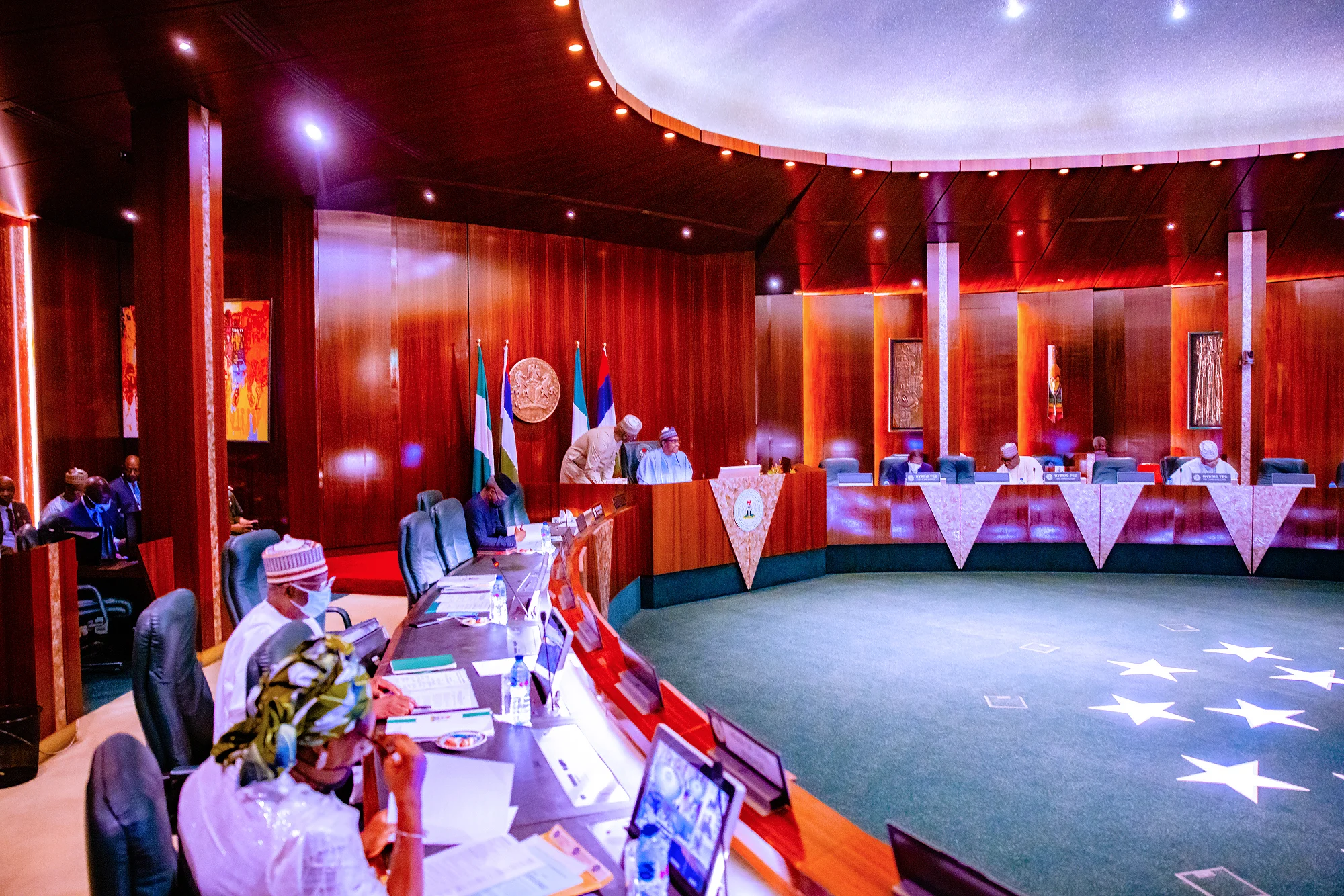
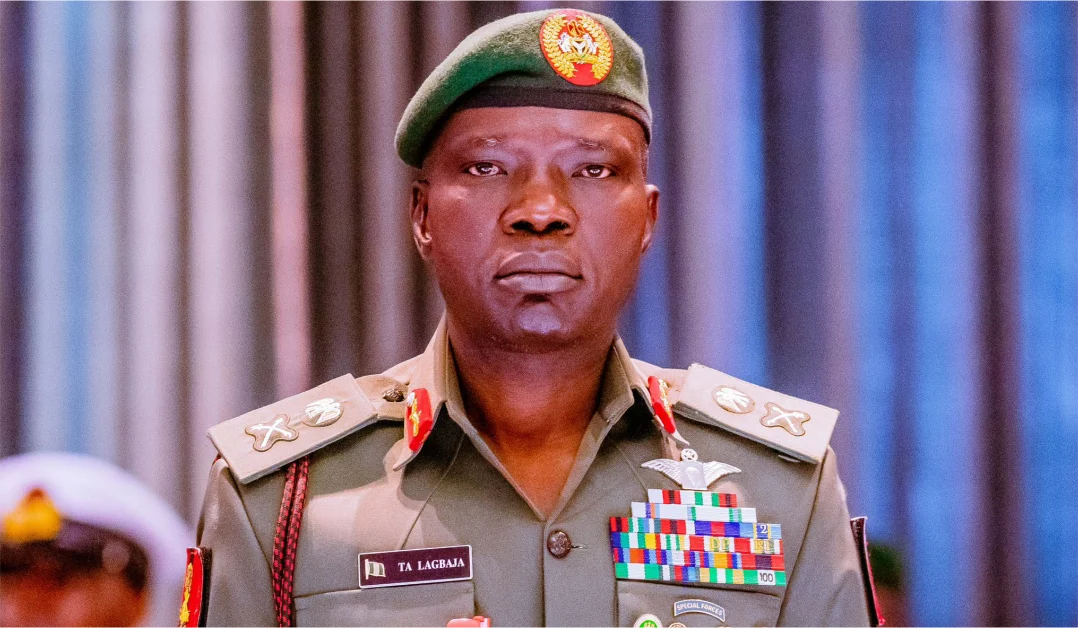
President Bola Ahmed Tinubu has postponed the Federal Executive Council (FEC) meeting in honour of the late Chief of Army Staff, Taoreed Lagbaja, who passed away on Tuesday night.
Tinubu also ordered flags to be flown at half-staff nationwide for seven days in honour of the departed general.
Lagbaja served as Chief of Army Staff from June 19, 2023, till his death on November 5, 2024.
The postponement of the FEC meeting was contained in a statement by the Special Adviser to the President on Information and Strategy, Bayo Onanuga, on Wednesday, November 6.
The statement reads: “President Bola Ahmed Tinubu, commander-in-chief of the Armed Forces, has ordered rescheduling the Federal Executive Council meeting till another date to be announced.”
Initially scheduled for today, the council meeting was postponed in honour of Lt. General Taoreed Lagbaja, the Chief of Army Staff, who passed away on Tuesday night.
“General Lagbaja served as the Chief of Army Staff from June 19, 2023, till his death on November 5, 2024.”
President Tinubu also ordered flags to be flown at half-staff nationwide for seven days in honour of the departed general.”
Earlier today, President Tinubu expressed his heartfelt condolences to the Lagbaja family and the Nigerian Armed Forces.
“He wished Lt. General Lagbaja eternal peace and honoured his significant contributions to the nation.”
President Bola Ahmed Tinubu has confirmed the passing of Lt. General Taoreed Abiodun Lagbaja, Chief of the Army Staff, at age 56.
This was made known in a statement on Wednesday morning by Tinubu’s Special Adviser on Information and Strategy, Bayo Onanuga.
Onanuga stated that Lagbaja passed away on Tuesday night in Lagos after a period of illness.
Born on February 28, 1968, Lt. General Lagbaja was appointed Chief of Army Staff on June 19, 2023, by President Tinubu.
His distinguished military career began when he enrolled in the Nigerian Defence Academy in 1987.
On September 19, 1992, he was commissioned as a Second Lieutenant in the Nigerian Infantry Corps as a member of the 39th Regular Course.
Throughout his service, Lt. General Lagbaja demonstrated exceptional leadership and commitment, serving as a platoon commander in the 93 Battalion and the 72 Special Forces Battalion.
He played pivotal roles in numerous internal security operations, including Operation ZAKI in Benue State, Lafiya Dole in Borno, Udoka in Southeast Nigeria, and Operation Forest Sanity across Kaduna and Niger States.
An alumnus of the prestigious U.S. Army War College, he earned a Master’s degree in Strategic Studies, demonstrating his dedication to professional growth and excellence in military leadership.
Lt. General Lagbaja is survived by his beloved wife, Mariya, and their two children.
President Tinubu expressed his heartfelt condolences to the family and the Nigerian Armed Forces during this difficult time.
He wishes Lt. General Lagbaja eternal peace and honours his significant contributions to the nation
Experts at the 6th Annual Lecture of the social club, Just Friends held today at Bolingo Hotels in Abuja asserts that the escalating cost of governance is a major obstacle to Nigeria’s development.
The event convened professionals and stakeholders across various sectors to discuss the implications of the high cost of governance on economic growth and social welfare.
The guest speaker, Dr. Sam Amadi, a notable advocate for ethical leadership, emphasized that the financial burden of governance detracts from the effective allocation of the country’s resources.
Referencing Transparency International’s 2023 Corruption Perception Index, which ranked Nigeria 14th out of 180 countries, the speaker pointed out that despite Nigeria’s wealth in natural resources, it continues to grapple with poverty and underdevelopment.
“The inefficiencies and corruption in our governance systems result in significant resource wastage, hindering economic progress and diminishing the quality of public services,” the speaker stated. “What we require is transformative leadership that prioritizes accountability and professionalism over personal interests.”
The discussion also highlighted the urgent need for systemic reforms to improve public sector efficiency. Participants agreed that strengthening institutions is vital for creating a favorable environment for sustainable growth.
The speaker drew comparisons between Nigeria and countries like Norway and Finland, where effective governance has led to significant advancements in development and quality of life for citizens.
(From left): Chairman of the Occasion, Olorogun Peter Igho; President of Just Friends Club of Nigeria(JFCN), Mr Fred Ohwahwa; Guest Lecturer, Dr Sam Amadi; Mrs. Eugenia Abu; Mr.Abdulhakeem Mustapha SAN and Managing Director, News Agency of Nigeria (NAN), Mallam Ali M Ali, during the 6th Annual JFCN Lecture in Abuja on Tuesday (5/11/24).
Earlier, the President of the club, Mr. Fred Ohwahwa told the gathering that the choice of the keynote topic was informed by the Club’s concern for the deplorable condition of the Nigerian state.
“From whatever angle you look at it, Nigeria is an apology to its vibrant citizens, the African continent, and the Black race. We are far behind in virtually all metrics of development. And this is in spite of abundant human and material resources the country is blessed with,” he lamented.
Mr. Owahwa, a veteran journalist who was the Editor of the Guardian Newspaper, said apart from the public lectures, the club also indulges in charity works.
“For us in Just Friends Club in Nigeria, apart from the Public Lecture Series, we place a lot of emphasis on reaching out to the needy in the society. We have made it a duty that every year, sometimes multiple times in a year, to reach out to them.
We have visited Old Peoples Home in Kado, Orphanages in Gwarinpa, Karu, Kuje; children with disabilities in Kubwa and Anawim Home in Gwagwalada run by Catholic nuns.”
A panel discussion featuring notable professionals and moderated by legendary broadcaster, Mrs. Eugenia Abu exhaustively deliberated on the subject of cost as well as governance models suitable for Nigeria and concluded that the greatest challenge to development of the Nigerian state was the failure of leadership.
As the event concluded, attendees were called to action, urging them to advocate for a governance framework that emphasizes ethics and accountability, aligning with the aspirations of the Nigerian populace.
The Just Friends Club’s initiative to foster such critical discussions reflects an increasing recognition of the essential role of governance in driving national development.
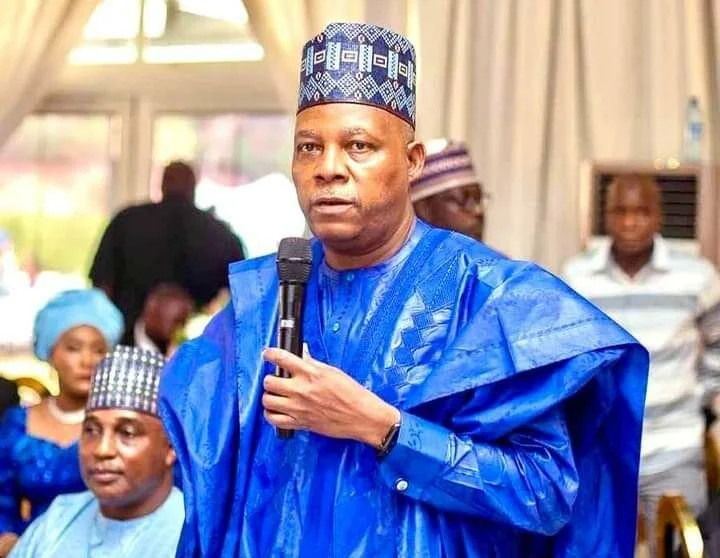
Vice President Kashim Shettima upscales Nigeria’s Human Capital Development (HCD) agenda with the launch of the second phase of the critical development strategy, November 1, Abuja.
He inaugurated the second phase, christened as HCD 2.0, during a meeting of the Human Capital Development Programme Steering Committee at the Presidential Villa in Abuja.
The launch marks a renewed commitment to enhancing healthcare, education, and economic inclusion across Nigeria, building upon efforts initiated in 2018.
Vice President Shettima acknowledged the progress made since the initial HCD 1.0 strategy, which laid essential groundwork to improve Nigeria’s global human capital rankings.
Recognizing critical gaps in health, education, and employment, HCD 1.0 united national and state-level stakeholders in a shared goal to strengthen Nigeria’s health and education sectors by 2030.
“Today, we are not only assessing our journey but setting a new path with HCD 2.0,” Shettima stated, describing the initiative as more than a program, but rather a “national commitment” aimed at creating a healthier, more educated, and inclusive Nigeria.
HCD 2.0 introduces an expanded focus on equitable healthcare access, including digital health solutions, innovative financing, and climate-resilient practices to ensure all Nigerians receive essential services.
Another key aspect of HCD 2.0 is bridging the digital divide and advancing financial inclusion, with measures to promote online banking, digital payment systems, and fintech solutions, allowing broader participation in the economy.
Shettima emphasized that HCD 2.0’s success relies on support from federal and state leaders, private sector partners, and civil society, urging all stakeholders to embrace this shared vision for a sustainable future.