
Category: News

  • NASS Seeks Take-Off Grants for Otukpo, Other New Teaching Hospitals

    NASS Seeks Take-Off Grants for Otukpo, Other New Teaching Hospitals

    The Joint Committee on Health of Nigeria’s National Assembly has appealed to the Joint Committee on Appropriations to make financial provisions for take-off grants to support newly established federal hospitals across the country.

    Chairman of the committee, Ipalibo Banigo, made the appeal on Wednesday while presenting the harmonised report of the joint Senate and House Committees on Health on the 2026 budget proposals of ministries, departments and agencies (MDAs).

    Banigo said the proposed take-off grants were critical to ensuring the effective and efficient operation of the new health facilities, noting that they would provide essential start-up funding to address immediate operational needs.

    The newly established hospitals include the Federal University Teaching Hospital, Lafia and the Federal University Teaching Hospital, Akure.

    Others are the Federal University of Health Sciences Teaching Hospital, Otukpo and the Federal University of Health Sciences Teaching Hospital, Ila-Orangun.

    Banigo stated that the Federal Government is targeting an investment of six per cent of the total national budget allocation to the health sector, net of liabilities, as part of efforts to strengthen healthcare systems nationwide.

    “The aim is to revitalise our hospitals with medication and better resources, and to care for all Nigerians by procuring essential drugs for distribution to the public, ensuring quality healthcare facilities nationwide,” she said.

    She disclosed that the 2026 budget proposal for the Federal Ministry of Health and Social Welfare includes N1.17 trillion for personnel costs, N57.03 billion for overheads, and N924.25 billion for capital expenditure, bringing the total allocation to N2.14 trillion.

    The committee, she added, observed during its review of the 2025 budget performance and the 2026 budget defence that many hospitals were yet to receive 100 per cent of their 2024 appropriations.

    “Although all of the 2024 appropriation had been uploaded, about 60 per cent of payments are still outstanding, and in some cases as much as 30 per cent of the appropriations remain unpaid,” Banigo said.

    Responding, the Deputy Chairman of the Joint Committee on Appropriations, Mohammed Monguno, assured lawmakers that the committee would look into the funding concerns raised by the health committee.

  • Kano to Begin 2026 Hajj Airlift May 13

    Kano to Begin 2026 Hajj Airlift May 13

    The Kano State Pilgrims Welfare Board has fixed May 13, 2026, for the airlift of the first batch of pilgrims for this year’s Hajj.

    Director-General Abubakar Ibrahim-Matawalle announced this on Wednesday during a visit to the Kano State House of Assembly, following the official airlift schedule released by the National Hajj Commission of Nigeria.

    According to a statement by the board’s spokesman, Sulaiman Dederi, Ibrahim-Matawalle said all logistics and administrative arrangements had been completed.

    “We are fully prepared. Every necessary arrangement is in place to guarantee a smooth, safe and hitch-free operation for our pilgrims,” he said, stressing that briefing the Assembly ahead of the airlift was part of the board’s commitment to transparency and accountability.

    He said the board would combine experience with new strategies to ensure a successful Hajj exercise for pilgrims from Kano State.

    Deputy Speaker of the Assembly, Muhammad Bello, congratulated Ibrahim-Matawalle on his appointment and pledged the legislature’s continued support to ensure a seamless operation.

    The Director-General also visited the Protocol Section of the Federal Ministry of Foreign Affairs in Kano to strengthen inter-agency collaboration. The Head of Protocol, Nu’uman Nuhu-Bamalli, assured the board of the ministry’s support.

    Ibrahim-Matawalle reaffirmed the board’s resolve to ensure the welfare, safety and spiritual fulfilment of all pilgrims from Kano State during the 2026 Hajj.

  • Alleged N90.4m Fraud: Court Admits More Exhibits Against Ex-NHIS Boss

    Alleged N90.4m Fraud: Court Admits More Exhibits Against Ex-NHIS Boss

    The Federal Capital Territory High Court sitting at Kuchiako, Kuje, Abuja, has admitted additional documentary exhibits in the ongoing trial of former Executive Secretary of the National Health Insurance Scheme, Usman Yusuf, who is standing trial over alleged financial impropriety.

    Justice Chinyere E. Nwecheonwu admitted the documents on Wednesday, February 25, 2026, following their presentation by the prosecution led by the Economic and Financial Crimes Commission.

    The documents were tendered through the second prosecution witness, James Balami, the Director of Procurement at the National Health Insurance Scheme, during proceedings that commenced earlier in January 2026.

    In her ruling, Justice Nwecheonwu held that the documents were properly admitted in line with extant legal provisions, noting that the defence raised no objection at the point of tendering. Defence counsel, O. I. Habeeb, SAN, did not oppose their admissibility.

    Among the exhibits admitted were Certified True Copies of letters dated November 11, 2016, marked as Exhibits E1–E32. Also admitted were the Certified True Copy of the NHIS Procurement Plan for 2016 (Exhibits F1–F4), the NHIS Procurement Plan for 2017 (Exhibits G1–G5), and the Certified True Copy of the NHIS Procurement Act 2016 (Exhibits H1–H2).

    While being led in evidence by prosecution counsel Francis Usani, the witness narrated his interactions with the EFCC following his invitation by the commission.

    “After I took those documents to the Commission, I made statements. The statements were not made in one day. I can recognise the statements. There are five,” Balami told the court.

    However, attempts by the prosecution to tender the extra-judicial statements of the witness were opposed by the defence.

    Following arguments from both sides, Justice Nwecheonwu adjourned the matter to May 13 and 14, 2026, for ruling on the admissibility of the statements and continuation of trial.

    Professor Yusuf is facing a five-count charge bordering on embezzlement, conferring undue advantage, and fraud involving the sum of N90,439,178.00.

    Public Reactions Trail Trial

    The court proceedings have continued to attract strong reactions on social media, where opinions remain sharply divided.

    While some commentators insist that Yusuf should be allowed to defend himself in court, others have questioned what they describe as selective prosecution by anti-graft agencies.

    Several commenters compared the case with other high-profile corruption allegations involving former governors and senior political figures, arguing that public confidence in the anti-corruption fight depends on fairness and consistency.

    Others cautioned against drawing conclusions before the conclusion of trial, stressing the constitutional principle of presumption of innocence.

    As the case progresses, the court is expected to rule on the disputed extra-judicial statements at the next adjourned date, a decision that could shape the direction of the trial going forward.

  • Nigeria Defeats European Dynamics in $6.2m Arbitration Case

    Nigeria Defeats European Dynamics in $6.2m Arbitration Case

    Nigeria has secured a major legal victory after an arbitral tribunal dismissed in its entirety a $6.2 million claim brought against the country by European Dynamics UK Ltd, an international technology contractor, over a disputed national e-Procurement project.

    The ruling followed an arbitration initiated by the company against the Bureau of Public Procurement (BPP) and was delivered at the International Centre for Arbitration and Mediation, Abuja. The decision, which is final and not subject to appeal, was handed down by Mrs Funmi Roberts, the sole arbitrator.

    This development was disclosed in a statement issued by Mr Kamarudeen Ogundele, Senior Assistant on Communication and Publicity to the Lateef Fagbemi, the Attorney-General of the Federation and Minister of Justice.

    According to the statement, the tribunal dismissed all claims by European Dynamics, thereby relieving Nigeria of a potential financial exposure estimated at more than $6.2 million—equivalent to about ₦9.3 billion in claimed payments and damages.

    European Dynamics had sought approximately $2.4 million for alleged milestone completions, $3 million in general damages, and an additional $800,000 as settlement claims, all of which were rejected by the tribunal.

    Background to the Dispute

    The dispute arose from a contract for the design, development, customisation, supply, installation and maintenance of a national electronic Government Procurement (eGP) system. The project was financed with support from the World Bank and was designed to enhance transparency, accountability and efficiency in federal public procurement.

    Upon assuming office, the Director-General of the BPP, Adebowale Adedokun, inherited both a stalled technology project and ongoing arbitration proceedings. Although discussions had previously taken place regarding an out-of-court settlement, the bureau opted to proceed with arbitration, insisting that payments must be strictly tied to verifiable value delivered.

    Tribunal Upholds Nigeria’s Position

    Central to the dispute was the User Acceptance Test (UAT) conducted by the BPP, which revealed significant functional deficiencies in the system, including critical omissions and errors affecting performance.

    The bureau argued that unlike traditional supply contracts, software customisation projects require performance validation, with delivery deemed complete only after a successful UAT confirming compliance with technical, statutory and operational requirements.

    The tribunal agreed with Nigeria’s position, holding that the identified deficiencies were the contractor’s responsibility to remedy at no additional cost. It further ruled that European Dynamics, as the technical expert, bore full responsibility for ensuring compliance with contractual obligations, regardless of any earlier technical documents approved by the BPP.

    The arbitrator also found no contractual basis for the contractor’s claim that multiple project phases had been merged into a single phase, noting that payments under the contract were clearly structured in phases.

    A Landmark Signal for Public Sector Contracting

    Presenting the arbitral award to the Minister of Justice, Adedokun described the outcome as a landmark moment for public sector technology contracting in Nigeria.

    “This particular vendor has taken various African countries to court and won every single case. Nigeria is the first to defeat them,” he said, praising the confidence placed in Nigerian legal professionals.

    He expressed appreciation to the Attorney-General for authorising the proceedings, noting that the decision saved the country billions of naira that can now be redirected toward critical national development.

    Commending the BPP leadership and the legal team, Fagbemi described the victory as a strong signal to the international community.

    “By standing up to European Dynamics, Nigeria has instilled courage in other African nations to protect their own resources. It is no longer business as usual,” the minister said.

    Nigeria’s legal team was led by Johnson & Wilner LLP, a Nigerian business and technology law firm, with Basil Udotai, the firm’s founding partner, leading the arbitration alongside strategic partners and associates.

    The ministry noted that legal representatives for the BPP have encouraged the integration of lessons from the arbitration into ongoing e-procurement reforms, with the aim of strengthening contract performance oversight and reducing the risk of future disputes.

  • BOBA Calls for Revival of Discipline, Integrity in Leadership at Murtala Muhammed Book Launch

    BOBA Calls for Revival of Discipline, Integrity in Leadership at Murtala Muhammed Book Launch

    The Barewa Old Boys Association (BOBA) has renewed calls for the revival of Nigeria’s founding values of discipline, integrity, and courage in leadership, drawing inspiration from the enduring legacy of former Head of State, Murtala Muhammed.

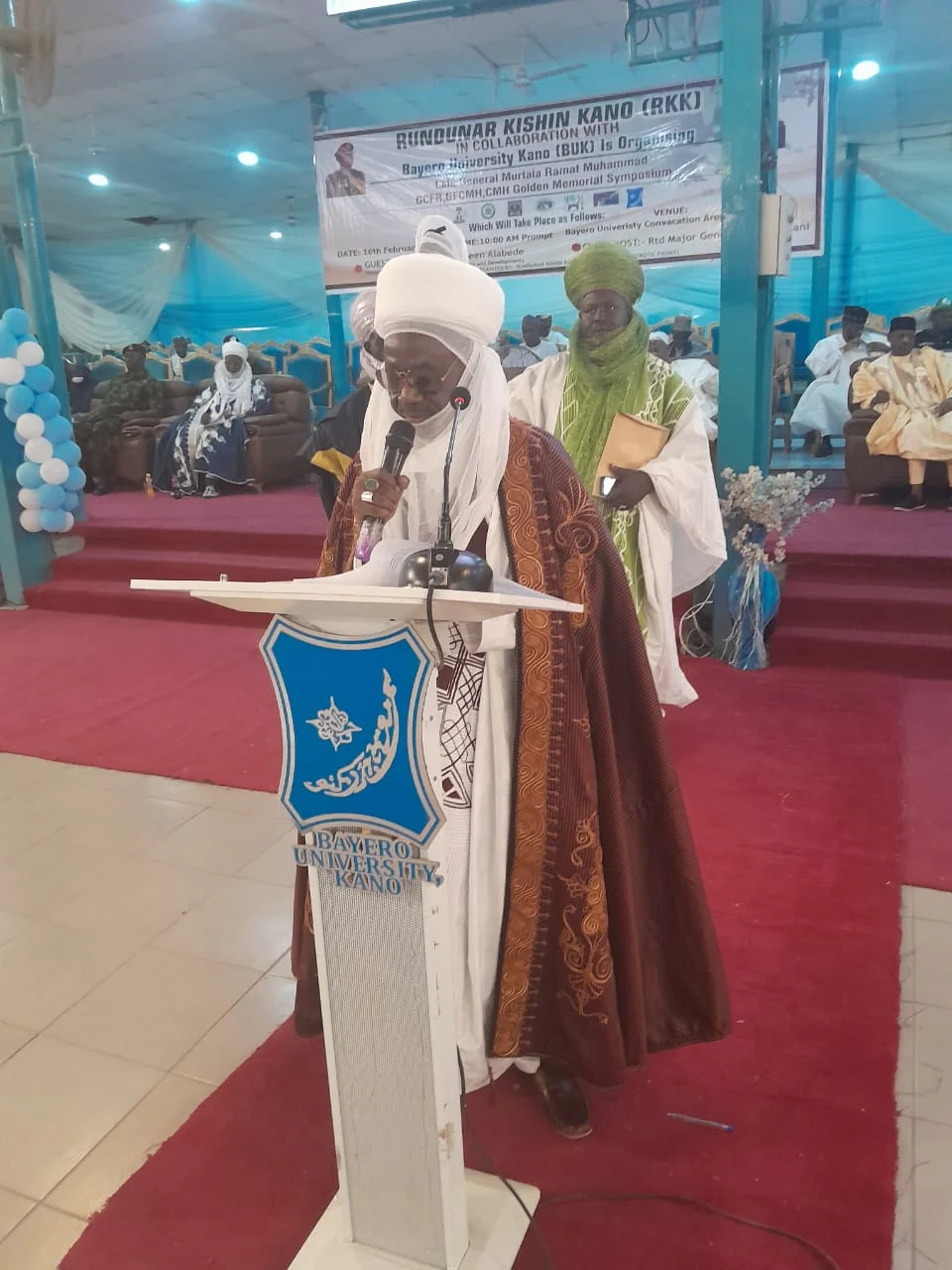
    The call was made at the launch of the book Murtala Muhammed: Unveiling the Ancestral Roots of a Nigerian General, where the President of BOBA was represented by Sarkin Shanun Kano, HRH Shehu Mohammad, FCA, FCCA, who described the occasion as “both an institutional privilege and a national obligation to celebrate a life of patriotic service.”

    Speaking on behalf of the Association, the BOBA President noted that, fifty years after his death, Murtala Muhammed’s name still resonates with urgency, courage, and deep patriotism.

    “Fifty years after his passing, Murtala’s name still carries the electricity of urgency, courage, and patriotism. Before he commanded troops, he commanded respect among his peers. Before he led the nation, he learned to lead himself,” he said.

    The Association traced the foundation of the late General’s leadership to his formative years at Barewa College, where he was admitted in 1952.

    The college’s strict discipline and leadership-oriented culture were described as crucial in shaping his character, instilling values of responsibility, courage, and excellence that later defined his national service.

    According to the BOBA President, three enduring lessons stand out from Murtala Muhammed’s life: that leadership begins early, discipline is the architecture of greatness, and courage is a moral decision before it becomes a public act.

    He reminded Nigerians that Murtala Muhammed’s famous declarations: “Nigeria will not tolerate indiscipline” and “Africa has come of age,” were reflections of convictions formed long before he assumed national power.

    “The story of Murtala Muhammed is not only a military story; it is an educational story. It proves that institutions matter and that the character we build in youth determines the destiny we reach in adulthood,” he added.

    In the press release authored by Stephen Ogboli, BOBA reaffirmed its commitment to strengthening schools and mentoring young Nigerians in values-based leadership, describing such efforts as “the truest memorial to the Murtala Muhammed legacy.”

    The Association further urged public officials and institutions to restore discipline, integrity, and urgency in national service, noting that Murtala Muhammed’s brief tenure in office remains a benchmark for courageous, people-centred governance.

    The solemn event attracted scholars, government officials, military representatives, and members of the Barewa community, and concluded with prayers for the late leader, asking Allah to grant General Murtala Ramat Muhammed eternal rest in Jannatul Firdaus.

  • Timing Dispute Sparks Protest as Akpoti-Uduaghan Misses NCDC Budget Session

    Timing Dispute Sparks Protest as Akpoti-Uduaghan Misses NCDC Budget Session

    A dispute over scheduling on Monday sparked fresh controversy in the Senate as Natasha Akpoti-Uduaghan protested what she described as her exclusion from a budget defence session of the North-Central Development Commission (NCDC).

    The budget defence, held at the National Assembly of Nigeria, was scheduled to begin at 10:00 a.m. and concluded shortly after 11:00 a.m. According to sources familiar with the proceedings, the Kogi Central lawmaker arrived at the venue around noon, only to discover that deliberations had already ended.

    Senators Akpoti-Uduaghan, Titus Zam and aids during the rowdy session.

    Akpoti-Uduaghan reportedly expressed dissatisfaction with the timing of the session, arguing that it effectively prevented her from taking part. Sources said her protest was not aimed at the substance of the proposed ₦140 billion 2026 NCDC budget, but rather at what she perceived as being shut out of the process entirely.

    Earlier, the chairman of the Senate Committee on NCDC, Titus Zam, told journalists that committee members had examined the commission’s estimates and found them aligned with the development priorities of the North-Central region. He said the panel advised the commission to place strong emphasis on agriculture and security during implementation.

    Monday’s incident comes just days after Akpoti-Uduaghan staged a walkout during a separate oversight session of the Senate Committee on Steel Development. During that meeting, she clashed with committee chairman Patrick Ndubueze after he moved to conclude questioning of the Minister of Steel Development, Shuaibu Audu, despite her request to continue speaking.

    The senator insisted she still had critical issues to raise and accused the committee leadership of curtailing her participation before walking out of the session.

    Taken together, the two episodes have intensified scrutiny of procedural practices within Senate committees, particularly around meeting schedules, members’ participation, and the management of speaking opportunities during budgetary and oversight engagements.

  • UN Chief Guterres Mourns Deadly School Shooting in Rural Canada

    UN Chief Guterres Mourns Deadly School Shooting in Rural Canada

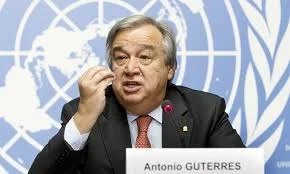
    Secretary-General of the United Nations, António Guterres, has expressed deep sorrow following Tuesday’s deadly school shooting in Tumbler Ridge that left at least eight people dead and 25 others injured.

    Speaking at the UN’s daily press briefing on Wednesday, the Secretary-General’s spokesperson, Stéphane Dujarric, said Guterres was “saddened to learn of the tragic shooting” in the small rural community located in British Columbia.

    “The Secretary-General extends his deepest condolences to those affected and his sympathies to the Government and people of Canada,” Dujarric told reporters.

    Victims Include Students and Teacher

    According to media reports, the victims include at least three female students, two male students and a teacher at the local secondary school. Two additional individuals were found dead at a nearby residence. Local police have reportedly identified them as the suspect’s mother and stepbrother.

    Authorities said the suspect, who was born male but was transitioning and identified as female, was discovered inside the school with an apparent self-inflicted fatal wound.

    Among the 25 injured, two individuals were airlifted to hospital in critical condition with life-threatening injuries.

    Small Community in Shock

    Tumbler Ridge is a remote community in the Canadian Rockies, located more than 1,000 kilometres northeast of Vancouver and near the Alberta border. The secondary school serves approximately 175 students from Grades 7 to 12, making the tragedy particularly devastating for the tight-knit town.

    The shooting has sent shockwaves across Canada, prompting expressions of grief and solidarity from national and international leaders. Authorities continue to investigate the circumstances surrounding the attack as the community begins mourning the victims and supporting those injured in the tragedy.

  • NAHCON in Turmoil as Usman Resigns, Stakeholders Demand Total Overhaul

    NAHCON in Turmoil as Usman Resigns, Stakeholders Demand Total Overhaul

    Nigeria’s Hajj industry is once again under intense scrutiny following the resignation of Prof. Abdullahi Usman as Chairman and Chief Executive Officer of the National Hajj Commission of Nigeria (NAHCON), with stakeholders calling for a comprehensive overhaul of the commission.

    Usman’s resignation, which takes effect Monday, was announced on Wednesday in Abuja. He cited personal reasons for stepping down after about 14 months in office.

    However, industry experts argue that his exit reflects deeper structural and political tensions that have continued to destabilize the commission.

    Recurring Leadership Changes Raise Concern

    Within the last two years, NAHCON has witnessed three leadership changes, a trend stakeholders describe as troubling for the stability of Hajj operations.

    Alhaji Zikrullah Hassan served as NAHCON Chairman from December 2019 to October 2023 following his appointment by former President Muhammadu Buhari.

    During his tenure, the commission navigated the challenges of COVID-19 restrictions, introduced the Hajj Savings Scheme, and established the Hajj Institute of Nigeria.

    Hassan was replaced by Alhaji Jalal Ahmad Arabi, appointed by President Bola Tinubu on Oct. 17, 2023, for a four-year term. Arabi was later removed amid an investigation into alleged misappropriation of funds released for the 2024 Hajj exercise.

    Following those allegations, Tinubu appointed Usman in October 2024. His tenure, however, was marked by internal disputes and allegations concerning financial management during the 2025 Hajj, generating public scrutiny and tension within the commission.

    “Campaign of Calumny” — Experts React

    Abubakar Jiddah Usman, a Hajj industry expert, said the frequent leadership changes highlight entrenched discord within and outside the sector.

    “Yes, Prof. Abdullahi Usman has resigned. Whether voluntary or forced is immaterial,” he said.

    “What remains indisputable is that anyone overseeing the Hajj industry in Nigeria faces a campaign of calumny from within and outside the sector. Within two years, NAHCON has changed leadership three times. Shall we continue this way?”

    He dismissed claims that Usman lacked administrative competence, arguing that fluency in Arabic or clerical background had never been a defining criterion for success in managing Hajj operations.

    “To argue that modern Hajj operations require less Arabic fluency is baseless. Were previous chairmen deficient in administrative skills?” he queried.

    He added that past chairmen also faced allegations ranging from abuse of office to political interference, suggesting systemic issues rather than individual shortcomings.

    Call for Sole Administrator

    Another expert, Abdullahi Mohammad, advocated for a radical administrative intervention.

    According to him, NAHCON requires a “no-nonsense” reform strategy, potentially through the appointment of a sole administrator with full authority to restructure the commission.

    “The administrator must insulate the Hajj process from material interests and political interference. Only a radical administrative reset can restore diligence, transparency and service to pilgrims,” he said.

    Concerns Over 2026 Hajj Operations

    Muhammed Ibrahim, Coordinator of Independent Hajj Reporters, described Usman’s exit as unfortunate but not unexpected, noting that most pre-Hajj activities, including registration and airline contracts, had already been completed.

    “Given the discord, it may be best to allow the chairman step down to avoid conflicts affecting pilgrims,” he said.

    He recommended that an experienced insider oversee ongoing operations to ensure continuity until after the Hajj, when a substantive appointment can be made.

    Operators Lament Slot Allocation Issues

    Alhaji Abdullateef Yusuf, President of the Association for Hajj and Umrah Operators of Nigeria, pointed to challenges surrounding the allocation of additional Hajj slots.

    “Many members paid millions for hotels and tickets in Saudi Arabia, amounting to billions of naira. Slots promised were later withdrawn, and there is still no clarity. Our operators are in serious limbo,” he said.

    He urged the government to appoint a calm, reputable and experienced individual with integrity, warning against politically motivated appointments.

    Tinubu Nominates New Chairman

    In response to the resignation, President Tinubu has nominated Ambassador Ismail Yusuf as the new Chairman and Chief Executive Officer of NAHCON.

    The nomination, subject to confirmation by the Nigerian Senate under Section 3(2) of the NAHCON Act 2006, was conveyed in a statement by presidential spokesman Bayo Onanuga.

    The President confirmed that he had written to Senate President Godswill Akpabio seeking expeditious confirmation of the nominee.

    Ambassador Yusuf is a career diplomat who served as Nigeria’s Ambassador to Türkiye from 2021 to 2024.

    As stakeholders await Senate action, many insist that beyond leadership changes, what NAHCON urgently needs is structural reform to restore credibility, transparency and stability to Nigeria’s Hajj operations.

  • Amachree Petitions Tinubu, Warns of Rivers Instability

    Amachree Petitions Tinubu, Warns of Rivers Instability

    Abuja — A serious political confrontation is unfolding over Rivers State following a blistering petition submitted to President Bola Ahmed Tinubu by political scientist and international executive Kio Amachree, who has accused the Federal Government of reckless interference, selective justice, and actions capable of destabilising the Niger Delta.

    The petition, dated 8 February 2026, was formally addressed to the President through his Chief of Staff and copied to Nigeria’s top security chiefs, the Attorney-General of the Federation, and the leadership of the country’s anti-corruption agencies. In it, Amachree warned that the federal posture in Rivers State is “dangerous, provocative, and unnecessary,” and risks igniting a crisis in one of Nigeria’s most economically vital regions.

    Amachree rejected any suggestion that Rivers State constitutes a security emergency, arguing that the state is being treated as though it were an insurgency zone despite facing none of the terrorism or banditry challenges afflicting other parts of the country. Rivers State, he said, is neither Boko Haram territory nor a bandit stronghold, yet is experiencing what he described as disproportionate federal pressure and political manipulation.

    He warned that the Niger Delta, which remains the backbone of Nigeria’s oil-dependent economy, cannot be governed through intimidation or manufactured political crises without severe national consequences. According to the petition, Abuja’s current approach risks undoing years of fragile stability in the oil-producing region.

    At the centre of the petition is a direct demand for the immediate removal of Minister Nyesom Wike from federal office pending investigation. Amachree described Wike’s continued presence in federal power as a destabilising factor in Rivers State and a matter of national concern.

    The petition calls for full-scale investigations by the Economic and Financial Crimes Commission and the Independent Corrupt Practices and Other Related Offences Commission into allegations of corruption, abuse of office, diversion of public funds, and unexplained wealth. It further demands a comprehensive asset and lifestyle audit, including scrutiny of luxury vehicles, overseas properties, and alleged proxy holdings.

    Amachree argued that the absence of visible accountability in high office fuels public cynicism and erodes confidence in the rule of law. “Selective justice destroys nations,” the petition stated.

    The document also raises questions over a widely circulated audio recording shared across social media platforms, allegedly capturing Wike making threats of violence against a political opponent. Amachree questioned why, despite the recording’s widespread circulation, no public arrest, interrogation, or formal investigation has been announced by security agencies.

    He warned that the apparent reluctance to act in such a high-profile case sends a damaging signal that power, rather than law, determines accountability in Nigeria.

    Beyond current politics, Amachree framed his intervention within the longer history of Rivers State and the Niger Delta. He identified himself as the son of Chief Godfrey Kio Jaja Amachree, a former Solicitor-General of the Federation, Acting Attorney-General of Nigeria, and senior United Nations official who played a central role in the creation and early administration of Rivers State.

    Amachree stressed that his petition was not driven by party politics or personal ambition, stating that he does not belong to any political party and holds no political office. He described his action as a civic intervention motivated by concern for constitutional order, justice, and regional stability.

    The petition also demands renewed action on the killing of Amachree’s cousin, Miss Ibyami Amachree, allegedly by a soldier. He called for the identification of the soldier involved, disclosure of the unit and chain of command, and prosecution where evidence supports it. According to the petition, unresolved killings involving security personnel deepen public anger and lay the groundwork for future unrest.

    As of the time of this report, the Presidency and the federal agencies copied on the petition have not issued an official response, and no indication has been given as to whether the allegations raised will be investigated. Attempts to obtain comments from representatives of the minister named in the petition were unsuccessful.

    Political analysts say the petition now places the matter squarely at the feet of the President. According to them, the silence or response of the Presidency will be read as a signal — either that allegations of corruption and intimidation at the highest levels will be confronted, or that political expediency will prevail over accountability.

    They warn that failure to act decisively could deepen mistrust in federal authority across the Niger Delta and reinforce perceptions that power shields allies from scrutiny. In a region historically sensitive to marginalisation and coercion, analysts say, such a signal carries consequences far beyond Rivers State.

    For President Tinubu, the petition represents an early and defining test of leadership in the Niger Delta. Whether he orders investigations, distances the presidency from the allegations, or allows the matter to fade into silence may determine not only the immediate political temperature in Rivers State, but Nigeria’s credibility in claiming commitment to justice, federal balance, and the rule of law.

  • Another NAHCON Chairman Down as Old Fault Lines Resurface

    Another NAHCON Chairman Down as Old Fault Lines Resurface


    The reported resignation of Abdullahi Saleh Usman as Chairman of the National Hajj Commission of Nigeria (NAHCON) has once again exposed a troubling reality: nearly two decades after its creation, Nigeria’s Hajj regulatory body remains trapped in a cycle of leadership crises, boardroom warfare, and political interference.

    Documents, stakeholder accounts, and past official actions suggest that Usman’s exit is not an aberration—but the latest casualty of a system that has repeatedly failed to reform itself.

    January 2026 Warning That Broke the Camel’s Back

    The immediate trigger for Usman’s departure was a January letter sent by the NAHCON Board to Bola Ahmed Tinubu, in which board members passed a vote of no confidence in the chairman.

    According to sources familiar with the letter, the board accused Usman of:

    • Centralising decision-making
    • Undermining statutory board functions
    • Delaying key procurement and logistics processes
    • Presiding over a breakdown of trust between management and commissioners

    Most damningly, the board warned that the commission was “ill-prepared” for the 2026 Hajj cycle and risked “systemic failure” if leadership issues were not urgently addressed.

    Within days, reports of Usman’s resignation surfaced.

    A Familiar Pattern: Chairmen Who Rarely Finish Strong

    Since NAHCON was established in 2006, few of its chairmen have exited office without controversy.

    2016–2019: Abdullahi Mukhtar Muhammad

    The tenure of Abdullahi Mukhtar Muhammad remains one of the most turbulent in the commission’s history.

    In 2019, the Federal Government suspended him amid allegations of financial mismanagement and administrative breaches. Although Mukhtar denied wrongdoing and no criminal conviction followed, his suspension came after prolonged conflict with board members and internal audit queries that prompted presidential intervention.

    The episode paralysed preparations for that year’s Hajj and deepened mistrust between NAHCON and state pilgrim welfare boards.

    Earlier Years: Bello Sadiq and Boardroom Infighting

    Under Bello Sadiq, NAHCON also struggled with allegations of opaque contract awards and disputes over airline selection for pilgrim airlifts.

    Multiple states openly accused the commission of poor coordination and late communication, while internal disagreements between political appointees and career officials spilled into the public domain.

    Though no formal indictment followed, his tenure reinforced a growing perception of NAHCON as an institution perpetually at war with itself.

    Structural Flaws No Chairman Has Escaped

    Interviews with former officials and Hajj industry stakeholders point to structural weaknesses that transcend individual personalities:

    • Blurred authority lines between the chairman, board, and secretariat
    • Politicised appointments that prioritise patronage over expertise
    • Weak internal controls, particularly around procurement and vendor selection
    • Last-minute decision-making in an environment that requires years of advance planning

    Each new chairman inherits these flaws—and often attempts to consolidate power to manage them—triggering resistance from boards, staff, or political sponsors.

    Why the Stakes Are Now Higher Than Ever

    Unlike a decade ago, Saudi Arabia now enforces stricter timelines, digital pilgrim profiling, and early contractual commitments. Any internal paralysis at NAHCON has immediate international consequences.

    Stakeholders warn that repeated leadership implosions could eventually:

    • Jeopardise Nigeria’s Hajj quota
    • Increase costs for pilgrims
    • Damage Nigeria’s credibility with Saudi authorities

    A senior state pilgrims’ board official, who spoke on condition of anonymity, described the situation bluntly:

    “We change chairmen, but we never change the system that destroys them.”

    Usman’s Exit: End of a Tenure, Not the Crisis

    While the Presidency has yet to formally confirm Usman’s resignation or announce a successor, analysts argue that replacing him without comprehensive reform risks repeating history.

    Calls are now growing for:

    • Clear statutory separation of powers within NAHCON
    • Stronger external oversight and audits
    • Transparent procurement frameworks
    • Appointments based on sector competence, not politics

    Until those issues are addressed, critics warn that NAHCON’s revolving door will keep spinning—no matter who occupies the chairman’s seat.