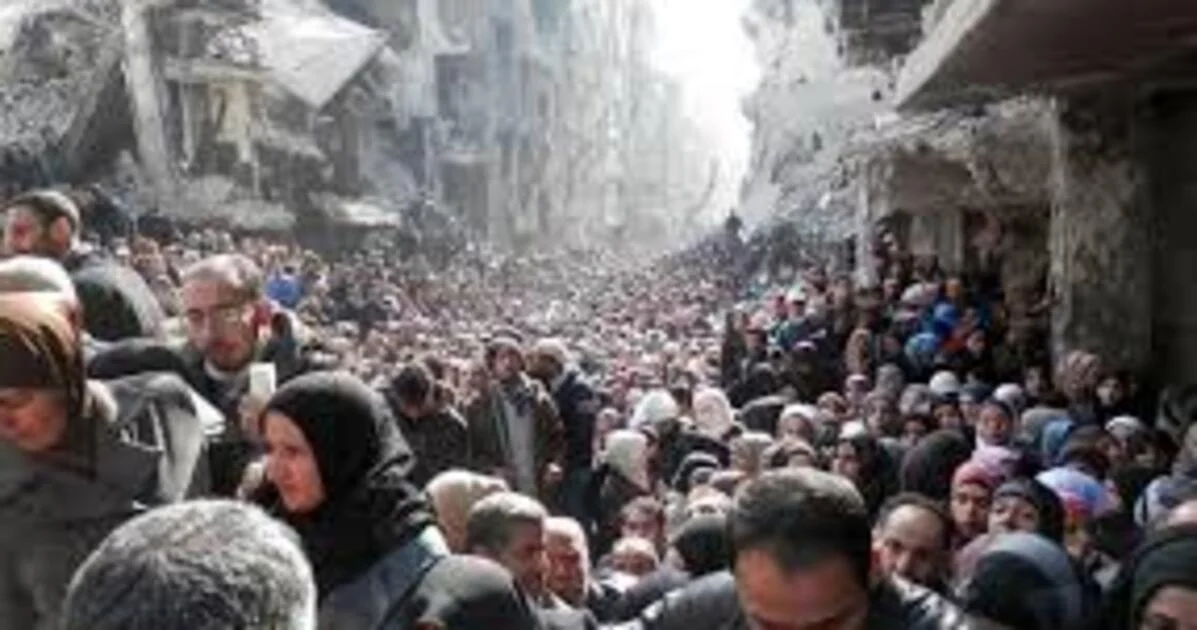

The head of UN Palestine refugee agency (UNRWA), Philippe Lazzarini, has reaffirmed the body’s commitment to assisting a population whose rights “continue to be violated.”
In a social media post on Friday, Commissioner-General Lazzarini stated that “people in Gaza have undergone systematic dehumanisation” since the war there began.
He stressed that “Palestinians do matter, including those in Gaza. Their rights, lives, and futures matter,” emphasising that “human rights cannot be applied selectively.”
His remarks follow U.S. President Donald Trump’s proposal this week that America should seize control of Gaza and permanently displace Palestinians—an act the UN Secretary-General called “ethnic cleansing.”
Lazzarini quoted UN chief António Guterres, who reiterated that peace depends on ending occupation and establishing an independent Palestinian state, with Gaza as an integral part.
The UNRWA chief said his agency’s teams remain committed to providing critical aid to Palestine refugees until empowered Palestinian institutions become a sustainable and viable alternative.
UNRWA continues to face major obstacles in carrying out its work.
In January, two Israeli laws took effect, banning UNRWA operations within its borders and prohibiting Israeli authorities from engaging with the agency.
UNRWA was ordered to leave its premises in East Jerusalem, and visas for international staff were not renewed.
Despite restrictions, teams are still delivering aid in the West Bank, including East Jerusalem, and in Gaza, where a ceasefire remains in place after 15 months of war.
Meanwhile, UN Humanitarian Coordinator Tom Fletcher continued his week-long visit to Israel and the Occupied Palestinian Territory.
On Friday, he visited an UNRWA-run shelter in Deir Al-Balah, Gaza, before travelling to Jerusalem through the Kerem Shalom crossing.
Fletcher met displaced families who shared their struggles over the past 16 months. Staff managing the shelter also described challenges in sustaining critical humanitarian support.
The UNRWA site is one of many schools in Gaza repurposed as shelters. Fletcher met children missing their education and stressed the urgency of reopening schools.
In Jerusalem, Fletcher met with UN aid agency heads and other humanitarian officials to discuss sustaining aid to Gaza and supporting West Bank operations.
Lt.-Gen. Jeremiah Useni, a former FCT Minister, has been described as an “angel in army uniform” by the Social Democratic Party (SDP) for his contributions to many lives.
The SDP presidential candidate in the 2023 election, Prince Adewole Adebayo, made this remark in Abuja on Friday during a condolence visit to Useni’s family with party leaders.
Adebayo praised Useni’s lifelong service, saying he was devoted to justice and helping people, regardless of political, religious, or ethnic background. He said Useni always prioritised humanity.
He credited Useni for making Abuja a city for the people. He noted that Useni allocated land to small traders and relocated, rather than demolished, homes in disadvantaged areas.
“During military rule, he transformed Abuja into the city of the people. Politicians today must ensure it remains a city for the people, not just the government,” Adebayo said.
Adebayo highlighted Useni’s role in uniting Nigeria from 1966 onward. He recalled a crucial moment in 1998 when Useni remained professional despite political pressures.
He noted that when the Nigerian Head of State died in 1998, Useni was the most senior officer but did not politicise the situation or seek personal advantage.
SDP National Chairman, Shehu Gabam, described Useni as a great leader with an outstanding legacy. He called his death a national loss and praised his simplicity and patriotism.
“At 30, every Nigerian knew his name. We never heard negative things about him, only positive reports,” Gabam said, recognising Useni’s impact on national unity and development.
Responding on behalf of the family, Useni’s first child, Mrs Julcit Bali, expressed gratitude to the SDP leadership for their visit and their kind words about her father.
She described her father as deeply generous. “Baba was not just a father to us but to many. Even in hospital, he still gave to others,” she said.
Members of the SDP National Working Committee also attended the condolence visit, joining in honouring Useni’s legacy and expressing their support for his grieving family.
The News Agency of Nigeria (NAN) reports that Useni passed away on Jan. 23 at the age of 82 after a prolonged illness.
The Independent Corrupt Practices and Other Related Offences Commission (ICPC) has arrested Adam Imam Yusuf, a Deputy Commandant of the Nigerian Security and Civil Defence Corps (NSCDC) in Kogi State, for allegedly diverting over N3 billion public fund.
Yusuf, who had been on the run, was caught at his home in Gwagwalada, Abuja.
Information available to Nigerian Anchor indicate that Yusuf and his co-travelers will soon be charged to court.
Investigations by ICPC linked former Chief of Naval Staff, Vice Admiral Usman Jibrin (rtd.), and former Brigadier General Ishaya Bauka Gangum (rtd.) to the case.
The funds were allegedly misused through 92 unregistered companies.
Some of the diverted money was traced to Lahab Integrated, Gate Coast Properties, and other firms.
These funds were reportedly used to acquire more than 18 properties, including filling stations.
So far, four of these properties have been seized by the government, while legal action continues on the rest.
ICPC spokesperson Demola Bakare confirmed the arrests in Abuja and said efforts are ongoing to track down other suspects still at large.
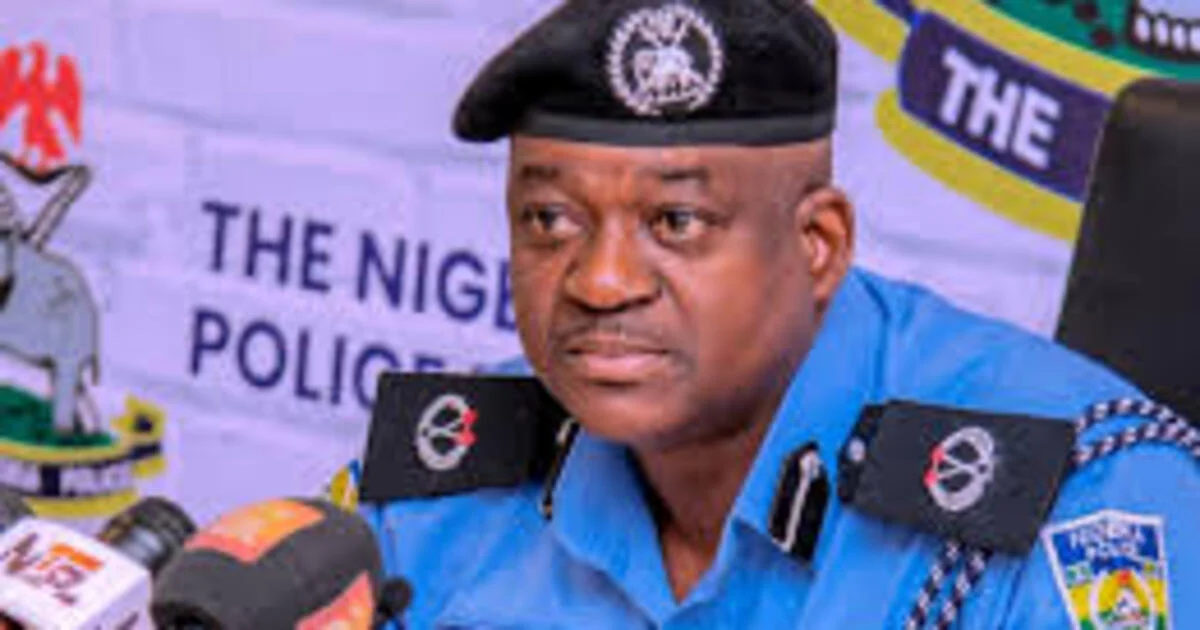
The Force Public Relations Officer, ACP Olumuyiwa Adejobi, said the Nigeria Police Force recovered 115 stolen vehicles and rescued 387 kidnap victims nationwide in one month.
Adejobi said at a news conference on Monday in Abuja that the successes were recorded during several operations nationwide in January.
The police spokesman said 960 suspects were arrested by operatives of the Intelligence Response Team (IRT) in the month under review.
He said 244 of the suspects were arrested over armed robbery, 170, kidnapping, 240 murder/homicide, 53, unlawful possession of prohibited firearms, 130, rape and 123, cultism.
Adejobi said 172 firearms and 3,134 ammunition of various calibers, including 12 rounds of 7.88 mm ammunition, two AK-47 rifles, eight fabricated AK-47 rifles and four fabricated revolver guns were recovered from the suspects.
The police spokesman said other items recovered were five fabricated semi-automatic pistols, 11 AK-47 magazines and 1,121 AK-47 live ammunition.
He said eight of the suspects were arrested by operatives of the IRT in Plateau over gun running and unlawful possession of Prohibited Firearms.
Adejobi said the suspects were arrested following credible intelligence on activities of a gun running syndicate in Plateau.
He said the only female suspect in the syndicate had confessed during police investigation that she sold 900 rounds of AK-47 live ammunition to one of the male suspects.
According to him, one locally made pistol, two rounds of 7.88 mm live ammunition, eight fabricated AK-47 rifles, four fabricated revolver guns and three fabricated semi-automatic pistols were recovered from the syndicate.
He said two AK-47 magazines and 1,105 AK-47 live ammunition were also recovered from the suspects.
Adejobi said building on the momentum of the operation, operatives of the IRT on Jan. 28 arrested two additional members of the syndicate.
He said the operatives recovered eight fabricated AK-47 rifles, four fabricated revolver rifles, three fabricated semi-automatic pistols and two fabricated AK-47 magazines concealed in the doormat of a red Volkswagen station wagon.
]`The suspects confessed to having taken delivery of the recovered firearms from a notorious firearms fabricator, currently at large,” he said.
Adejobi said efforts were being intensified to apprehend the fleeing firearms fabricator and others fabricating guns and supplying to wrong hands in the country.
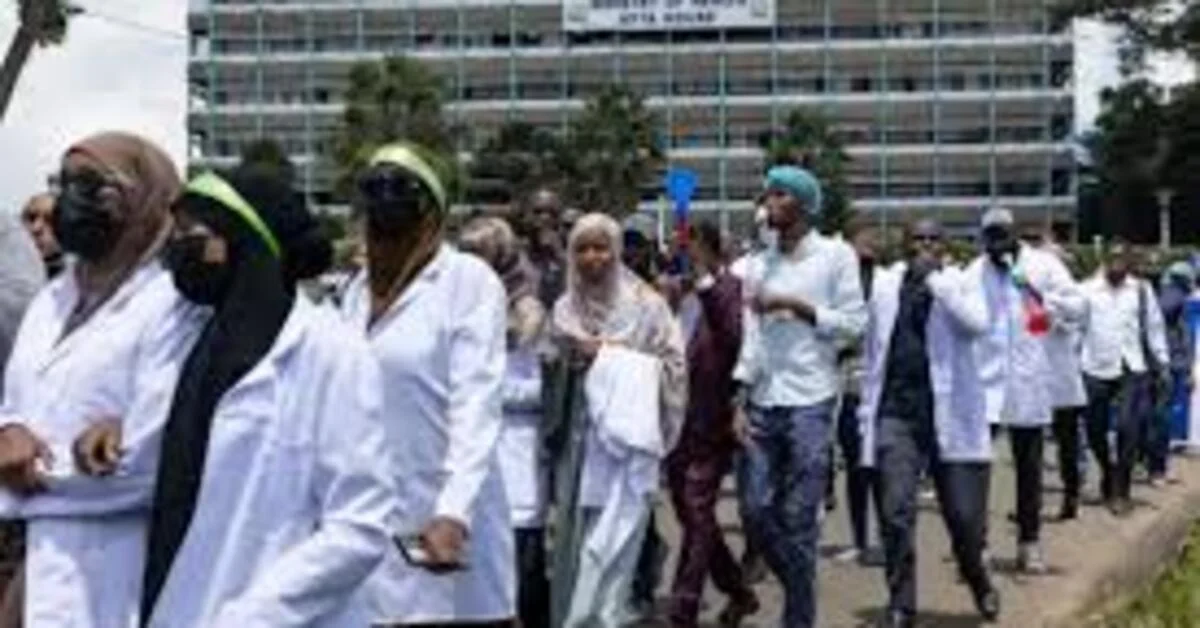
Turbulence in the nation’s Ivory Towers has hit the Federal University Teaching Hospital, Lokoja as doctors took to the streets on Friday to protest poor working conditions, leading to the resignation of 272 doctors.
The hospital’s doctor count has fallen from 315 to just 43, according to Dr. Olushola Baoku, the former Chairman of the Association of Resident Doctors (ARD).
The protestors are calling on President Bola Tinubu and Health Minister Prof. Ali Pate to address the situation before the hospital faces a complete breakdown.
Baoku described the hospital as being poorly managed under the leadership of Dr. Olatunde Alabi, the Chief Medical Director (CMD).
He pointed out issues such as short-term contracts, no pensions, no hazard allowances, and faulty medical equipment.
The hospital is unable to handle emergencies, which led to the death of a staff member due to power failures.
The protestors also demanded the return of their suspended president, Dr. Jimoh Umar. Despite an order from the Ministry of Health in December 2024 for his reinstatement, Dr. Alabi has not complied.
The doctors have pledged to continue their protests until the government addresses their demands.
The Labour Party (LP) has denied receiving a N50 million bribe from the ruling All Progressives Congress (APC) as alleged by former Vice President Atiku Abubakar.
The party said it has no knowledge of such payments and has never accepted money from any external source.
LP’s National Publicity Secretary, Obiora Ifoh stated in Abuja that the party was surprised by Atiku’s claim.
He criticized the former vice president for making the allegation without providing evidence, calling it reckless and unfair to opposition parties.
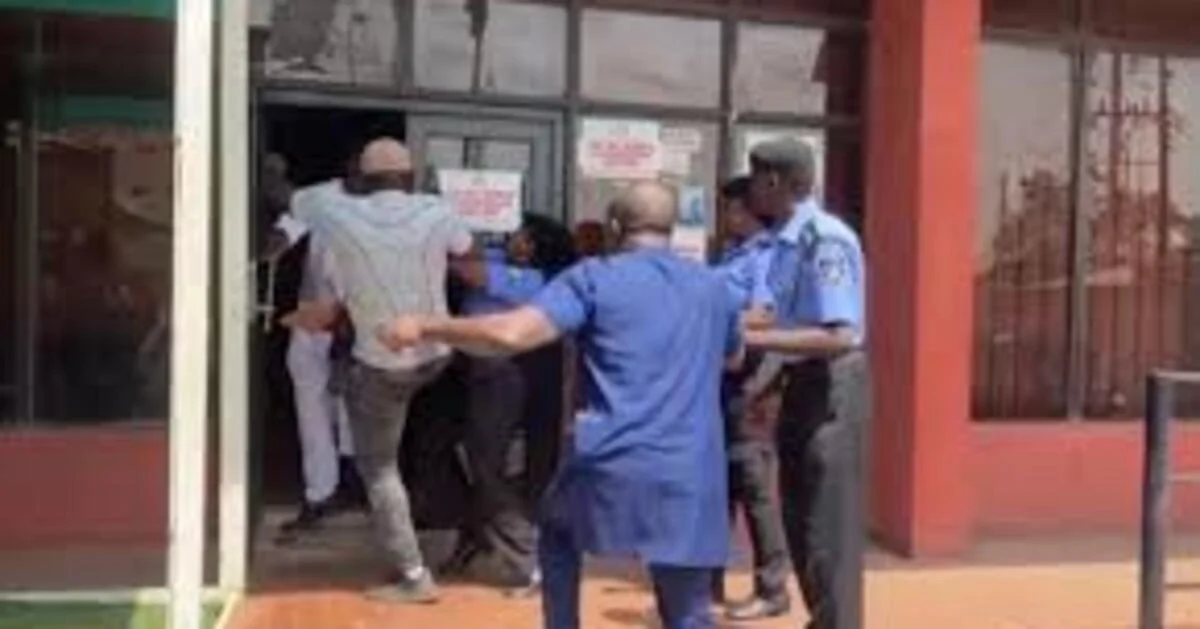
A violent scene erupted at the Peoples Democratic Party (PDP) headquarters in Abuja on Wednesday when suspected thugs stormed in and disrupted a Board of Trustees (BoT) meeting.
The disruption led to panic among party members present.
The meeting, led by Acting National Chairman Umar Damagum, had key figures in attendance, including National Secretary Senator Samuel Anyanwu, BoT Chairman Senator Adolphus Wabara, and former Youth Leader Sunday Ude-Okoye.
Tensions escalated between Anyanwu and Ude-Okoye, both contesting for the PDP National Secretary position. Ude-Okoye arrived early but was later forced out after Anyanwu entered with Damagum.
The conflict stems from a leadership dispute within the party.
In 2023, PDP’s South East zone nominated Ude-Okoye to replace Anyanwu, who had contested in the Imo State governorship election.
A High Court ruling in December 2024 removed Anyanwu from the position, declaring Ude-Okoye as the rightful National Secretary.
However, a recent Court of Appeal order allowed Anyanwu to stay in office until the Supreme Court decides on the matter.
The Joint Admissions and Matriculation Board (JAMB) has shared the schedule for the 2025 Unified Tertiary Matriculation Examination (UTME).
A statement from the examination board yesterday in Abuja, indicates that Registration will start on January 31, 2025, and close on March 5, 2025. Direct Entry candidates can purchase application forms and e-PINs from March 10 to April 7, 2025.
it was also stated that the Mock-UTME is set for April 5, while the main UTME will take place between April 25 and May 5, 2025.
JAMB explained that candidates opting for the mock exam will pay ₦8,200, while those skipping it will pay ₦7,200.
The fees include charges for application forms, reading materials, CBT center services, and bank fees.
Additionally, a mock UTME for candidates under 16 has been introduced to help them prepare, though it will not count for admission. However, candidates must be at least 16 years old by September 30, 2025, to qualify for admission into tertiary institutions.
Exceptions may be made for candidates under 15 who score 280 or higher in the UTME and excel in other required exams.
As the global Muslim Umma prepare for the commencement of Ramadhan fasting, the Sultan of Sokoto, Alhaji Sa’ad Abubakar, has called for the observance of the crescent moon of Sha’aban 1446 AH on Wednesday, January 29.
In a statement from Sokoto, the Sultanate Council’s Advisory Committee on Religious Affairs encouraged Muslims to report moon sightings to their local district or village heads.
Our children are now chasing out the adults from the business. But in their own case they are mainly foraging for foods that are often not there. On Monday, January 20, a national newspaper published a news feature on the dire situation of some Nigerian children. Its finding was that not many children were currently privileged to have tea and bread for food at home. It said many of them now live off refuse dumps; they carry sacks filled with used cartons, empty drink cans, and discarded plastic bottles and bowls.
WHAT’S unfolding presently will form part of the foundations for the future of our country. And the picture is not good. That the majority of the privileged and the ruling elite live in denial will not change it. What is looming and getting clearer as daylight is that this will be a future and a disaster that was foretold. Successive regimes, and especially those of the All Progressives Congress (APC) political party since 2015, had been leading Nigeria down a slippery slope. The 15 years or so of the former ruling People’s Democratic Party (PDP) are now being celebrated as the ‘golden years’ of Nigeria, to borrow from President Donald Trump’s so-called American golden age. But as disasters go the PDP as a ruling party was just a shade above this ruinous APC. PDP lived on borrowed robes. It started fairly well under President Olusegun Obasanjo (1999-2007) but quickly relapsed into bad ways, profligacy and the expressed feelings of invincibility. The party suffered from low crude oil prices at the beginning, as low as $15 per barrel at the start of this democratic dispensation, but later under President Goodluck Jonathan enjoyed a boom with prices surging beyond $120/barrel. It failed miserably in managing the bumper returns. And so got itself sacked ostensibly by voters in 2015.
The APC, a hastily cobbled special purpose vehicle that passed as a political party, took power at the centre and in most of the sub nationals subsequently. This party over-promised in its quest for power during the campaigns in 2014. It promised everything under the sun except creating human beings. It even promised to recreate Nigeria and Nigerians. But under Muhammadu Buhari it started very poorly by first denying virtually all it promised, and disclaiming its own manifesto. Its candidate – turned – president Buhari was strident in distancing himself from the promises of the party, the so-called Contract with Nigerians. In terms of ineptitude the APC under Buhari turned out worse than the PDP. In corruption the party and its principal operatives were worse than eye-sores. It piled up debts from every source – offshore, domestic markets, and through Ways and Means which simply means minting Naira banknotes backed by nothing. Yes, nothing. Buhari fumbled and wobbled for eight years, and took the country back by 30 years. He was an affliction of unimaginable proportions.
Buhari’s successor, Alhaji Bola Ahmed Tinubu, now going to 20 months on the saddle, appears to be no better in spite of claims to courage and to reforming the economy and the country. He came with a baggage of personal failings, certificates and names controversies, and a questionable electoral victory. So he was dogged by palpable legitimacy issues. Indeed, there was a recent report, which is yet to be refuted (unlike what is in the regime’s DNA), that a foreign lobbying firm was retained with millions of dollars to help burnish his image and to make him appear less a pariah among his supposed peers on the international stage. By some calculations, Tinubu jets out of the country after every 17 days of what now appears to be a visit to the country he is supposed to be governing to, according to his officials woo foreign investors. He cuts a forlorn and isolated figure in many of his trips abroad, especially when he is in the midst of other significant world leaders. Not a good comparison, anyway, but the US President Donald Trump who took office one week ago, yesterday, and without travelling out of his country, has attracted pledges of investments reported to be close to $3 trillion from around the world.
Nobody needs to dig deep to find out how shallow this regime is and how desperately it looks for a win. Recently, the henchmen of the administration and their choristers started celebrating that the Naira, Nigeria’s national currency, has stabilised at N1,500 to $1USD. Are they for real? At the beginning of the so-called economic reforms and currency convergence, the consensus and the projection was that the rate would settle at N800/$. Rulers with a modicum of shame will not roll out the drums for the current exchange rate.
The economic policies and programmes of the Tinubu regime are whimsical and his claimed political reforms are inchoate and haphazard. The jury is still out on his quest to make federating units out of the country’s 774 local councils by making them ‘autonomous’ and funding them directly from the federation account. He claims his actions were informed by Constitutional provisions. But that’s self – serving because this same man, in his earlier incarnation as Lagos state governor (1999-2007) fought tooth and nail for councils to be under the suzerainty of state governments. But not anymore today. The only thing that has changed is that Bola Tinubu is now the president. His actions are political and driven by 2027. He wants his fingers in every pie, and foot soldiers to ‘grab, snatch and run’ away with results of the 2027 election, that is, if there will be any elections in the true sense of the word. The same uncertainty is playing out in the economy. Tinubu says repeatedly that he is already seeing light at the end of the tunnel. He might be seeing a mirage. The World Bank has said it would take a minimum of 15 years of sustaining his punishing economic regimen for any impact to be noticed. The hallmarks of the Tinubu economic kalo kalo are that his policies and programmes are not measurable, they have no benchmarks, they have no timelines, and they have no publicly available templates for reviews should the need arise. They are more like the rural Nigerian children’s game of tumbom tumbom.
Nobody needs to dig deep to find out how shallow this regime is and how desperately it looks for a win. Recently, the henchmen of the administration and their choristers started celebrating that the Naira, Nigeria’s national currency, has stabilised at N1,500 to $1USD. Are they for real? At the beginning of the so-called economic reforms and currency convergence, the consensus and the projection was that the rate would settle at N800/$. Rulers with a modicum of shame will not roll out the drums for the current exchange rate. But APC has no shame. The party’s serial misrule is on display. Poverty is becoming entrenched in our country. The other day the deputy speaker of the House of Representatives Benjamin Kalu celebrated the rise in diaspora remittances from $25 billion in 2023 to $28 in 2024, as a sign of confidence in Nigeria’s economy. No, it was not. It showed that Nigerians at home were in dire straits, and that the situation had increased the pressure on diasporans to up their remittances. How could it be otherwise with inflation running in the high 30s, the worst level in about one generation?
The increased diaspora remittances could be the reasons why Nigerians are not yet widely dropping dead on the streets as Europeans predicted and wished would happen in Africa during the COVID pandemic; why some families are still managing to pay children’s school fees at all levels in spite of students’ loan scheme; why some families can still spare a little money for hospital bills; why there’s no widespread starvation; why erstwhile middle class citizens can afford transportation fares to their offices or business premises, or to repair and fuel their cars. If Tinubu’s friend whom he claimed had abandoned his four Rolls Royce limousines had been a destiny – helper, he probably wouldn’t have suffered humiliation brought upon him by friend, the president. A little dollar here and a little pounds sterling and euro there would have kept him going. He would not have been reduced to using a car whose front wheel is susceptible to breaking off in motion without notice on Nigerian roads. In spite of diaspora remittances and other mercies, the Tinubu and APC economic wizardry is taking a huge toll presently on a vulnerable segment of the population. And it presents a foreboding future for our country.
WASTE to wealth is a fairly popular phrase. Ordinarily, it means a situation where some citizens out of choice visit dump sites to pick out supposed waste and recycle the same to create value and possibly wealth. And this used to be the exclusive preserve of adults. It is no longer the case. Our children are now chasing out the adults from the business. But in their own case they are mainly foraging for foods that are often not there. On Monday, January 20, a national newspaper published a news feature on the dire situation of some Nigerian children. Its finding was that not many children were currently privileged to have tea and bread for food at home. It said many of them now live off refuse dumps; they carry sacks filled with used cartons, empty drink cans, and discarded plastic bottles and bowls. The newspaper illustrated with the story of one Jacob Olorunfemi who claimed that the economy had crippled his parents, forcing him to drop out of school. “I don’t go to lesson(s) anymore because my parents said there is no money… I usually attend lessons like school, where I pay N500 per week. My mother usually sweeps and wash(es) clothes for customers . My father works at a bus park. I have a friend called Sule. He is twelve years old. He used to pick used plastics and condemned items and sell them. His mother beg(s) for alms for a living. He advised me to join him in this scavenging routine and I have been able to save N2,000 since I started”. Jacob is 10 years old.
Yet there’s another child, Yekini Salam, 11 years old. His late father reportedly left him with a step mother who also had three other children of her own to care for. “I have not been in school for years”, he started. “I dropped out when I lost my father. I don’t know who my mother is but I have a stepmother and three step brothers. I usually hawk wares for my stepmother. But last year she asked me to stop. Sometimes I help people to run errands and they give me tokens in the form of food or cash (in) appreciation. Recently I had to join my friends who are a little above my age in the scavenging routine. I move around places sourcing for plastics, cans and bottles. There are people who I sell to. The materials are scaled (weighed) and I am paid. I want to save enough money to learn aluminium window and door frame construction skills”. The plights of Jacob and Yekini are not just urban phenomena. Children engaging in menial jobs and dropping out of school for various reasons are widespread. The figures for Nigeria’s out of school children range from between 18-20 million. The future is sadly not also bright for some of our children who are fortunate to be in school. The findings are depressing in schools in one of the country’s most populated states. Last Friday, the United Nations Children’s Fund (UNICEF) disclosed that only 9.6% of primary school pupils in Kano showed reading proficiency whilst only 11.2% had basic numeracy skills. The agency’s chief field officer for Kano, Rahama Mohammed further indicated that almost one million children (989,234) of primary school age (about 32% of the population), were “currently not enrolled in formal education in the state”.
The depressing statistics in Kano could be the same across many states in the north of this country. And it will be myopic to blame the situation solely on the emphasis placed on Islamic or religious education in that part of Nigeria. Even if that were to be the case, a more sensitive ruling elite should know that in the fullness of time what’s happening in Kano and some other states would have a cataclysmic national impact, and would have taken steps to arrest the looming disaster. But how can the situation be redressed with no discernable and sustainable national policy on education with widespread buy-in, and with a miserable and miserly allocation to education in the 2025 national and sub nationals budgets. Even before the advent of the APC in governance at the federal level, infrastructure in public schools were dilapidated. They have only become worse. Not many teachers are in the profession out of choice. The teachers in public schools are badly trained or not trained at all, poorly remunerated, ill-equipped, and generally demotivated. Some of them are petty traders hawking their wares right inside school premises. The future of this country is not looking good. But do our rulers care?
UGO ONUOHA, a veteran journalist, was the Editor-in-Chief of Champion Newspaper