
Category: News

  • Anambra targets N160bn revenue from palm oil, coconut

    The Anambra Government says it hopes to rake in more than N160 billion yearly from ongoing palm oil and coconut investment.

    Dr Onyekachi Ibezim, Deputy Governor of the state made this known while inaugurating the 2023 Farming Season at Alex Ekwueme Square Awka.

    Ibezim who represented the governor at the event said the anticipated revenue was from one million palm seedlings and one million coconut being imported from Malaysia.

    “We started importation of one million palm oil seedlings and one million coconut from Malaysia last year, these species have three years maturity period.

    “When this investment fully matures, the off-takers will be processing the fruits of these plants and over N160 billion will be yearly income from this window”, he said.

    Ibezim also said there is a plan for irrigation of 10,000 hectares of land for rice farming at Ifite Ogwari Community, Ayamelum Local Government Area for rice cultivation.

    He said that agriculture has the potential of not only creating wealth but employment opportunities for thousands of people.

    Ibezim said it was for the abundance of opportunities in the sector that the government listed it among the priority area of investment in the 50 years development plan of the state.

    He called on farmers to show commitment to the sector as the government will always support them in their activities.

    Also speaking, Dr Foster Ihejiofor, the Commissioner for Agriculture said the state is currently promoting the “Biological Farming” practice which according to him is nature’s sustainability solution.

    “As we all know farming is not about producing food; it is about preserving our environment and ensuring the sustainability of our food system.

    “Biological farming aka, zero budget, carbon farming or regen-Ag launched in 2022 by Gov. Chukwuma Soludo is a sustainable agricultural system”, he said.

    Ihejiofor urged farmers to embrace the new farming system, saying ”Biological farming is not just environmentally friendly, it is also economically beneficial to farmers as it reduces the cost of inputs while improving soil health, plants health, nutrients among others.

    The event was attended by farmers from the 21 Local Government Areas and tertiary institutions within the state.

  • Encroachment: Court orders Army to pay N.260m to host communities

    The Kaduna State High Court has ordered the Nigerian Army to pay N260,000 cost to host communities of Jaji Military Cantonment.

    Justice Hannatu Balogun ordered the army to pay each of the 260 members N1,000 cost and also,  present evidence of payment by July 10.

    She also ordered the army to allow members of the communities access to their farmlands.

    Earlier, the Plaintiffs’ Counsel, Kimi Livingston filed a contempt proceeding against the General Officer Commanding, 1Division, and some senior officers.

    They alleged that the army refused to obey the court order which stopped the construction of a perimeter fence around Jaji Barracks.

    Also, alleged that the army blocked the plaintiff’s access to their farmland, villages, and communities during the pendency of the case.

    The respondents were not in court but sent a letter stating that officers occupying the offices had been transferred to other places.

    The judge refused to accept the letter.

    The defendant’s counsel, Aliyu Ibrahim told the court that he would ensure that the officers were in court personally by July 10.

    He also denied the allegations of stopping communities access their farmlands.

    The host communities within the Jaji Military Cantonment had on November 2020 dragged the military to the state High Court, over alleged encroachment of their ancestral land.

    The communities which include Wusono, Ungwan Auta, Labar, and Ungwan Alhassan were in court because the military had started fencing the community into the cantonment while the settlement was ongoing.

  • EFCC has become too politicised -Transparency International 

    The Head of Transparency International, Nigeria, Mr Auwal Rafsanjani, says the suspension of the Economic and Financial Crimes Commission (EFCC) Chairman, Abdulrasheed Bawa, did not come to the organisation by surprise as his office has become too politicised.

    Rafsanjani, who is also the Executive Director of the Civil Society Legislative Advocacy Center (CISLAC), said this in an interview in Abuja.

    President Bola Tinubu on Wednesday announced the suspension of the Economic and Financial Crime Commission (EFCC) chairman in a statement by the office of the Secretary to the Government of the Federation (SGF).

    Bawa was suspended based on “weighty allegations of abuse of office” levelled against him.

    ”The suspension did not come to us by surprise, this is because of the way and manner the previous regimes or governments have always removed the EFCC leaders when they come into power.

    ”For this development, with regard to the removal of the EFCC chairman, we believe that already we knew that he was going to be removed because of  so many political interests and changes that can happen.”

    He said that Tinubu might not likely retain Bawa because of how he was appointed and his affiliation.

    ”He will want to get rid of anything that has to do with that.

    ”Also there are some political interests, some politicians associated with the government also have issues with the current suspended EFCC chairman and therefore they are likely not to be comfortable having him there.”

    Rafsanjani added that “the EFCC office has been unnecessarily made to be too political.

    ”Therefore, it is making it difficult to do what ordinarily government agency is supposed to do.

    ”So, we need to look at it from that context and from that perspective, so I’m not surprised.”

    Rafsanjani, however, said that ”what is important is that we must insist and demand that the anti-corruption and the good work of agencies, including EFCC must continue in the country.”

    He also advised the government to look beyond politics in appointing the next chairman of EFCC.

    ”In appointing the next one,  I think first and foremost, let’s make that office to be a technical professional office.

     ”Let’s make it less political, let us remove the use of that to settle political issues.

    ”I think we need to have a credibly experienced, fairly minded person to carry out that responsibility,” he said.

  • NAF airstrike in Nasarawa killed only terrorists – Military

    The Director, Public Relations and Information, Nigerian Air Force (NAF), Air Commodore Ayodele Famuyiwa, has explained that the military airstrike of January 24 in Nasarawa State only targeted and eliminated terrorists.

    Famuyiwa said this while reacting to questions at a bi-weekly news briefing on the operations of the armed forces, on Thursday in Abuja.

    He said the air strike was carried out after a series of intel and surveillance, adding that innocent civilians were not killed as being speculated in some quarters.

    He faulted the report by Human Rights Watch (HRW) alleging that the NAF bombarded herders who were evacuating their cattle in Kwatiri, a border community between Benue and Nasarawa.

    In its report on June 7, HRW said “Nigerian authorities have provided little information and no justice” with regard to the airstrike.

    “Although the authorities admitted carrying out the raid, the organisation said, they evaded “key questions” concerning the circumstances surrounding the attack.

    HRW said their preliminary investigations revealed that the pastoralists had gone to Kwatiri to pay fines for the release of their cattle seized by the Benue State Livestock Guards when they were struck in the air raid.

    But in his reaction to the report on Thursday, NAF spokesman challenged the organisation to produce evidence to prove the allegation that those killed in the airstrike were not terrorists.

    According to him, there had been Intel from several reliable sources of the activities of terrorists in that particular area.

    “You are all aware of the nefarious activities of criminal elements in that part of the country.

    “We are also aware that there is an ongoing operation, that is, Operation Whirl Stroke and the Intel came from several sources and even to the commander of that operation for the air component that there was plan by terrorists within that area to carry out a massive attack.

    “And then there was a secondary school in question that they also planned to kidnap students.

    “To that extent, the air force carried out surveillance and the surveillance confirmed that there were terrorists and that surveillance continued for almost throughout the day until later in the evening when a truck appeared in that scene.

    “The truck was suspected to have brought logistics to them and that was why approval was given by the appropriate authority that that truck be taken out and the truck was taken out.

    “Now if anyone is coming around to say innocent people were killed where is the photograph of the truck that brought the cattle that they are talking about?,” he asked.

    Famuyiwa said the claim that the people came there to pay for their cattle was not tenable.

    He also challenged anyone accusing the military to come out with proofs such as photograph of the said truck, the cattle and dead bodies.

    “The position of the air force is that terrorists were struck that day and whether it is whatever group and if they think they were innocent people, let them provide the evidence.

    “If you think the military is going to give you the evidence of that operation for now, you won’t get it because there is information that cannot be declassified now.

    “Let the people who said innocent citizens were killed, provide the evidence and let the press do the analysis and then the truth will come up,” he said.

  • Tinubu directs NSIB to probe Kwara boat mishap

    Tinubu directs NSIB to probe Kwara boat mishap

    President Bola Ahmed Tinubu has directed the Nigerian Safety Investigation Bureau (NSIB) ACT 2022 to investigate the boat mishap that occurred at Kpada community in Pategi Local Government Area of Kwara State, on Monday night, June 12, 2023.

    The General/ Manager/CEO of the Bureau, Akin Olateru while briefing newsmen in Abuja on Thursday, explained that reports gathered thus far, say the boat was carrying about 250 passengers from a village called Egboti in Niger State.

    He called on other local, state, and federal agencies and other relevant stakeholders to maintain effective cooperation and collaboration so as to ensure transportation safety.

    He said information received also revealed that 106 fatalities have been recorded while 144 passengers have so far been rescued.

    According to him, the NSIB is an autonomous multimodal investigation agency charged with the mandate to investigate air, rail, marine and other modes of transportation accidents and serious incidents in Nigeria with the aim of identifying the probable causes and proffer safety recommendations that can prevent recurrences.

    “The purpose of accident investigation, however, is not to apportion blame or liability but to prevent future recurrence of similar incidents. 

    “In order to carry out this mandate, the Bureau would be carrying out a lot of fact findings through crew and passenger interviews, working with relevant authorities to be able to determine the probable cause(s) of this accident. 

    “We are committed to a swift response to the accident and serious incident occurrences through our well-equipped Command and Control Centre. 

    “Accident reporting has also been simplified through our Mobile Application, which was introduced to interface with the public and make it easy for them to communicate with NSIB digitally,” he said. 

    He solicited information from the public in the form of pictures, video, or recording evidence to help assist in conducting a comprehensive investigation. 

  • $6trn wasted on subsidies can address climate change – World Bank

    $6trn wasted on subsidies can address climate change – World Bank

    Trillions of dollars are wasted on subsidies for agriculture, fishing, and fossil fuels that could be used to help address climate change instead of harming people and the planet, a World Bank report says.

    The report, Detox Development: Repurposing Environmentally Harmful Subsidies, says global direct government expenditures in the three sectors are $1.25 trillion a year—around the size of a big economy such as Mexico.

    To subsidize fossil fuel consumption, countries spend about six times what they pledged to mobilize annually under the Paris Agreement for renewable energies and low-carbon development.

    “People say that there isn’t money for climate but there is – it’s just in the wrong places. If we could repurpose the trillions of dollars being spent on wasteful subsidies and put these to better, greener uses, we could together address many of the planet’s most pressing challenges,” said Senior Managing Director of the World Bank, Axel vanTrotsenburg.

    The report notes that government subsidies of $577 billion in 2021 to artificially lower the price of polluting fuels, such as oil, gas, and coal, exacerbate climate change, and cause toxic air pollution, inequality, inefficiency, and mounting debt burdens. Redirecting these subsidies could unlock at least half a trillion dollars toward more productive and sustainable uses.

    The problem is bigger than direct government expenditures. The report assesses the harmful impact of implicit subsidies, which amount to $6 trillion each year. These represent the costs on people and the planet from pollution, greenhouse gas emissions, road congestion, and the destruction of nature ultimately resulting from the subsidies.

    In agriculture, direct subsidies of more than $635 billion a year are driving the excessive use of fertilizers that degrade soil and water and harm human health. Subsidies for products such as soybeans, palm oil, and beef cause farmers to push into the forest frontier and are responsible for 14 percent of forest loss every year.

    Fisheries subsidies, which exceed $35 billion each year, are a key driver of dwindling fish stocks, oversized fishing fleets, and falling profitability. With more than 1 billion poor people obtaining most of their animal protein from fish, it is critical that the world’s fish stocks are restored to healthy status.

    The burning of oil, gas, and coal causes 7 million premature deaths a year around the world through the bad air that people must breathe. The burden falls mostly on the poor.

    Chief Economist of the Sustainable Development Practice Group at the World Bank Richard Damania, noted that “With foresight and planning, repurposing subsidies can provide more resources to give people a betterquality of life and to ensure a better future for our planet. Much is already known about bestpractices for subsidy reform, but implementing these practices is no easy feat due to entrenched interests,challenging political dynamics, and other barriers.”

    For successful subsidy reform, governments must compensate the most vulnerable groups through social assistance programs, like cash transfers; build public acceptance through transparent communication; give people and businesses time to adjust; as well as show how freed-up revenue is being reinvested to support longer-term development.

  • Tinubu appoints 8 new Special Advisers

    *Dele Alake, Nuhu Ribadu get appointments

    President Bola Tinubu has appointed Dele Alake as Special Adviser Special Duties, Communications and Strategy.

    According to a statement signed by Abiodun Oladunjoye, Director Information, State House on Thursday, seven others also got appointments in the new government of President Bola Tinubu.

    The statement reads: President Bola Tinubu has approved the appointment of the following as Special Advisers: Mr. Dele Alake
    (Special Adviser, Special Duties, Communications and Strategy); Mr. Yau Darazo (Special Adviser, Political and Intergovernmental Affairs); Mr. Wale Edun (Special Adviser, Monetary Policies) and Mrs. Olu Verheijen(Special Adviser, Energy).

    Others are: Mr. Zachaeus Adedeji (Special Adviser, Revenue); Mr. Nuhu Ribadu (Special Adviser, Security); Mr. John Ugochukwu Uwajumogu
    (Special Adviser, Industry, Trade and Investment) and Dr (Mrs.) Salma Ibrahim Anas as
    (Special Adviser, Health).

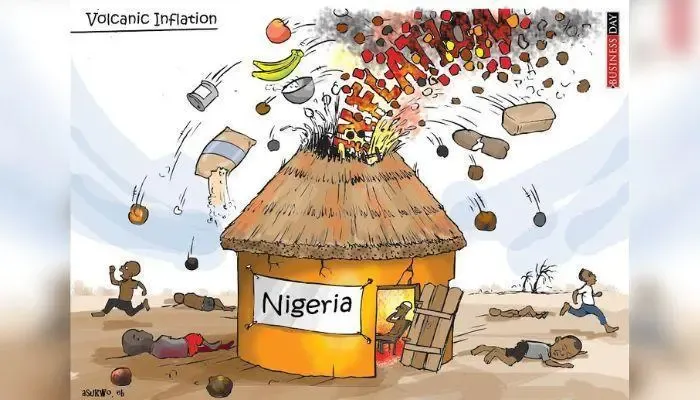
  • Nigeria’s inflation rate rises to 22.41% in May

    Nigeria’s inflation rate rises to 22.41% in May

    Nigeria’s headline inflation rate increased to 22.41 per cent in May 2023, relative to April 2023 headline inflation rate which was 22.22 per cent.

    According to the National Bureau of Statistics in its CPI and Inflation Report May 2023, it represents a 0.19% point when compared to April 2023 headline inflation rate.

    Similarly, on a year-on-year basis, the headline inflation rate was 4.70% points higher compared to the rate recorded in May 2022, which was (17.71%).

    More details later…

  • DSS quizzes suspended EFCC Chairman, Bawa

    The Department of State Services (DSS) says the suspended Economic and Financial Crimes Commission (EFCC) Chairman, Abdulrasheed Bawa, has arrived at its office for questioning.

    Bawa is at the DSS office over allegations of abuse of office brought against him.

    The Public Relations Officer of the DSS, Dr Peter Afunanya, said this in a statement on Thursday in Abuja.

    “The DSS has invited Mr Abdulrasheed Bawa, the suspended Chairman of the EFCC and he arrived a few hours ago.

    “The invitation relates to some investigative activities concerning him,” he said.

    President Bola Tinubu on Wednesday approved the indefinite suspension of the EFCC Chairman from office.

    A statement from the Office of the Secretary to the Government of the Federation said the suspension was to allow for a proper investigation into his conduct while in office.

    The statement said the suspension followed weighty allegations of abuse of office levelled against the suspended EFCC boss.

    It directed Bawa to immediately hand over the affairs of his office to the Director of Operations in the commission.

    The statement said the director would oversee the affairs of the office of the chairman, pending the conclusion of the investigation. 

  • Salary Padding: Tinubu suspends IPPIS Assistant Director, others

    President Bola Tinubu Suspends Assistant Director In Charge Of IPPIS, Others In OAGF For Salary Padding.

    Many civil servants across several Ministries, Departments and Agencies (MDAs), including the Revenue Mobilisation Allocation and Fiscal Commission (RMAFC) and Office of the Accountant General of the Federation (OAGF) have been suspended for alleged salary padding on the Integrated Personnel and Payroll Information System (IPPIS).

    The allegation was confirmed by RMAFC Chairman, Mohammed Bello Shehu, who said those identified had been placed on suspension pending investigation.

    The affected workers were found to have manipulated the IPPIS system to pad their salaries above their threshold.

    An Assistant Director at the OAGF in charge of staff salary was alleged to have connived with some staff to pad up the salaries of unspecified number of lower level staff.

    The scheme was discovered when a level 7 officer whose salary should be in the range of N60,000 was paid over N400,000, which was in the range of a salary package of a Director.

    The salary padding racket had been on for a while among a small clique of civil servants in different MDAs with the IPPIS office with the OAGF as the epicentre.

    Reacting to the development, the OAGF in a statement said it was, “in receipt of enquiries over alleged ‘salary padding’ on the IPPIS involving some unspecified MDAs.”

    “In the meantime, a staff suspected to be connected with the breach has been suspended to allow for thorough investigation.

    “All necessary steps are being taken to strengthen the controls around the IPPIS payment platform and an independent forensic audit of the entire payroll system is underway to ascertain if the reported breach is isolated or widespread,” Shehu said.

    He said if the indicted officials were found culpable of the salary padding allegations, they would be handed over to the appropriate authorities for prosecution.