
Category: News

  • Starmer to Meet Danish PM After Trump Drops Tariff Threat Over Greenland

    Starmer to Meet Danish PM After Trump Drops Tariff Threat Over Greenland

    UK Prime Minister Keir Starmer will meet Danish Prime Minister Mette Frederiksen on Thursday, a day after U.S. President Donald Trump withdrew his threat to impose tariffs on the UK and other NATO allies over their opposition to his ambitions concerning Greenland.

    Trump stepped back from the proposed tariffs on Wednesday evening following talks with NATO Secretary-General Mark Rutte on the sidelines of the World Economic Forum in Davos, Switzerland. The meeting, according to Trump, led to the formation of a framework for a future security agreement in the Arctic region.

    The development capped a turbulent day for NATO’s European members after Trump ruled out the use of force to secure Greenland, a self-governing territory of Denmark rich in critical minerals. He had earlier threatened to impose 10 per cent tariffs on eight NATO countries, including the UK, for opposing his stance on the territory.

    However, after what he described as a “very productive meeting” with Rutte, Trump indicated he had reconsidered his position.

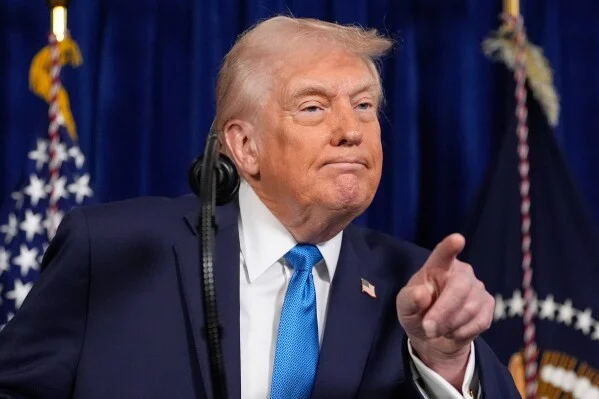
    Writing on his Truth Social platform, the U.S. president said: “We have formed the framework of a future deal with respect to Greenland, and in fact, the entire Arctic Region. This solution, if consummated, will be a great one for the United States of America and all NATO Nations.

    “Based upon this understanding, I will not be imposing the tariffs that were scheduled to go into effect on Feb. 1.”

    Denmark’s Foreign Minister, Lars Lokke Rasmussen, welcomed the shift in tone, saying the day was “ending on a better note than it began.”

    “Now, let’s sit down and find out how we can address the American security concerns in the Arctic while respecting the red lines of the Kingdom of Denmark,” he said.

    Frederiksen’s visit to Britain is expected to include discussions with Starmer on Greenland’s sovereignty and wider Arctic security, although few details have emerged about the agreement reached between Trump and the NATO chief.

    Trump told reporters the arrangement would be a “long-term deal” and an “infinite deal,” but declined to say whether it would involve the United States gaining ownership of Greenland.

    UK government sources suggested there was quiet satisfaction in London that Starmer’s diplomatic approach—urging restraint and dialogue rather than direct confrontation with Trump—had paid off.

    Earlier on Wednesday, Starmer told the House of Commons he would “not yield” on the issue of Greenland’s sovereignty, marking his strongest public stance yet against the U.S. president and pledging to stand firm in defence of international law and allied unity.

  • MTN Foundation Trains Over 2,000 Young Nigerians in Digital, Business Skills

    MTN Foundation Trains Over 2,000 Young Nigerians in Digital, Business Skills

    he MTN Foundation has trained more than 2,000 young Nigerians in digital and business skills under its Information and Communication Technology (ICT) Skills and Training Programme.

    Speaking on the initiative in a statement, the Executive Director of the MTN Foundation, Mrs Odunayo Sanya, said the programme was designed to equip young entrepreneurs with practical digital skills tailored to their business needs.

    She said small businesses remained the backbone of the Nigerian economy and that supporting young entrepreneurs with simple, affordable digital tools could significantly improve productivity and drive long-term growth.

    According to Sanya, the training, now in its seventh cohort, focuses on helping Small and Medium-sized Enterprises (SMEs) adopt digital tools to enhance productivity and sustainability. She noted that SMEs account for over 90 per cent of businesses in Nigeria and employ a large proportion of the workforce, according to data from the National Bureau of Statistics (NBS).

    The foundation said the programme followed a call for applications in September 2025, which attracted more than 5,000 entries from Nigerians aged between 18 and 35 years.

    Sanya explained that successful applicants are currently participating in a five-week virtual training programme scheduled to end in February 2026. The training began with a general onboarding session across four business tracks and is focused on practical digital growth for small businesses.

    Participants were drawn from sectors including food services, fashion, retail, logistics, beauty and printing, she said, adding that the training emphasises the use of affordable digital tools suitable for small and early-stage enterprises.

    The programme also promotes gradual digital transformation, encouraging participants to digitise basic operations before scaling up over time.

    The sessions are facilitated by a Business Analyst and Digital Transformation Expert, Mr Babajide Jolaolu-Kehinde, who highlighted the benefits of automating repetitive tasks to save time, reduce errors and improve efficiency.

    He introduced participants to tools such as WhatsApp and WhatsApp Business for customer engagement, as well as MTN’s MoMo API for digital payments. Through case studies, he demonstrated how digital tools could help small businesses expand their customer base and increase sales.

    The foundation added that participants would continue to have access to learning materials and recorded sessions throughout the duration of the programme.

  • Human Trafficking: NAPTIP Raises Alarm Over Baby-Selling in Akwa Ibom, rescue 68 victims

    Human Trafficking: NAPTIP Raises Alarm Over Baby-Selling in Akwa Ibom, rescue 68 victims

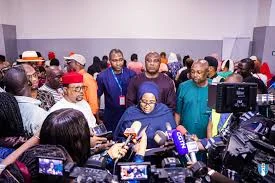
    NAPTIP rescued 68 victims of human trafficking and arrested 62 suspected traffickers in Akwa Ibom State in 2025, raising fresh concerns over the state’s deepening trafficking crisis.

    The Uyo Zonal Commander of the agency, Mr Ubong Ekwere, disclosed this on Thursday in Uyo during an interview with the News Agency of Nigeria (NAN).

    Ekwere said 51 of the rescued victims were females, while 17 were males. Five victims—two males, one female and two babies—are still receiving care at NAPTIP’s shelter, while others have been reunited with their families.

    He revealed that the command handled 58 trafficking cases during the year, with five transferred from the police, four from the Department of State Services (DSS), two from the Nigeria Immigration Service and 47 handled directly by the Uyo command.

    Despite the scale of the problem, Ekwere said only two convictions were secured, while 22 cases remain in court at various stages of prosecution. He, however, expressed confidence that more convictions would follow to serve as a strong deterrent.

    Describing Akwa Ibom as an endemic hub for human trafficking, the zonal commander warned of a disturbing new trend involving the sale of babies, which he described as a grave crime against the state.

    He urged parents and guardians to be alert to traffickers’ tactics, particularly promises of greener pastures for young girls, which often end in child labour or prostitution.

    Ekwere said NAPTIP would intensify aggressive sensitisation across churches, mosques, schools and rural communities to expose trafficking networks and protect vulnerable children.

    He called on state and local governments, corporate organisations and well-meaning individuals to support the agency, lamenting the absence of an operational vehicle to patrol the state’s 31 local government areas.

    The commander commended sister security agencies for intelligence sharing and warned traffickers to desist, stressing that Akwa Ibom and Nigeria were no longer safe for the crime.

  • France Pushes NATO Exercise in Greenland as Arctic Security Tensions Rise

    France Pushes NATO Exercise in Greenland as Arctic Security Tensions Rise

    Paris / Copenhagen / Washington — France has urged NATO to conduct a military exercise in Greenland, signaling European concern over the strategic and security challenges emerging in the Arctic.

    Élysée Palace sources confirmed Wednesday that Paris is ready to participate, stressing that safeguarding the Arctic is increasingly vital amid shifting geopolitical dynamics.

    The announcement comes as Denmark has formally requested a permanent NATO presence on the island, local media reported Tuesday.

    Danish Prime Minister Mette Frederiksen suggested that NATO’s enhanced presence in the Baltic Sea and the Baltic States could serve as a blueprint for Greenland, highlighting the alliance’s potential role in countering growing Russian influence in the region.

    Both Denmark and Greenland have previously proposed a NATO mission in the Arctic, reflecting the strategic importance of the territory.

    Earlier this month, international troops—including units from Germany and France—visited Greenland on a multi-day reconnaissance mission. Danish officials emphasized that this operation was Danish-led and not an official NATO exercise, though it underscored Greenland’s emerging significance on the international security stage.

    Complicating matters, U.S. President Donald Trump has openly expressed interest in acquiring Greenland, a semi-autonomous territory of Denmark, fueling tensions with European allies.

    White House spokeswoman Karoline Leavitt noted last week that the Danish-led reconnaissance mission was unlikely to influence the President’s decisions regarding Greenland.

    In a dramatic escalation, Trump announced punitive tariffs on eight countries starting February 1, in apparent response to European NATO nations backing Denmark’s desire to maintain Greenland’s current status.

    The tariffs have drawn immediate criticism from the affected nations and other global actors, signaling potential friction between U.S. economic policies and European security priorities.

    As the Arctic gains strategic, economic, and environmental importance, NATO exercises and international cooperation are increasingly seen as essential measures to ensure stability.

    France’s call for a NATO operation in Greenland reflects a broader European effort to assert influence and maintain balance in a region of growing geopolitical significance.

  • China Pushes Back Against UN Replacement Talk, Vows to Defend UN-Led Global Order

    China Pushes Back Against UN Replacement Talk, Vows to Defend UN-Led Global Order

    China has reaffirmed its commitment to multilateralism and to safeguarding the international system with the United Nations at its core, as questions emerge over the future role of the global body following remarks by U.S. President Donald Trump.

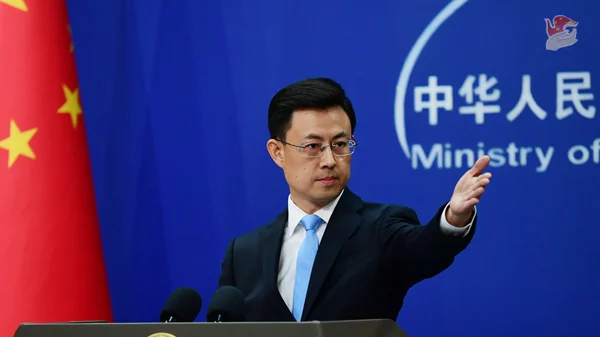
    Foreign Ministry spokesperson Guo Jiakun made the comments on Wednesday at a regular press briefing, responding to Trump’s statement a day earlier that the United Nations should continue because of its potential, while suggesting that a proposed “Board of Peace” could possibly replace the organization.

    Guo stressed that China’s position on the United Nations and the international order remains firm and unchanged. “No matter how the international situation evolves, China will resolutely safeguard the international system with the United Nations at its core,” he said.

    According to Guo, China has consistently advocated for true multilateralism and believes the UN plays an irreplaceable role in maintaining international peace and security, promoting development, and addressing global challenges.

    He emphasized that the UN-centered system reflects the collective will of the international community and should not be weakened or undermined.

    Guo further noted that China will continue to uphold the international order underpinned by international law, as well as the basic norms governing international relations based on the purposes and principles of the UN Charter.

    These principles, he said, remain the cornerstone of global governance and cooperation.

    The remarks come amid broader international debate over reforms to global governance institutions and concerns about unilateral approaches to international affairs.

    China, Guo added, supports strengthening the authority and effectiveness of the United Nations through cooperation and dialogue, rather than replacing existing multilateral mechanisms.

    “China will work with all parties to defend fairness and justice in international affairs, promote cooperation among countries, and contribute to a more stable and orderly international system,” Guo said.

  • Lagos Assembly in 2025: Between Institutional Crisis and Legislative Productivity

    Lagos Assembly in 2025: Between Institutional Crisis and Legislative Productivity

    The Lagos State House of Assembly in 2025 presented a study in contrasts: a legislature shaken by a profound leadership crisis, yet paradoxically productive in lawmaking and oversight. The events of the year exposed both the fragility and resilience of legislative institutions in Nigeria’s most politically influential state.

    At the centre of the crisis was the dramatic removal of Speaker Mudashiru Obasa on Jan. 13 by 36 lawmakers, followed by the election of Deputy Speaker Mojisola Meranda. Lawmakers justified the action as a corrective step aimed at addressing alleged misconduct and abuse of power, and as an attempt to reset the leadership culture of the Assembly.

    However, the decision to remove a sitting Speaker while he was abroad created a legitimacy problem that quickly escalated into a full-blown institutional crisis. Rather than stabilising the House, the move deepened internal divisions, weakened cohesion among lawmakers, and opened the Assembly to intense political pressure from outside forces.

    The failure of party mechanisms to swiftly resolve the dispute was particularly instructive. Interventions by senior figures of the All Progressives Congress (APC), including former governors Chief Bisi Akande and Chief Olusegun Osoba, failed to restore unity. Even the Governance Advisory Council (GAC), traditionally regarded as the party’s ultimate authority in Lagos politics, proved unable to impose a settlement. That some stakeholders openly suggested that only President Bola Tinubu could resolve the crisis underscored the limits of institutional autonomy within the state’s political structure.

    The crisis reached its most dramatic point on Feb. 17, when Obasa returned to the Assembly complex with security operatives and declared himself the lawful Speaker. His brief occupation of the Speaker’s Office symbolised not just a personal power struggle, but a broader contest over authority, legality and control of the legislature. The episode further polarised lawmakers and exposed the Assembly to public embarrassment.

    Mrs Meranda’s short tenure as Speaker unfolded in an atmosphere of instability, culminating in a clash between officials of the Department of State Services (DSS) and legislative workers. The arrests that followed raised concerns about the encroachment of security agencies into legislative affairs and further highlighted the erosion of internal order within the Assembly.

    Ultimately, the resolution of the crisis on March 3 — through the intervention of President Tinubu, the resignation of Meranda and the reinstatement of Obasa — reinforced perceptions that political power, rather than legislative process, remains decisive in resolving elite conflicts. While the intervention restored surface stability, it left unresolved questions about legislative independence, internal democracy and succession norms within the House.

    Yet, beyond the political drama, the Assembly’s legislative output in 2025 tells a more complex story. Despite internal discord, lawmakers continued to function, passing several significant bills that have long-term implications for governance in Lagos State.

    The swift passage of the N3.37 trillion 2025 Appropriation Bill early in the year demonstrated institutional continuity amid crisis. The “Budget of Sustainability,” with its emphasis on infrastructure, economic diversification and social inclusion, reflected policy consistency between the legislature and executive, even as leadership battles raged within the House.

    Similarly, the passage of the Local Government Administration Bill signalled an effort to modernise governance at the grassroots by harmonising existing laws and aligning state frameworks with national reforms. The E-GIS Bill, aimed at improving land administration and transparency, addressed long-standing structural weaknesses in land management — a critical issue in a rapidly urbanising state like Lagos.

    The Assembly also showed responsiveness to social pressures through bills such as the Tenancy and Recovery of Premises Bill. By seeking to regulate rent practices, curb illegal evictions and reduce agency fees, the House positioned itself as an arbiter in the increasingly contentious landlord–tenant relationship. If effectively implemented, the bill could significantly alter housing dynamics in the state.

    In the health sector, the bill establishing the Lagos State University of Medicine and Health Sciences reflected a strategic attempt to address chronic manpower shortages, while other proposed laws on correctional services, cancer treatment and policing pointed to a broader agenda of institutional reform.

    Oversight activities further demonstrated that legislative functions did not completely grind to a halt. Committees continued to scrutinise ministries, departments and agencies, reviewed executive appointments and monitored policy implementation, reinforcing the Assembly’s constitutional role despite internal divisions.

    Stakeholder assessments of the Assembly’s performance reflect this dual reality. Civil society actors and former lawmakers acknowledged the damaging effect of the leadership crisis but also credited the House with passing impactful legislation and sustaining debate and oversight. Public reactions, particularly from residents and community leaders, suggest that constituency-level interventions and empowerment programmes helped buffer the reputational damage caused by the crisis.

    In sum, the Lagos State House of Assembly in 2025 illustrated the tension between politics and institution-building in Nigeria’s democratic practice. The leadership crisis exposed vulnerabilities in legislative governance and party control, while the volume and substance of legislative work highlighted the Assembly’s underlying capacity to function.

    Whether the House builds on its legislative gains or remains vulnerable to future power struggles will depend on lessons drawn from the crisis — particularly the need for clearer internal processes, stronger institutional autonomy and mechanisms for resolving leadership disputes without external intervention. The trajectory of 2026 will test whether the Assembly can move from crisis management to genuine institutional consolidation.

  • NGF, HiiL Seal Partnership to Advance People-Centred Justice in Nigeria

    NGF, HiiL Seal Partnership to Advance People-Centred Justice in Nigeria

    The Nigeria Governors’ Forum (NGF) has entered into a formal partnership with the Hague Institute for Innovation of Law (HiiL) to deepen justice sector reforms and promote people-centred justice across Nigeria’s 36 states.

    The partnership was sealed through the signing of a Memorandum of Understanding (MoU) at the NGF Secretariat in Abuja, marking a shift from years of engagement between both institutions to a more structured and long-term collaboration focused on measurable outcomes for citizens.

    Speaking at the event, the Director-General of the NGF, Dr. Abdulateef Shittu, said the agreement builds on an existing relationship shaped by sustained, evidence-based dialogue on justice reform. He described the collaboration as timely, given ongoing challenges around access to justice, affordability, and public trust in justice institutions.

    According to Shittu, a key milestone in the NGF–HiiL relationship was the launch of the Justice Needs and Satisfaction in Nigeria 2023 Report, which he said has provided policymakers and justice sector stakeholders with credible data on how Nigerians experience justice and where critical gaps remain.

    He noted that the report has helped move reform conversations beyond assumptions, enabling governments and practitioners to design interventions that respond more directly to citizens’ needs.

    Under the MoU, both organisations will work together to promote justice systems that are accessible, fair, affordable, and responsive, with a particular focus on the subnational level where most justice challenges occur.

    Shittu explained that the agreement is not intended to be symbolic, but rather a platform for coordinated action, innovation, and learning. “This is a commitment to action and measurable impact across Nigeria’s justice landscape,” he said.

    Sitting (l-r): Dr. Abdulateef Shittu, Director General, NGF, and Udo Jude Ilo, Chief Executive Officer (CEO), HiiL

    The NGF’s role places state governments at the centre of the reform effort. As the coordinating body for Nigeria’s 36 governors, the Forum is expected to use the partnership to position states as testing grounds for people-centred justice models that reflect local realities.

    The collaboration is also expected to support reforms that strengthen justice institutions while ensuring that legal systems respond to how people experience everyday disputes, including land, family, commercial, and service-related issues.

    Shittu acknowledged HiiL’s technical expertise and global experience in justice innovation, expressing optimism that research insights generated through the partnership would translate into practical solutions that improve efficiency, inclusion, and trust in justice delivery.

    A press statement by NGF Director of Media and Strategic Communications, Mr. Yunusa Tanko Abdullahi explains that HiiL has operated in Nigeria for several years and reputed for its people-centred justice approach, which focuses on outcomes rather than procedures and integrates formal and informal justice pathways.

    It States further that the partnership with the NGF is expected to help scale such approaches across states through stronger institutional alignment.

    Both parties committed to working in good faith to expand access to justice through data-driven reforms, innovation, and collaboration, with specific initiatives to be developed under the MoU framework.

    As Nigeria continues to confront long-standing challenges related to justice delivery, observers say the NGF–HiiL partnership signals a renewed effort to place citizens at the centre of justice reform.

  • Rivers Assembly Begins Impeachment Process Against Gov Fubara

    Rivers Assembly Begins Impeachment Process Against Gov Fubara

    Contrary to public expectations of renewed presidential intervention, the Rivers State House of Assembly has voted overwhelmingly to commence an investigation into allegations leveled against Governor Siminalayi Fubara.

    Twenty-five of the state assembly’s 32 lawmakers voted in favor of initiating the impeachment process. The decision came after efforts to resolve the political impasse through behind-the-scenes negotiations proved futile.

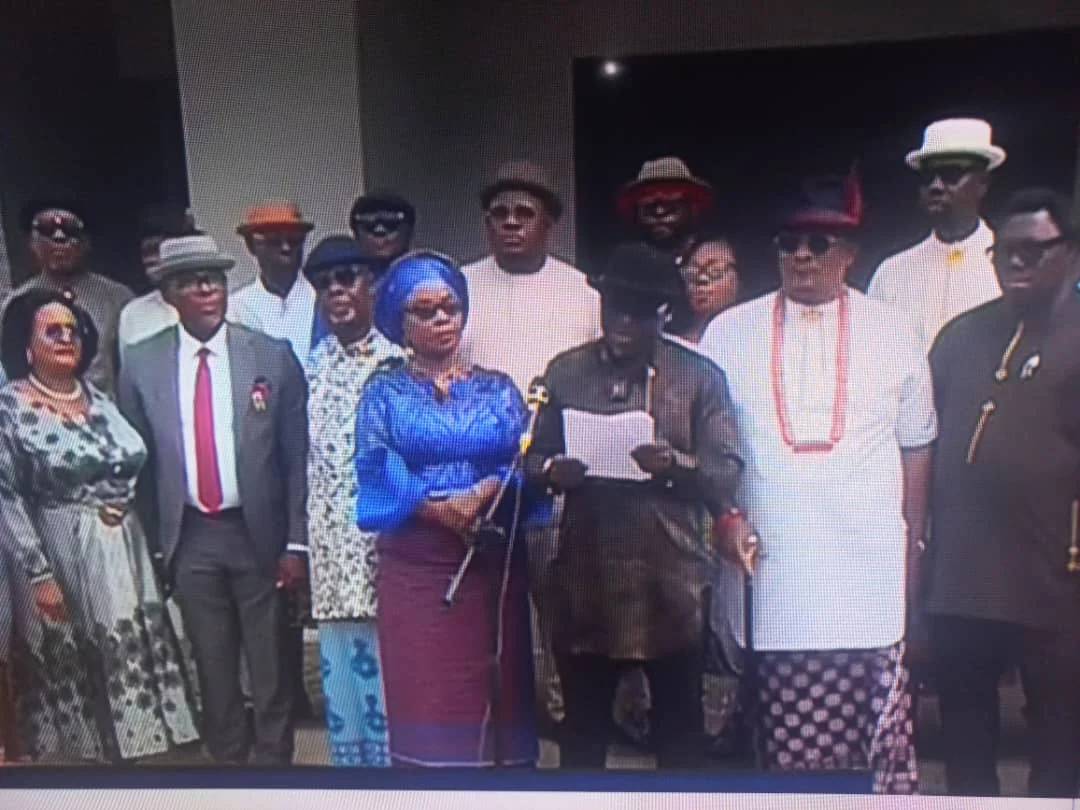
    Lawmakers announced the decision on Friday at the temporary Assembly complex, addressing the press on why the impeachment process had reached what they described as a point of no return. During the briefing, a member read a written statement outlining the Assembly’s position.

    The House said the decision followed the presentation of formal allegations against the governor and the subsequent resolution to proceed with an investigation.

    Some lawmakers who had previously distanced themselves from the impeachment threat have now reversed their positions. Hon. Emelia Amadi, speaking at the Assembly premises, said she had decided to close ranks with her colleagues, citing what she described as Governor Fubara’s continued unconstitutional actions.

    Other members reiterated their resolve to continue with the process, emphasizing that their actions were guided by constitutional responsibility and the need to uphold the rule of law.


    The impeachment of a state governor in Nigeria is governed by Section 188 of the 1999 Constitution (as amended).

    Under the Constitution, impeachment may be initiated on grounds of gross misconduct, defined as grave violations of the Constitution or serious misconduct in the performance of official duties.

    The process begins with a notice of allegation signed by at least one-third of the members of the State House of Assembly and served on the governor. Within 14 days, the Assembly must decide whether to investigate the allegations. Such a decision must be supported by not less than two-thirds of all members.

    If approved, the Speaker requests the Chief Judge of the State to constitute a seven-member investigative panel of persons of unquestionable integrity. The panel is required to investigate the allegations and allow the governor to respond.

    The panel must submit its report within three months. If the allegations are not proven, the matter ends. If they are proven, the House may proceed to adopt the report.

    A governor is removed from office only if the panel’s report is adopted by a resolution supported by not less than two-thirds of the Assembly members, after which the removal takes immediate effect.

    While the Constitution limits court interference in impeachment proceedings, the process must strictly comply with constitutional provisions to be valid.

  • Trump Threatens 25% Tariff on Countries Doing Business With Iran Amid Protests

    Trump Threatens 25% Tariff on Countries Doing Business With Iran Amid Protests

    WASHINGTON — President Donald Trump said the United States would impose a 25 per cent tariff on all trade with any country that does business with Iran, escalating economic pressure on Tehran as it faces its largest anti-government protests in years.

    “Effective immediately, any Country doing business with the Islamic Republic of Iran will pay a Tariff of 25 per cent on any and all business being done with the United States of America,” Trump said in a post on Truth Social, adding that the order was “final and conclusive.”

    No official documentation outlining the policy appeared on the White House website, and the administration has not clarified the legal authority for the proposed tariffs or whether they would apply to all of Iran’s trading partners. The White House did not respond to a request for comment.

    Under U.S. law, tariffs are paid by American importers, meaning the cost would likely be borne initially by U.S. companies and consumers.

    Iran, a member of the OPEC oil-producing group, has been under extensive U.S. sanctions for years. It exports most of its oil to China, with Turkey, Iraq, the United Arab Emirates and India also among its key trading partners.

    China criticised Trump’s announcement, with its embassy in Washington opposing what it called “illicit unilateral sanctions and long-arm jurisdiction.” A spokesperson said China would take “all necessary measures” to safeguard its interests, adding that “tariff wars and trade wars have no winners.”

    Japan and South Korea, both of which reached trade agreements with the United States last year, said they were closely monitoring developments. South Korea’s trade ministry said it would consider its response once U.S. actions became clear, while Japan said it would examine the potential impact and respond appropriately.

    Trump’s comments come as Iran grapples with widespread unrest that has evolved from protests over economic hardship into calls for the overthrow of the country’s clerical leadership.

    The demonstrations represent one of the most serious challenges to Iran’s ruling establishment since the 1979 Islamic Revolution.

    U.S.-based rights group HRANA said it had verified the deaths of 599 people since protests began on December 28, including 510 protesters and 89 members of security forces.

    Iran, which fought a brief war with U.S. ally Israel last year and whose nuclear facilities were bombed by U.S. forces in June, said it is keeping communication channels open with Washington. Trump has said the U.S. may meet Iranian officials and that he has been in contact with Iran’s opposition, while also threatening military action.

    “Diplomacy is always the first option for the president,” White House press secretary Karoline Leavitt said on Monday, though she acknowledged that other options remain on the table.

    The tariff threat is consistent with Trump’s broader trade strategy in his second term, during which he has repeatedly used tariffs to pressure countries over trade practices and ties with U.S. adversaries. However, his approach faces legal uncertainty, as the U.S. Supreme Court is considering whether to strike down a wide range of existing Trump-era tariffs.

    According to World Bank data, Iran exported goods to 147 trading partners in 2022, underscoring the potentially wide-reaching implications of Trump’s proposal if it is formally implemented.

  • Akwa Ibom Assembly Denies Outrageous Bill to Jail Women Over Married Men!

    Akwa Ibom Assembly Denies Outrageous Bill to Jail Women Over Married Men!

    A viral social media post claiming that the Akwa Ibom State House of Assembly is planning to pass a law jailing women for sexual relationships with married men has been categorically dismissed as false and misleading.

    The post, reportedly shared by Facebook user Obiavel Albert Abigo, alleged that Deputy Governor Sen. Akon Eyakenyi was sponsoring the bill, which supposedly would punish women with 10 years in prison and impose a ₦2 million fine on men.

    But the House has hit back hard. In a strongly-worded statement on Monday, Jerry Otu, Chairman of the House Committee on Information, described the report as a “fabrication with no legislative basis”.

    He emphasized that the Assembly has never received, discussed, or considered any such bill, and that the Deputy Governor has no involvement whatsoever.

    “This is a malicious attempt to tarnish the image of both the Deputy Governor and the House of Assembly,” Otu said. “We urge the public to disregard this fake news and any commentaries circulating alongside it.”

    Otu further reassured citizens that the House remains firmly committed to its constitutional role of lawmaking, and warned that such mischievous reports will not undermine its integrity or distract from its legislative duties.

    This incident highlights the growing problem of viral misinformation, particularly on social media, where outrageous claims can spread faster than facts.

    The Akwa Ibom Assembly’s prompt rebuttal is a reminder to always verify news before sharing, especially when it concerns sensitive issues that can damage reputations.