
Category: News

  • Traumatized travellers, broken highways, and coastal road

    Traumatized travellers, broken highways, and coastal road

    By

    UGO ONUOHA

    The 1999 Constitution of Nigeria is unequivocal: the security and welfare of all Nigerians must be the primary purpose of government. Yet, decades of neglect, poor planning, and elite indifference have turned the nation’s highways into deathtraps, exposing citizens to danger, delays, and economic loss. Federal roads, meant to connect communities and enable commerce, have crumbled under the weight of neglect and overuse, while successive administrations have prioritized grand projects over the basic maintenance that ensures safety and wellbeing. This failure on the part of those in power reflects a deeper disregard for the constitutional mandate and the everyday lives of Nigerians.

    For the avoidance of doubt, we will reproduce aspects of the relevant constitutional decree. Yes, decree, because the prescription was made to be obeyed. It did not make room for any administration to offer excuses in lieu of compliance. Under the headline The Government And The People, Chapter 2 of the Nigerian Constitution states in part: (1) The Federal Republic of Nigeria shall be a State based on the principles of democracy and social justice. (2) It is hereby, accordingly, DECLARED (emphasis mine) that: (a) sovereignty belongs to the people of Nigeria from whom government through this Constitution derives all its powers and authority; (b) the SECURITY and WELFARE of the people SHALL BE THE PRIMARY PURPOSE OF GOVERNMENT…(again emphasis mine).

    It is unlikely that the intention of the framers of the prescription of the “primary purpose” clause in the constitution was that the government would spoon feed the citizens. No. But even in its severely distorted form, this country can still lay a modicum of claim to operating a capitalist economy. In effect, the least expectation is that this regime as well as preceding administrations should provide an enabling environment at all times for Nigerians to thrive. This should not ordinarily be difficult for any service – driven government to deliver. Here are a few things that will qualify any administration to be said to have met the constitutional prescription. Ensuring security of life and property is at the core of the matter. Without security every other thing will be virtually impossible to accomplish. Then there’s the issue of providing access to affordable and quality education. This should be a matter of priority for any administration that understands that human capital is key to the development of a country, and not necessarily the abundance of natural resources buried under the ground. Of course, next but not necessarily in that order, is access to health care. Sickly people translate to a sickly society.

    Can we say of a truth that this has been the lot of our people since the return to democracy in 1999? Certainly not. Yes, there may have been flashes of sanity in how our rulers treat the commonwealth, but the image we have of our rulers has been that of marauding bandits. The majority of our rulers have been what my Igbo people call “ikiri”, the tenacious animal that never lets go of its prey, or “usu biara orji ntagbu”. Our rulers fit those that the Good Book (Holy Bible) refers to as devourers. And because of our shortsighted and extremely selfish rulers, Nigeria is virtually on its knees. It has been laid bare and belly up.

    The insensitivity, nay wickedness, of any regime can be gleaned from how it treats its citizens in prioritising the provision of basic infrastructure. And the regime of Alhaji Bola Ahmed Tinubu lived up to its reputation as an uncaring government in the days before, during, and after the celebrations of Christmas by Christians. I am not unmindful of the fact that Christmas has become a global cultural phenomenon which celebration transcends Christians, and incorporates people of other faith. In spite of its global stature, Christmas remains essentially a key and sacred event in Christendom.

    For the avoidance of doubt, Christmas has fixed date in the calendar irrespective of the variant of the sect. The Eastern Orthodox church marks Christmas around April while the majority of Christ followers where Nigerian adherents belong celebrate Christmas in December. So, it has not been unusual for successive governments to make special preparations for ease of celebrations ahead of time. Christmas does not depend on the sudden sighting of the moon or the occurrence of other elements in the cosmos. This is not to denigrate the practices of other faiths, but it is to emphasize that Christmas celebrations in the modern era do not depend on the whims of any person or authority.

    This may be the reason why late in November of 2024 works minister, Dave Umahi, (a self acclaimed professor of practice) assured the country that all federal roads would be made motorable before Christmas of that year. It appeared he worked furiously to deliver on the promise, but he failed. Miserably. If we are to be charitable, we have to admit that his failure was not for lack of trying. What, however, we can not say for certain is that his promise to do remedial work on federal highways was imbued by manifest sincerity. For a regime that’s essentially driven by propaganda and hollow promises, he might have been playing games with Nigerians. Those who thought that Umahi’s word was his bond believed him, took to the roads, especially the very busy Lagos – Sagamu – Benin – Onitsha expressway. To varying degrees, users of that highway passed through the valley of the shadow of death. But most of the travellers that year made it to their destinations unscathed in comparative  terms.

    So ahead of this December Umahi kept his cool. He refused to run his mouth. He made no such promise in spite of the fact that federal roads including the Lagos – Onitsha road had gotten worse. Last year, the contentious portion of the highway was mainly the Benin bypass. This year almost the whole stretch of the road had deteriorated badly. Travellers from Lagos to all parts of the east and parts of the south south zone started to contend with traffic jams from Sagamu (construction work), then Okada just before Benin where a vehicle-swallowing manhole in the middle of a bridge had remained unrepaired for going to one year. After surviving the Okada broken bridge complete logjam, travellers would then start the tortuous manoeuvring and meandering through the Benin bypass. If hell in the Holy Bible is a place of torture and gnashing of teeth, then Benin bypass was hell on earth for users of that road this season. Many did not make it through. Some spent hours and days for a travel time between Lagos and Onitsha of normally six hours. Any driver on that road this season will spend a minimum of 15 hours to make. I was among the fortunate people on Sunday, December 21.

    Unlike in the past years, the same travelling nightmare was visited on commuters plying the Abuja – Lokoja – Benin highway. That so-called expressway is already notorious for being a haven for kidnappers, bandits, and terrorists. The trauma of road users trapped and made sitting ducks on that highway this Christmas and New Year season is better imagined than experienced. A senior journalist who has had a stint working in the presidency recently related the experiences of a cousin who plied that route days before Christmas. Of course, the traumatized cousin barely it on time for Christmas in Lagos from Abuja. Lagos – Sagamu – Benin – Onitsha – Enugu – Owerri – Aba, and Abuja – Lokoja – Benin highways are not peculiar in terms of torturing road users. The truth is that virtually all federal roads are broken. They are deathtraps. They constitute clear and present dangers to lives, limbs, and livelihoods of Nigerian road users. And our rulers know about the state of these roads, though they do not use them.

    If you ply this country’s highways, at any period and more so in the rainy season, you will not need to be persuaded that our rulers are “thoroughly wicked”, to borrow the words that bishop emeritus of Ondo Anglican Diocese, the late Emmanuel Gbonigi, once used to describe former head of state, the late Gen. Sani Abacha.

    It may be uncharitable to heap the blame of the sufferings of road users on Umahi and Tinubu. But they should take the flak because they are the people who are now in office and in power. If Nigerian roads are broken, and they unmistakably are, it is the result of years of neglect and especially of lack of vision by successive rulers.

    Certainly, our highways are broken, they are seldom repaired and maintained, they are hardly reconstructed, and they hardly met the minimum global standards at the time of their construction. But our freeways fail essentially to lack of vision. The roads are exposed to all manner of traffic. Our roads are the major mode of transportation of humans and cargoes. Articulated and heavy duty vehicles constitute menace and hazards on our roads. They bear the burden of transporting everything from logs (wood) to petroleum products to cement to iron rods and everything in-between. Given this situation, the roads that are ab initio poorly constructed collapse under the weight of trucks. Of course, these vehicles which have seen the better days of their lifespan in Europe, North America and Asia before being dumped in Nigeria suffer frequent breakdowns on the highways and become accidents waiting to happen to cars and buses and hapless road users.

    For the life of this country since 1960, our rulers have neglected and failed to develop the rail and the rivers/seas as alternatives to travelling by road. Are travel has been made the exclusive of the elites. The ruling elites have also conspired to develop only the seaports in Lagos. Recently, the relevant authorities announced multi trillion Naira impending further investment on Lagos ports. Meanwhile, the seaports in Koko near Warri, Calabar, Port Harcourt, and Onne are underdeveloped and underutilized. The potential for a seaport in the south east is an anathema to the ruling elite who are the winners of the civil war (1967-1970). The net effect of this visionlessness or wickedness is that almost all container goods come into the country through the ports in Lagos. And they include containers meant for manufacturers and markets outside Lagos and the south west. Studies have since established that many of the containers that are shipped through Lagos ports are destined for the south east. This means that they have to be trucked by road to the east and to destinations elsewhere. Meanwhile, the Lagos ports are perennially congested and ineffective. They routinely lose business to the seaports in neighbouring countries.

    Indeed, bad roads were responsible for the traumatic experiences of travellers this season, but the situation was compounded by the fact that broken down trucks littered the Lagos – Onitsha highway. Some of the articulated vehicles tumble and rest on their backs because of the bad roads. And these trucks included petroleum products tankers which spill their inflammable liquids on the road. Such vehicles and their spilt products constitute obvious danger to other road users. They are incinerators waiting for victims. Many travellers have been so incinerated.

    It is in the midst of this state of the highways that the Tinubu regime embarked upon a N15 trillion Lagos – Calabar coastal road. All entreaties to the administration to prioritise the recovery of the broken roads nationwide before the coastal road project fell on deaf ears. To demonstrate how much the regime holds Nigerians in utter contempt, it proceeded to award the coastal highway contract to a long-standing business partner of President Tinubu, without public tendering, without competitive bidding, ahead of determining the route of the road, without budgetary provisions at the beginning, without firm assurance funding sources, and without environmental impact assessment report. The president and his Kept Man, Umahi,  rode roughshod over Nigerians in their desire to forge ahead with the project that had opacity and numbing corruption written all over it. It’s tempting to say that a people get the kind of leadership they deserve, but for the fact that the extant regime assumed office in 2023 under a cloud. And it has had to contend with legitimacy problems ever since.

    UGO ONUOHA, A Veteran Journalist and reknown columnist was the Managing Director/Editor-in-Chief, Champion Newspapers Ltd

  • Davido Thrills Fans as Flytime Fest 2025 Lights Up Lagos

    Davido Thrills Fans as Flytime Fest 2025 Lights Up Lagos

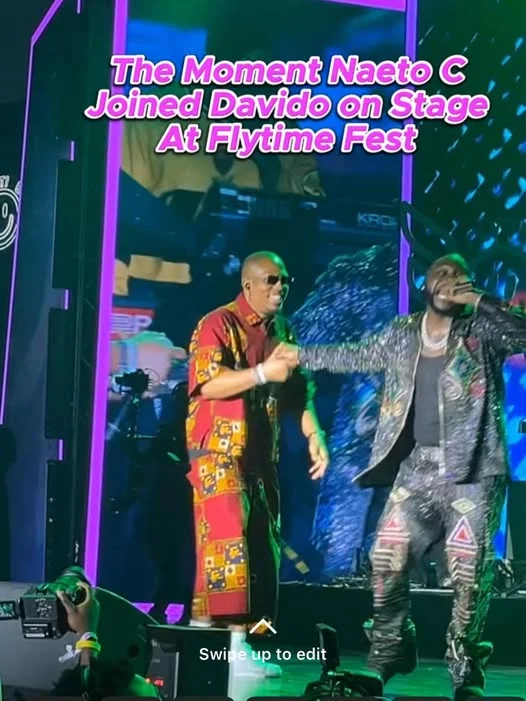
    Flytime Fest 2025 drew thousands of music lovers to Lagos on Thursday night as Nigerian music superstar, Davido, delivered a breathtaking performance at the Eko Convention Centre.

    The News Agency of Nigeria (NAN) reports that the concert stretched into the early hours of Friday, with fans filling the venue to witness electrifying live performances from some of Nigeria’s biggest music acts.

    The annual festival, which celebrates sound, culture and live entertainment, offered fans an immersive concert experience, with top artistes delivering high-energy performances that kept the audience fully engaged throughout the night.

    The highlight of the event came when Davido stormed the stage to thunderous applause, thrilling fans with a string of hit songs that had the crowd singing and dancing from midnight until dawn.

    The award-winning artiste showcased powerful vocals and dynamic stage presence, delivering electrifying renditions from his extensive music catalogue and further heightening the excitement at the venue.

    The performance was amplified by surprise appearances from guest artistes, including Dremo and Peruzzi, who joined Davido on stage to the delight of the cheering crowd. While Dremo thrilled fans with energetic rap verses, Peruzzi delivered smooth melodies that drew loud sing-alongs.

    Davido, Chike, Odumodu Black, others at Flytime Fest, Lagos

    Several attendees who spoke with NAN expressed excitement at witnessing Davido’s live performance. Adewale Ogunleye described the concert as exceptional, saying Davido’s energy remained unmatched from start to finish.

    Funke Akinwale, who attended the festival with friends, described the experience as unforgettable, while Musa Abdullahi praised the joyful atmosphere and positive vibes at the event.

    Another attendee, Chiamaka Nwoye, commended the organisers for a well-executed festival, noting that Flytime Fest continues to improve yearly and unite people through music.

  • Nigerian Army Disowns Fake DSSC 29 Recruitment Advertisement

    Nigerian Army Disowns Fake DSSC 29 Recruitment Advertisement

    The Nigerian Army has warned members of the public to disregard a recruitment advertisement circulating on social media claiming that the “Direct Short Service Course (DSSC) 29 Application Form 2026” is available.

    The warning was contained in a statement issued on Friday in Abuja by the Acting Director, Army Public Relations, Colonel Appolonia Anele.

    Colonel Anele described the advertisement as fake, false, and misleading, stressing that the Nigerian Army has not commenced any recruitment or commissioning exercise for the Direct Short Service Course (DSSC) or the Short Service Commission (SSC).

    She explained that all legitimate recruitment exercises are announced only through the Army’s official communication channels, including the Nigerian Army website, verified social media platforms, and national newspapers.

    The Army spokesperson further reminded the public that recruitment into the Nigerian Army is free of charge and does not require payment of any kind.

    She urged members of the public to remain vigilant and report any suspected fraudulent recruitment activities to the nearest security agency or relevant authorities.

  • NAF C-130 Aircraft Lands Portugal for Scheduled Maintenance

    NAF C-130 Aircraft Lands Portugal for Scheduled Maintenance

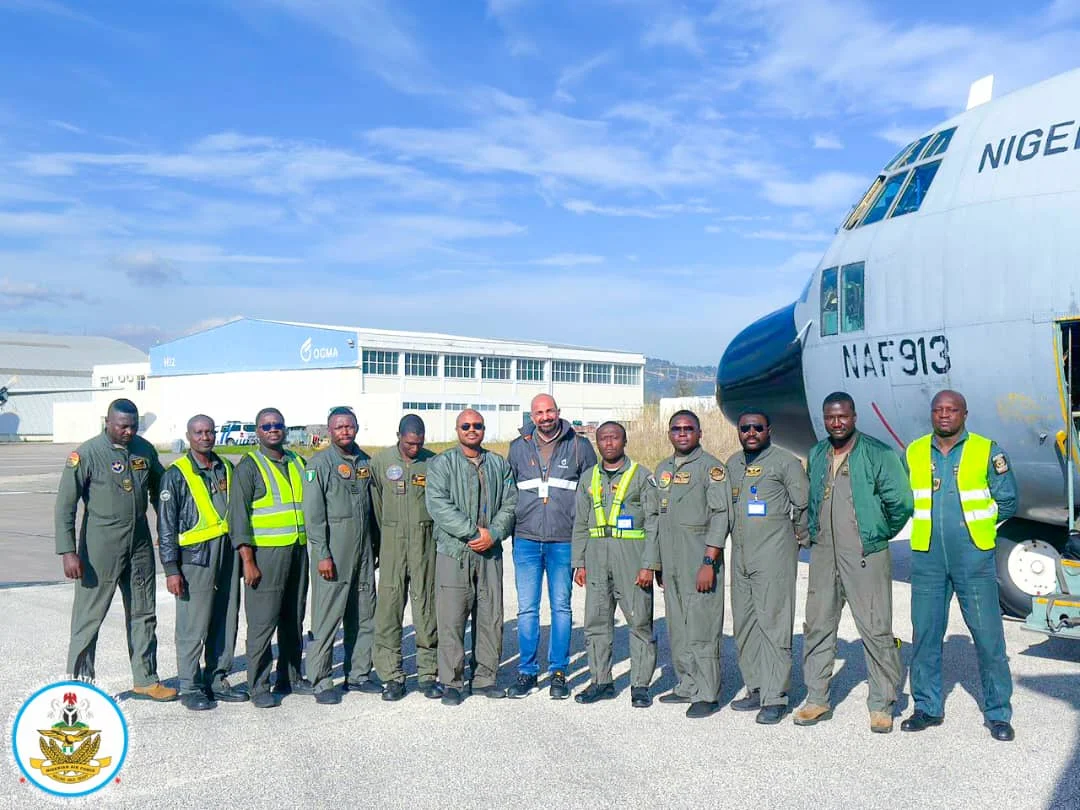
    The Nigerian Air Force (NAF) has successfully ferried one of its C-130 transport aircraft, NAF 913, to Lisbon, Portugal, for scheduled depot maintenance.

    This was disclosed in a statement issued on Friday in Abuja by the Director of Public Relations and Information, Nigerian Air Force, Air Commodore Ehimen Ejodame.

    According to Ejodame, the aircraft departed Nigeria and made planned technical stops in Banjul, The Gambia, and Casablanca, Morocco, before arriving safely at the OGMA maintenance facility in Lisbon on Thursday. He confirmed that both the crew and the aircraft arrived in good condition.

    He noted that the ferry flight was conducted in strict adherence to aviation safety standards, adding that all personnel involved remained safe and in high spirits throughout the operation.

    Air Commodore Ejodame commended the host authorities for their cooperation and support, while reaffirming the NAF’s commitment to the highest standards of safety, professionalism, and operational accountability.

    He explained that the maintenance deployment is part of the Air Force’s ongoing efforts to sustain operational readiness and ensure that its fleet remains fully mission-capable.

  • U.S. Strike on ISIS in Sokoto Sparks Questions Over Motive and Target Selection

    U.S. Strike on ISIS in Sokoto Sparks Questions Over Motive and Target Selection

    Abuja — As security analysts question the true motive behind recent U.S. military action in Nigeria, U.S. President Donald Trump has said American forces carried out strikes against Islamic State (ISIS) targets in the country’s northwest, citing attacks on Christians amid worsening insecurity.

    In a post on his Truth Social platform late Thursday, Trump said the operation targeted ISIS fighters he accused of “viciously killing, primarily, innocent Christians.”

    “The United States launched a powerful and deadly strike against ISIS Terrorist Scum in Northwest Nigeria,” Trump wrote. He added a Christmas message that included a warning that further attacks would result in additional U.S. military action.

    Motive Under Scrutiny

    The stated rationale for the strike has drawn skepticism from Nigerian security experts and residents, particularly in Sokoto State, where the targets were reportedly located.

    Retired Nigerian Air Force officer and security analyst, Group Captain Sadeeq Shehu (rtd), is among those questioning the true motive of the operation. He called for urgent clarification from relevant authorities, especially regarding the reported selection of Jabo, a community in Sokoto State.

    He urged authorities to provide:

    • A transparent explanation—within security limits—of the intelligence basis for the strike
    • Clear assurances on civilian harm mitigation
    • Verification and accountability mechanisms to assess potential collateral damage

    “People in Sokoto are not dismissing security threats,” Shehu said. “They are asking for logic, evidence, and accountability.”

    Across the state, a recurring question continues to surface:
    Why Jabo? Why Sokoto, of all places in a country grappling with terrorism in multiple regions? Was this a symbolic strike on what some consider the historical ‘seat of the Caliphate’?

    Pentagon Releases Video

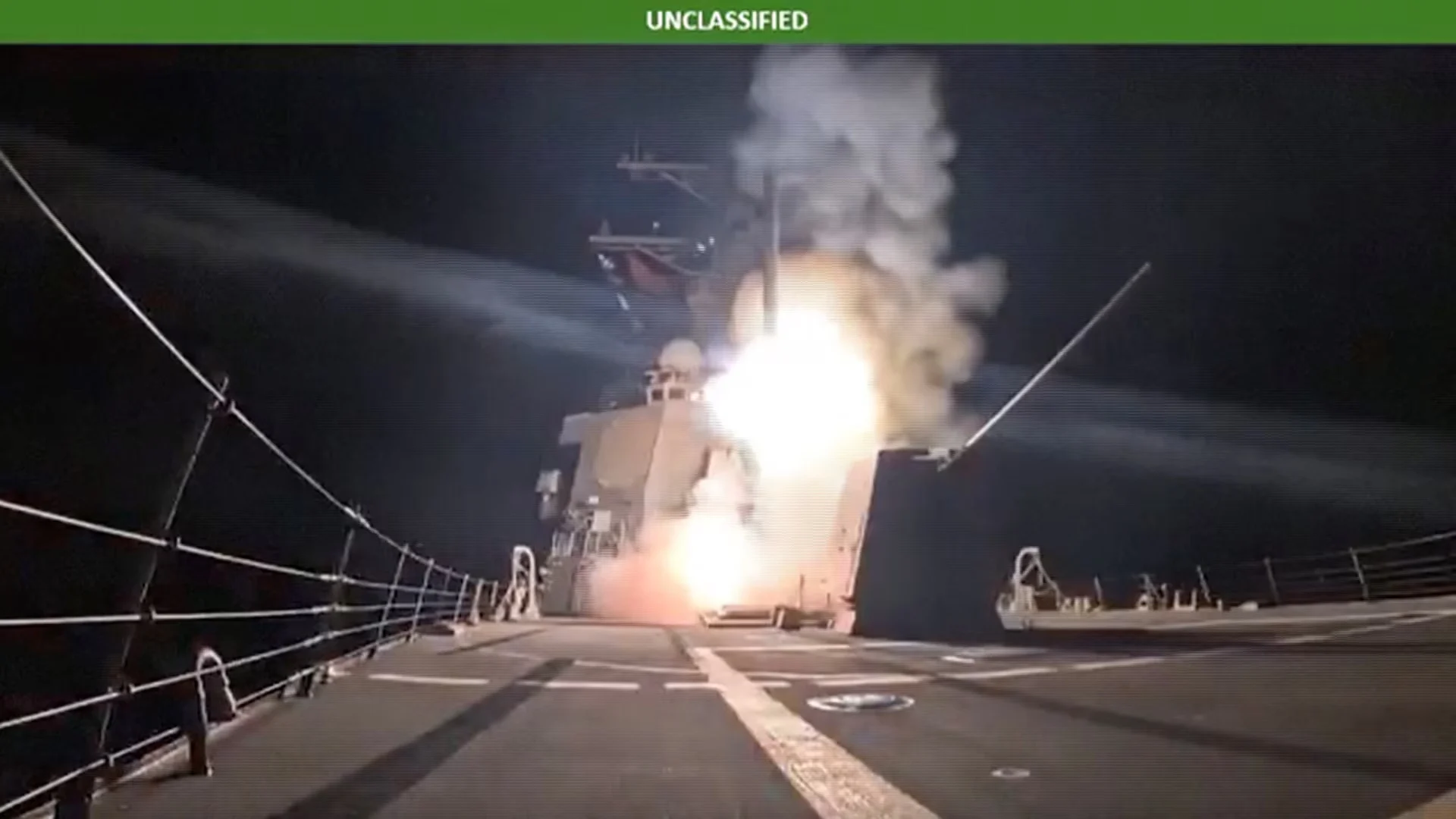
    The Pentagon later released video footage appearing to show a missile being launched from a U.S. warship. Officials did not immediately disclose details on casualties or the extent of damage caused by the strike.

    According to the United States Africa Command (AFRICOM), the targets were located in Sokoto State. U.S. Defence Secretary Pete Hegseth said he was “grateful for Nigerian government support and cooperation” following the operation.

    Rising Violence in Nigeria

    The strike comes amid growing security challenges in Africa’s most populous country, particularly in the north and northeast, where Islamist militant groups remain active.

    Boko Haram, which originated in Nigeria, along with Islamic State–affiliated factions, has intensified attacks in recent weeks. Mass abductions from churches and schools have heightened fear and unrest among local populations.

    Earlier this month, Trump warned that Washington could intervene if attacks on Christians continued, urging the Nigerian government to prevent further bloodshed or risk reduced U.S. aid.

    Despite those warnings, violence has persisted. On Thursday, a suicide bombing in northeastern Nigeria killed at least five people and injured 35 others, according to a police spokesperson.

    Limited Details on Casualties

    U.S. officials have not released figures on the number of militants killed in the strike, and Nigerian authorities have yet to issue a comprehensive public response.

    As questions linger over intelligence, targeting, and civilian impact, the situation remains fluid, with Nigeria continuing to battle multiple insurgent groups across several regions.

  • U.S. Military Strike in Nigeria: A Blow to National Pride and a Projection of Weakness

    U.S. Military Strike in Nigeria: A Blow to National Pride and a Projection of Weakness

    By Wale Alonge

    No amount of official reassurance or diplomatic damage control can erase the profound injury done to Nigeria’s national pride by a United States military strike on Nigerian soil. At the core of statehood lies a single, non-negotiable responsibility: the protection of sovereignty and territorial integrity against incursion by foreign powers, regardless of the justification offered.

    For a country of over 220 million people, one that consistently projects itself as the giant of Africa, the very occurrence of a foreign military strike within its borders raises unsettling questions. These questions become even more troubling when the foreign power involved is led by an administration that has previously denigrated Nigeria in crude terms and promoted a deeply flawed narrative of a Muslim-orchestrated genocide against Christians. Such rhetoric is not merely offensive; it is dangerous, polarizing, and destabilizing.

    The suggestion that Nigeria willingly opened its airspace to a unilateral U.S. military operation, or that Washington fully coordinated its plans with Abuja, deserves serious scrutiny. Under President Donald Trump, the United States repeatedly demonstrated a preference for unilateral action, particularly in matters framed as counterterrorism. Trump publicly pledged to strike Islamist terrorists in Nigeria, presenting the issue through a religious lens that ignored the country’s complex security realities.

    Context matters. The strike followed closely after a terrorist bombing of a mosque in northern Nigeria and days after U.S. servicemen were killed by ISIS in Syria. To view the timing as coincidental is to ignore the pattern of retaliatory signaling that has characterized U.S. military actions in recent years. Whether or not Nigeria was informed after the fact, the broader message remains troubling: a foreign power exercised lethal force within Nigeria’s borders, reinforcing the perception that Nigeria lacks full control over its own security space.

    Once a nation allows its sovereignty and airspace to be pierced, whether by consent, coercion, or quiet acquiescence, it sets a precedent that is exceedingly difficult to reverse. Sovereignty, once compromised, rarely returns intact. The genie, as the saying goes, does not go back into the bottle.

    This issue transcends partisan loyalty or personal support for any sitting president. The defense of national sovereignty is sacrosanct and must stand above politics. African states have demonstrated this principle before. Burkina Faso’s firm response to the unauthorized penetration of its airspace by a Nigerian aircraft underscored a simple truth: respect among nations begins with the enforcement of boundaries.

    Calls to celebrate foreign military intervention as a victory against terrorism are therefore premature. The true consequences of the strike—potential civilian casualties, destruction of villages, and political fallout in northern Nigeria—remain to be seen. These outcomes carry serious implications for domestic stability and could impose substantial political costs on the presidency.

    In the final analysis, regardless of how the event is framed, the optics are damaging. The strike projects weakness, not strength; dependency, not leadership. It casts an unflattering light on Nigeria’s military capability, raises questions about the government’s control over national security, and undermines the country’s standing as a sovereign regional power.

    For Nigeria, the lesson is stark and unavoidable: no nation can claim greatness while its sovereignty is negotiable.

  • State House Perm Sec Warns Staff Against Infighting, Honours Retiring Directors

    State House Perm Sec Warns Staff Against Infighting, Honours Retiring Directors

    The Permanent Secretary of the State House, Mr Temitope Fashedemi, has cautioned staff against bickering and acrimony, warning that such behaviour undermines productivity and professionalism in the public service.

    Fashedemi gave the warning at a ceremony held in Abuja to mark the retirement of two top management staff of the State House, Mr Sule Tegina, Director of Finance and Accounts, and Mr Ali Sufiyan, Director of Planning, Research and Statistics.

    According to a statement issued on Wednesday by the Director of Information and Public Relations, State House, Mr Abiodun Oladunjoye, the two officers retired after attaining the mandatory retirement age of 60, in line with the Public Service Rules.

    The Permanent Secretary stressed that adherence to ethical conduct, diligence and professionalism remained critical to career progression and institutional efficiency.

    “Hard work, good conduct and professionalism always bring rewards at the end of the day,” Fashedemi said.

    He commended the retirees for their dedication, competence and integrity, noting that their contributions had significantly strengthened operations at the State House.

    “They are seasoned administrators whose commitment enhanced efficiency and professionalism in the system,” he said.

    Fashedemi urged the retirees to remain active and continue contributing to society and the public service in advisory capacities.

    “I enjoyed working with you. Keep your brains active. Do not retire to the village. Stay around and continue to add value,” he added.

    The Permanent Secretary also reaffirmed his commitment to staff welfare, describing it as a priority of his administration.

    “Sometimes rewards come unannounced, but to whom much is given, much is expected,” he said.

    In his remarks, Tegina expressed gratitude to the State House management and staff for the opportunity to serve, noting that he had enjoyed a harmonious work environment throughout his career.

    “I have worked in different places, and I have been fortunate not to work in a toxic environment,” he said.

    Similarly, Sufiyan thanked the Permanent Secretary and staff of his department for their support during his years of service.

    The event featured the presentation of gifts, as colleagues, family members and well-wishers celebrated the retirees and offered prayers for good health and a fulfilling retirement.

  • CCI Launches TeleOncology Hub in Northeast Nigeria

    CCI Launches TeleOncology Hub in Northeast Nigeria

    Abuja — The Cancer Consciousness Initiative (CCI) has inaugurated a TeleOncology Hub aimed at improving access to specialist cancer care in Northeastern Nigeria, a region facing rising cancer cases and limited oncology services.

    The programme, which was officially launched at the Federal Medical Centre (FMC), Jalingo, leverages telemedicine technology to connect cancer patients in remote and underserved communities with oncology specialists across the country.

    Services provided include virtual specialist consultations, Multidisciplinary Team (MDT) meetings, electronic medical record (EMR) monitoring, and patient navigation support.

    Speaking in an interview with the News Agency of Nigeria (NAN) in Abuja, Dr Hannatu Ayuba, Chief Executive Officer of CCI and Programme Lead of the TeleOncology Hub, described the initiative as a health system strengthening intervention designed to address long-standing disparities in cancer diagnosis and treatment.

    According to Ayuba, cancer cases are increasing steadily in the Northeast, with breast cancer accounting for about 60 per cent of reported cases, most of which are diagnosed at advanced stages.

    “Many patients in underserved communities face barriers that delay diagnosis and treatment, which significantly affects survival outcomes,” she said. “Late presentation remains one of the biggest challenges in cancer care in the region.”

    Ayuba urged women to prioritise early detection, advising them to seek medical attention if they notice symptoms such as breast lumps, changes in breast shape, nipple discharge, or other unusual signs.

    “Early detection through self-examinations, mammograms, and regular medical check-ups can save lives,” she stressed.

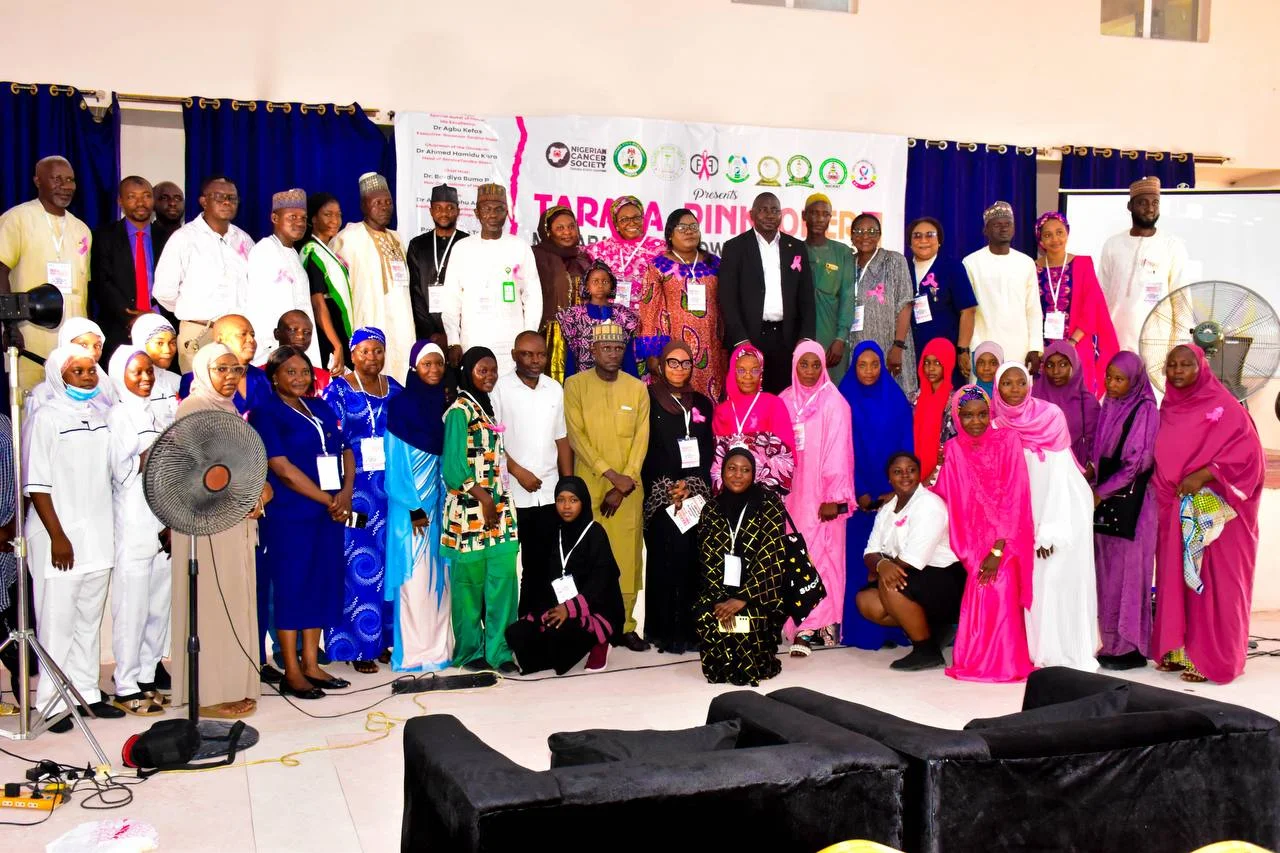
    To mark Breast Cancer Awareness Month, CCI, in collaboration with partner organisations, organised town hall meetings and a mega rally across communities to raise awareness about cancer symptoms and available care options.

    Since its inauguration in April, the TeleOncology Hub has expanded its reach through partnerships with Modibbo Adama University Teaching Hospital, FMC Nguru, and Yobe State University Teaching Hospital, Damaturu, significantly increasing access to virtual oncology consultations in the region.

    The initiative has also launched a community-based patient navigation programme in Borno State in partnership with the Grow Strong Foundation.

    The programme integrates telemedicine services, virtual MDT meetings, EMR monitoring through PocketPatientMD, and personalised patient guidance to ensure timely diagnosis and treatment.

    Ayuba revealed that more than 35 patients have already been enrolled, with over 85 per cent of navigation encounters resulting in prompt diagnoses, treatment initiation, or follow-up care.

    “Video-enabled MDT meetings help overcome geographical barriers and improve coordination among healthcare professionals,” she noted.

    As part of capacity building, CCI has trained healthcare professionals, nurses, and pharmacy staff in oncology care, digital health tools, and patient navigation to strengthen local healthcare delivery.

    The initiative has also partnered with patient assistance programmes to reduce diagnostic costs.

    These include BRANT by Oncopadi/Roche, which provides free immunohistochemistry testing for 5,000 women, as well as Merck and AstraZeneca, which offer free KRAS and EGFR testing for colorectal and lung cancer patients.

    Despite the progress, Ayuba acknowledged ongoing challenges such as late-stage diagnosis, financial constraints, cultural barriers, and low health insurance coverage.

    She disclosed that only 8.6 per cent of patients at one participating centre are enrolled in health insurance or national health schemes.

    To support vulnerable patients, CCI provides financial counselling, treatment assistance, transportation support, and logistics aid.

    “Our goal is to unlock access to quality cancer care for all patients, regardless of their location or financial status,” Ayuba said.

    Looking ahead, CCI plans to expand the TeleOncology Hub nationwide, introducing HIPAA-compliant telemedicine suites, broader training programmes, advanced diagnostic integration through the African Digital Health Network, and stronger advocacy for sustainable funding and supportive health policies.

    The TeleOncology Hub is expected to play a critical role in reducing cancer care disparities in Nigeria and improving survival outcomes for patients in hard-to-reach communities.

  • PDP Crisis: Warring Factions Assure Nigerians Party Remains on Course After INEC Meeting

    PDP Crisis: Warring Factions Assure Nigerians Party Remains on Course After INEC Meeting

    The two warring factions of the Peoples Democratic Party (PDP) have reassured Nigerians that the party remains united in purpose and committed to its role as Nigeria’s leading opposition party, despite its lingering leadership crisis.

    The assurances were given on Friday by the PDP National Chairman, Tanimu Turaki, and the embattled National Secretary, Sen. Samuel Anyanwu, following a crucial meeting with the Independent National Electoral Commission (INEC) in Abuja.

    PDP Leadership Crisis: INEC Steps In

    Speaking separately with journalists after the meeting, Turaki said the engagement was convened at the invitation of INEC to address the prolonged internal dispute rocking the party’s national leadership.

    “We want to assure Nigerians and indeed our party members that we are on course. We shall continue to remain on course by the special grace of God,” Turaki said.

    He disclosed that the National Working Committee (NWC) under his leadership honoured the invitation but expressed surprise that some individuals who had been expelled from the PDP were also invited by the electoral body.

    According to him, both factions presented their positions to INEC.

    “We have spoken from our own perspective. We have made presentations on the issues, and INEC has listened to us,” he stated.

    INEC Cannot Act as a Court — Turaki

    Turaki explained that INEC acknowledged that several issues surrounding the PDP leadership crisis were already before the Court of Appeal, while others were yet to be heard.

    He said the commission made it clear that it could not assume the role of a court of law but promised to carefully review the submissions made by both factions and communicate its decision in due course.

    While awaiting INEC’s response, Turaki insisted that the PDP under his leadership would continue to function fully.

    “The PDP will continue to hold the government accountable, uphold the rule of law, promote best democratic practices, and address the challenges facing Nigerians,” he said.

    INEC’s Recognition Question

    When asked which PDP leadership INEC recognised, Turaki said the commission’s primary objective was to find a sustainable path forward for the party.

    He commended INEC Chairman, Prof. Joash Amupitan, and his team for giving both factions a fair hearing.

    “I think what INEC has done, in the spirit of reconciliation, is proper. If only one side was invited, it would have been like talking to ourselves,” he said.

    Elections and Democracy at Stake

    Turaki warned that excluding a major opposition party like the PDP from elections would undermine Nigeria’s democratic credibility, especially in upcoming polls in the Federal Capital Territory (FCT), Ekiti, and Osun States.

    “Conducting an election that a major opposition party will not participate in will cast a dark shadow on the process,” he warned.

    He also urged INEC to adopt similar conflict-resolution approaches for other political parties experiencing internal crises.

    Anyanwu: Court Disqualified Turaki-Led Executive

    On his part, Sen. Samuel Anyanwu, who leads the faction backed by the Minister of the FCT, Nyesom Wike, said the PDP would emerge stronger from the crisis.

    “The PDP is still PDP. Nigerians know that PDP has mechanisms for managing internal crises. We will come out stronger,” Anyanwu said.

    He claimed that a court ruling had invalidated the convention that produced the Turaki-led executive.

    However, he praised INEC for demonstrating a genuine commitment to preserving the PDP as Nigeria’s main opposition party.

    Call for Reconciliation

    Anyanwu said the meeting allowed both factions to highlight the root causes of the crisis, which he attributed to “greed, ambition, and ego.”

    He reaffirmed the faction’s commitment to the rule of law, INEC guidelines, and the PDP Constitution, and urged aggrieved party members to return to the National Caretaker Committee for reconciliation.

    Earlier, INEC Chairman Prof. Joash Amupitan explained that the meeting became necessary due to conflicting communications received from both PDP factions, which threatened the party’s operational clarity ahead of elections.

  • NNPP Re-elects Ahmed Ajuji as Chairman, Signals Major Push for 2027 Elections

    NNPP Re-elects Ahmed Ajuji as Chairman, Signals Major Push for 2027 Elections

    The New Nigeria People’s Party (NNPP) has re-elected Dr. Ahmed Ajuji as its National Chairman, a move party leaders say signals a renewed push to expand the party’s influence ahead of the 2027 general elections.

    Ajuji was returned unopposed through a voice vote at the party’s National Convention held on Saturday in Abuja. Officials of the Independent National Electoral Commission (INEC) were present to monitor the exercise.

    The convention also saw the re-election of Dipo Olayoku as National Secretary, alongside other members of the party’s national leadership, all of whom emerged unopposed and were later affirmed by delegates.

    Speaking after his re-election, Ajuji thanked party members for the confidence reposed in the leadership and pledged that the NNPP would intensify efforts to strengthen its structures nationwide.

    He said the new leadership accepted the responsibility of steering the affairs of the party over the next four years, describing the moment as critical to the NNPP’s future.

    “Our task is clear. We must work harder, remain united and position this party to win the trust of Nigerians ahead of 2027,” Ajuji said.

    He urged national officers to treat their re-election as a call to service and to uphold the oath of office administered to them.

    “Our Flag Must Fly Higher” — Ajuji

    Earlier in his welcome address, Ajuji called on NNPP members across the country to remain hopeful and committed to the party’s vision of a united and prosperous Nigeria.

    He said the NNPP was determined to build a strong, progressive and inclusive nation, stressing that the party had been repositioned to play a leading role in Nigeria’s democratic process.

    “Our flag must fly higher across all parts of Nigeria. Nigerians want reassurance that a better country is possible, and NNPP is ready to provide that hope,” he said.

    According to him, the party’s restructuring and internal reforms have strengthened its readiness to compete nationally.

    “All eyes are on NNPP to show the way forward for sustainable democracy and development. Nigerians deserve a fresh start and a new deal,” Ajuji added.

    Kwankwaso, Abba Yusuf Back New Leadership

    The National Leader of the NNPP and former Governor of Kano State, Senator Rabiu Musa Kwankwaso, congratulated the re-elected national executives and urged them to remain disciplined and loyal to the party.

    Kwankwaso said the performance of the NNPP-led government in Kano State offered a clear picture of what Nigerians could expect if the party is elected into power in 2027.

    Kano State Governor, Abba Kabir Yusuf, described the convention as a defining moment for the party, saying it reflected the NNPP’s growing national relevance.

    He urged the new leaders to promote unity, fairness and inclusivity within the party.

    “Let this convention mark a new beginning where no one is left behind,” Yusuf said.

    NNPP Dismisses Rumours of Internal Crisis

    Chairman of the National Convention Planning Committee, Bala Mohammed, said the NNPP had recorded notable achievements in the past four years, strengthening its place in Nigeria’s political landscape.

    He explained that the convention was held to ratify key decisions of the National Executive Committee and formally elect national officers.

    “This gathering is also about reinforcing the unity and brotherhood that define us as a political family,” Mohammed said.

    The party’s National Adviser, Magaji Ibrahim, dismissed claims of division within the NNPP, insisting the party remained united under Kwankwaso’s leadership.

    “I can assure Nigerians that nothing will divide this party. We are solid and focused as we move toward 2027,” Ibrahim said.

    A major highlight of the convention was the ratification of the suspension of Article 37(1) of the NNPP Constitution (2024 as amended).